The Trans-Pacific Partnership negotiations have apparently reached the final stage, but it is still not known when an agreement on the TPP can be reached.
Negotiating countries still have major differences over market access, protection of intellectual property rights, labor standards, environmental protection, provisions of state-owned enterprises and other areas, and some are even likely to quit the negotiations. The biggest obstacle to the negotiations is the difference over controversial issues such as agriculture and automobiles between the United States and Japan. And finding a common ground on the two sticking points is no longer a pure economic decision, instead it depends on the political aspirations of the two sides.
In 2013, the TPP formally invited Japan to join the negotiations, marking a new stage in the process of making the TPP a reality. On one hand, Japan's participation is bound to delay the TPP negotiations, something that the US is fully aware of. On the other, it means that the TPP will be able to not only yield huge economic benefits for the US (and thus attract more small countries to join the TPP in the future),but also help Washington to carry out its strategic "rebalancing" to Asia and play a leading role in deciding the development direction of regional economic cooperation.
By joining the TPP negotiations, Japan has hinted that the opening of its agricultural products' market is no longer impossible. More importantly, Japan has shifted its focus from negotiating a free trade agreement with China and the Republic of Korea to the TPP negotiations. In other words, the US and Japan have reached an agreement to maintain their leadership of the Asia-Pacific economic order in the future through the TPP. This is the basis and premise of the ongoing US-Japan TPP negotiations.
On the surface, some other countries also find it difficult to accept the severe TPP terms advocated by the US. For example, Malaysia and Vietnam have difficulty in complying with the provisions on state-owned enterprises and most developing countries can hardly follow the high standards on the protection of intellectual property rights.
However, these factors are not likely to become the main obstacle in the TPP negotiations, because the handicapped economies are relatively small and the US is highly likely to reach a compromise over these issues in order to complete the TPP negotiations. Even if some countries quit the negotiations, the US will not be perturbed because that will not affect the TPP's ultimate goal. But the US cannot do without Japan, for it considers the East Asian country an indispensable partner in the deal.
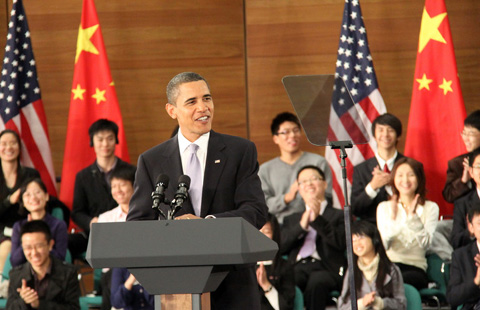
Going by past international trade negotiations, the final stage of any negotiation is a struggle for all sides, depending on their endurance and capability of taking political decisions. Two factors will affect the Barack Obama administration's political decisions in the final stage of negotiations. The first is whether US Congress will grant President Obama "fast-track" authority to go ahead with the TPP. With growing opposition to the TPP within the Congress, the Obama administration has to secure further concessions from its negotiating opponents to advance the stalled TPP negotiations.
Another potential factor thwarting the TPP negotiations is the Regional Comprehensive Economic Partnership, talks on which are expected to be completed in 2015. Emerging economies such as China and India, and a number of TPP countries, including Japan, will attend the RCEP negotiations.
As the main advocator of RCEP, the Association of Southeast Asian Nations is determined to complete the RCEP negotiations on schedule even at the cost of lowering the level of trade liberalization. And if the TPP negotiations lag behind the RCEP talks, they will face more uncertainties.
Strategically speaking, the US will not allow such a scenario to emerge. As a result, the possibility of the US making concessions in the final stage of the TPP negotiations cannot be ruled out, especially because voices have been raised in the US to end the TPP negotiations as soon as possible.
The author is director of National Institute of International Strategy at the Chinese Academy of Social Sciences.

Copyright 1995 - . All rights reserved. The content (including but not limited to text, photo, multimedia information, etc) published in this site belongs to China Daily Information Co (CDIC). Without written authorization from CDIC, such content shall not be republished or used in any form. Note: Browsers with 1024*768 or higher resolution are suggested for this site.
License for publishing multimedia online 0108263 Registration Number: 130349