

 Comments
  Print
Print  Mail
Mail  Large Medium Small
China and Russia are the two largest countries in the world with more than 4,300 kilometers of mutual border line. They are both permanent members of the UN Security Council and the world's five nuclear countries. So Sino-Russia relations have a significant impact on Asia and the rest of the world.
Diplomatic relations began 64 years ago, beginning the establishment of the PRC.
1. Ally during the 1950s. For China in the pre-1980s, the biggest pressure came from the northern regions The possibility of a Soviet invasion through Mongolia not only disturbed the layout of national defense, it also had an obvious negative impact on the economic development of North and Northeast China.
In 1950 the two countries signed the "Sino-Soviet Treaty of Friendship, Alliance and Mutual Assistance," China allied with the Soviet Union, joining the socialist camp headed by the Soviet Union.
At the beginning of the Khrushchev administration, friendship between China and the Soviet Union was consolidated. Khrushchev changed the practice of chauvinism from Stalin's time and abolished some unequal agreements.
During this period, the Soviet Union aided China in building 156 large industrial projects, which played an important role in China's industrial and economic development. The most important was the technology of atomic bomb. At this point the friendship between the two peoples also saw a huge development with many examples of touching stories.
There also were problems between the two, such as putting too much emphasis on the specialty of the socialist countries and improperly making ideology a priority in their relations - while in practice there existed the unequal "big brother" to "little brother" relationship. This foreshadowed the later deterioration of the Sino-Soviet relations.
2. Confrontation period in the 1960s-70s. The "long-wave radio[1]" and "common fleet[2]" events of 1958 were a turning point in Sino-Soviet relations. With Taiwan crisis, the Soviets tearing up the "Defense technology agreement" and Sino-Indian conflict[3] happened later, relations between the two countries began to deteriorate, and finally resulted in a violent confrontation.
During this period, the Soviet Union imposed great economic and military pressure on China, from cutting off financial support to a series of military measures. In the late 1960s, the border situation between the two countries was very tense and in 1969 an armed conflict broke out on Chen-pao Island.
To get tighter control of the socialist camp to counter-balance the US, Khrushchev treated China in the way he treated "satellite states" in Eastern Europe, as though he was trying to turn China to serve the Soviet Union's overall strategy. Different strategic needs led to the two sides' different views on the theories of the international communist movement. In addition, Mao Zedong and Khrushchev failed to establish a good personal relationship due to different cultural backgrounds and ways of thinking.
The long confrontation had brought serious effects on both sides. Trade revenue saw a sharp decline and technological and cultural exchanges were completely interrupted.
-----------------------------------------------------------------
[1] In April 1958, the Soviet proposed to establish a long-wave radio station in China to maintain communication with the Soviet submarine in the Pacific. But China and the Soviet couldn't reach an agreement on the issues of who to pay the expense and who to control the station.
[2] In July 1958, the Soviet ambassodar proposed to build a Soviet-Chinese common fleet as a response to the assistance Chinese naval needed. Chairman Mao Zedong refused the proposal.
[3] The dispute border line of the so-called "McMahon Line" finally opened the Sino-Indian conflict in 1962. Despite the special Sino-Soviet relations, Khrushchev accepted the then Indian President Nehru's invitation to visit India in 1960, ignoring deteriorating Sino-Indian relations.

 Woman pulls a 2.5 ton car with her hair
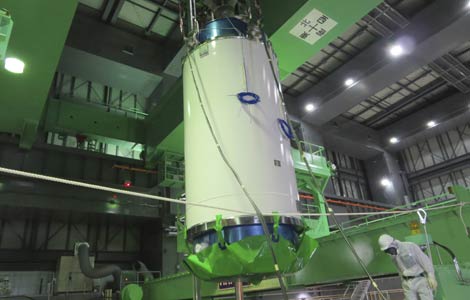 Fukushima starts year-long fuel removal
 Mermaids mesmerize visitors
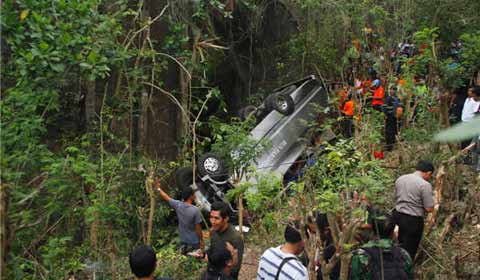 Bus overturns in Indonesia, killing 4 Chinese
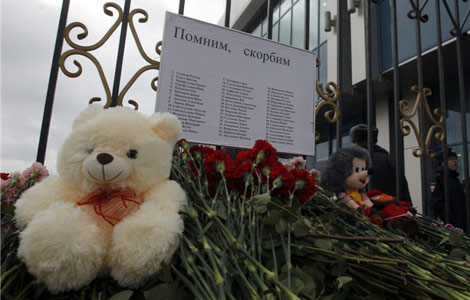 Russia mourns air crash victims
 5 dead as tornadoes ravage US Midwest
 Vintage cars concours kicks off in Kenya
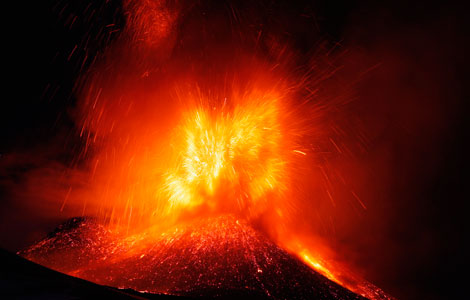 Volcano erupts on Italy's Mount Etna
Copyright 1995 - . All rights reserved. The content (including but not limited to text, photo, multimedia information, etc) published in this site belongs to China Daily Information Co (CDIC). Without written authorization from CDIC, such content shall not be republished or used in any form. Note: Browsers with 1024*768 or higher resolution are suggested for this site.
License for publishing multimedia online 0108263 Registration Number: 20100000002731