Going shopping is almost routine for many during the holiday season. But a shopping trip may turn sour for some of us middle-aged only because attendants address us wrongly.

Yes, we do have some gray hairs, but we feel it impolite when people treat us as if we were too old to make our own decisions. For instance, my husband went the other day to Dinghao, a shopping mall well-known for its wide range of electronic appliances.
He wanted to buy a computer that would best suit his needs. However, one young salesman was so impatient he said to him: "Well, Lao Da Ye (old man), this one is good enough for you."
My husband told me he immediately moved to another counter. "I couldn't put up with the condescending attitude of that salesman, as if I don't know anything about computers."
The most embarrassing time my husband ever experienced was when he was helping my brother-in-law choose a suit for formal wear. The shop assistant mistook my husband for my brother-in-law's father.
I may sound a little harsh on young salespeople who must have been trained to address people with politeness and warmth. In fact, there was a time when many Chinese were proud of being addressed as "lao shifu", or old master, as the term means respect and deference. After all, it is a tradition among us Chinese to respect the old.
But how old is really old?
I believe until a decade or so ago, people entering their fifth decade of life were being considered "old". A friend of mine and his wife one day walked into the elevator of their apartment building together with a young woman and her dog. The young woman gleefully asked her dog to salute "granny and grandpa". My friend did not think it proper, but he had no way to retort to the young woman.
The concept of old age really dies hard. Occasionally, we still hear television broadcasters call some people "granny" or "grandpa" even though they are still in their prime.
How do we address people properly? Things seemed to be simpler some 30 years ago, when in urban centers we mostly addressed people as "shifu" (master) or "tongzhi", comrade.
Even in rural areas, where the rule was a bit complicated, it was still easy. I remember the so-called "long marches" I so enthusiastically participated in, the first time, when I was only 13.
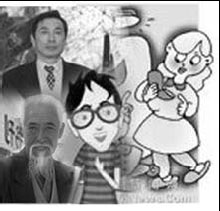
The drills took us into the countryside, where we spent the nights on a kang, a brick bed with heat coming from underneath. Before we arrived at our first ever village, the teacher repeatedly told us to call people of our grandparents' age "da ye", "da ma"; of our parents' age "da shu", "da sher" (uncles and aunties); of our siblings' age "da ge", or "da jie" (brothers and sisters).
While things have not changed that much in the countryside, the appellations of "shifu" or "tongzhi" have now become almost obsolete in urban areas, so we now find it difficult to properly address people.
We hear people call out Miss in restaurants, but that is now considered a bit flirtatious. As to the word Mister, it is a bit too formal and too distant, at least to many of us who grew up with "shifu" or "tongzhi".
But despite the changes, it is not proper to address middle-aged people as "lao" (old). As life expectancy increases, people in their 50s or even early 60s are still strong and energetic. The young should not make these people feel old.
E-mail: lixing@chinadaily.com.cn
(China Daily 12/27/2007 page10)