Yuan trading places with dollar







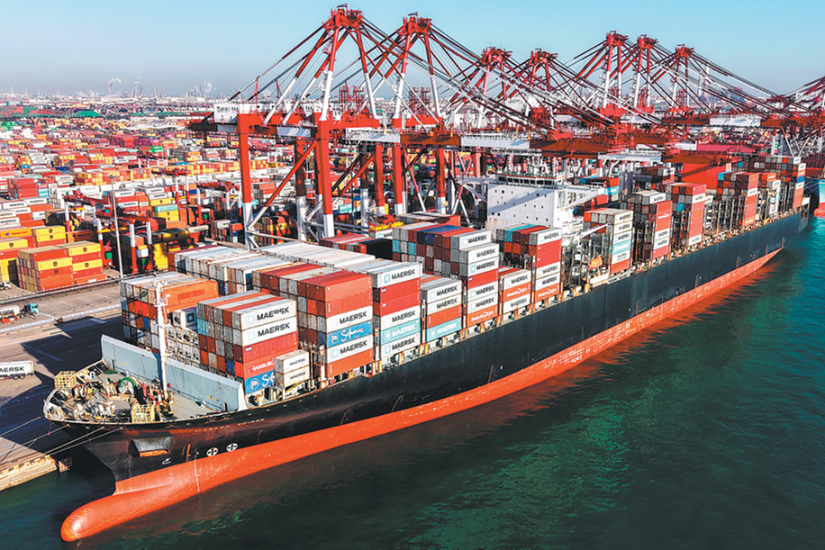
| Trade settlement in yuan between China and Africa is used as a means to reduce the risks and cost of using the US dollar. Xie Zhengyi / for China Daily |

African governments begin settling trade deals in Chinese currency
As surging bilateral trade pushes China and Africa toward a new cross-border RMB settlement mechanism, China's 100-yuan red note may come to pack more power compared with the greenback rival when making payments in Africa.
As the dominant reserve currency in the world, the US dollar is mostly used in global trade transactions and for invoicing goods and services.
The majority of transactions between Chinese and foreign companies are still based on its exchange rate.
But to lower the risk caused by quantitative easing measures and further depreciation of the US dollar, trade settlement in yuan (renminbi or RMB) is now starting to take place between China and Africa.
In 2012, the ministerial conference of the Forum on China-Africa Cooperation (FOCAC) led to the adoption of the Beijing Action Plan (2013-2015), which has pledged to accelerate the pace of RMB cross-border trade and internationalization in Africa.
According to the plan, the Chinese government has an open attitude toward currency swap arrangements with the central banks of African countries, and encourages businesses on both sides to settle bilateral trade and make direct investment in local currencies.

Lu Shaye, director-general of the Department of African Affairs of China's Foreign Ministry, says China welcomes African countries to settle bilateral trade in local currencies. The implementation of a currency settlement agreement will promote more currency exchanges between the two sides
"Chinese and African ministries of finance are conducting negotiations on how to move forward with China-Africa currency cooperation," Lu says.
Lu says support will also be given to Chinese financial institutions to provide loans in RMB to African concerns. China is also willing to see central banks of African countries investing in China's inter-bank bond market and including RMB in their foreign exchange reserves.
After China Development Bank allocated Africa a purchase quota of three-year bonds in 2012, a number of African central banks gained access to RMB-denominated bonds for the first time. This was considered a significant step in the RMB's wider use in the continent.
The central banks of Nigeria and Tanzania made the biggest purchase, according to the global cooperation department of the CDB.
Hoping to further promote trade activities, political relations and the internationalization of the RMB, China has signed bilateral investment protection agreements with 35 African nations, including Nigeria, South Africa, Egypt and Kenya. It also offered 10.5 billion RMB debt relief to 31 poor and deeply indebted African nations and allowed 25 countries to export products to China duty-free.
Wei Jianguo, vice-chairman and secretary-general of the China Center for International Economic Exchanges, says China is to promote the RMB's use in trade settlements and investment with Africa, and speed up development of Chinese financial institutions across the continent.
Chinese banks have managed to establish their presence in Africa and enlarge their influence in its financial markets. The China Development Bank, Export-Import Bank of China, Bank of China and China Construction Bank have all established branches or representative offices throughout Africa. Industrial and Commercial Bank of China also gained a 20 percent stake in Standard Bank for $5.5 billion in 2007.
"If you look at the currency rate risk management of the reserve portfolio, the RMB has performed well, because it is supported by China's enormous international reserves," says Wei. "It is fairly useful to use RMB as both the settlement currency and the reserve currency in Africa."
Statistics from the People's Bank of China show that yuan-denominated settlements between China and African nations have already been carried out, with 4.3 billion yuan ($684 million) worth of settlements with South Africa and 2.3 billion yuan with Mauritius.
Mauritius has one of the most developed banking industries in Africa.
"With a free flow of US dollars and trading with other African countries, Mauritius has become a new regional financial and trade center, as many African energy, food processing and mining companies are moving there from traditional financial service centers such as Dubai, London and New York," says Paul Chong Leung, Mauritius's ambassador to China.
"As a tourist hot spot in Africa, many hotels and catering businesses in Mauritius and South Africa have already started to accept RMB."
Li Anshan, director of the Center for African Studies at Peking University, says other African countries can also become more competitive as their regulations change and develop, because no one wants to miss the opportunity to handle more RMB through this mode.
"The major issue is that all African nations, except for Kenya, Mauritius and Botswana, implement currency controls, and this has limited the chance of establishing an offshore RMB center or market," Li says.
Robins Mwanga, business information executive of Malawi Investment and Trade Centre, says using local currencies to settle RMB trade payments has been under consideration by monetary authorities since 2011.
"Despite the huge potential of such a mechanism, there remain technical issues to be solved before a full system can be put in place," Mwanga says. "For Malawi and Chinese companies, such a mechanism would make sense if it can provide fast and safe clearing procedures and abundant financing.
"As in most African countries, the main currency used by firms in foreign trade is still the US dollar, it is natural that such innovative mechanisms meet resistance from some companies and institutions that are used to working under that system. The role of governments is to try and anticipate important changes, to make business see the benefits brought by cross-border RMB settlement."
Other countries, such as Australia, Turkey, Japan, the United Arab Emirates and BRICS members, have all signed agreements with China to use their own currencies to trade, and this could inspire African governments to learn from those deals and review their own arrangements.
"It is necessary for rising African economies to understand more about the function of the currency swap agreement," says Lin Shunjie, secretary-general of China Chamber of International Commerce.
"With upcoming shifts driven by China's industrial and investment activities, it will assist their companies to accelerate the use of RMB as a trade settlement currency," he says.
Lin feels that holding a certain number of RMB assets would help African governments "ease heavy dependence on the US dollar and build a fair trading environment between China and Africa".
zhongnan@chinadaily.com.cn
(China Daily 05/03/2013 page16)




Today's Top News
- Poll findings indicate Taiwan people's 'strong dissatisfaction' with DPP authorities
- Xi emphasizes strong start for 15th Five-Year Plan period
- PLA drills a stern warning to 'Taiwan independence' separatist forces, external interference: spokesperson
- Xi, Putin exchange New Year greetings
- ROK leader's visit to help boost bilateral ties
- China's new plan, world's new opportunities