China's new plan, world's new opportunities







The year 2026 will be the starting year of China's 15th Five-Year Plan (2026-30). As suggested in the recommendations approved by the fourth plenary session of the 20th Central Committee of the Communist Party of China, the plan will not merely be a blueprint for domestic policy, but an invitation to the world to cooperate and collaborate. The plan is expected to reaffirm China's commitment to building a just and multipolar world order based on universally recognized principles of international law, inclusive security, sustainable development and shared prosperity.
One of the most encouraging aspects will be China's support to the Global South. While Western countries represent only about 12 percent of the world's population, they continue to cling to outdated notions of hegemony.
On the other hand, China has been intensifying its support for developing countries through concrete measures that foster multilateral cooperation. Since the 14th Five-Year Plan (2021-25) period, platforms such as BRICS, China-CELAC Forum, Regional Comprehensive Economic Partnership, the Shanghai Cooperation Organization, Association of Southeast Asian Nations, the G20 and the United Nations have become channels for translating principles into action.
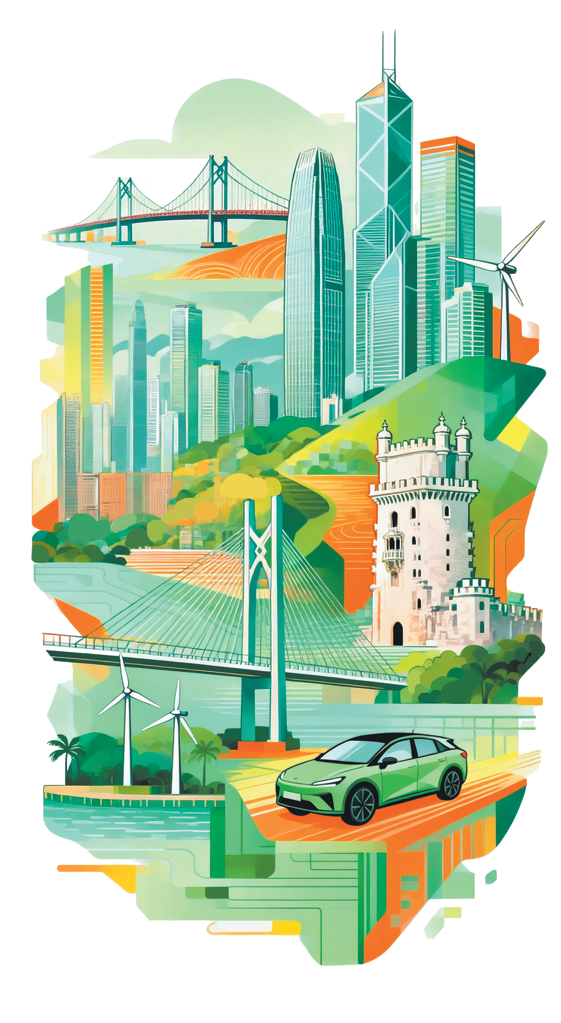
The fourth plenary session underscored the strategic importance of the Guangdong-Hong Kong-Macao Greater Bay Area as an engine of high-quality development. One resolution focuses on promoting long-term prosperity and stability in the Hong Kong and Macao special administrative regions. China's unwavering respect for the "one country, two systems" principle in Macao and Hong Kong sends an important message. It shows that diversity of economic systems and local autonomy can coexist within national unity. This reassurance should resonate in Taiwan, as it demonstrates that under the framework of national reunification, Taiwan could retain its distinct economic system and enjoy a high degree of autonomy, consistent with the "one country, two systems" policy. No wonder China is expected to deepen ties with Portuguese-speaking countries. These countries — spread across Europe, Asia, Africa and South America — share linguistic bonds but have enormous geographical diversity. However, they all are important economic, commercial and political partners for China.
In recent years, they have signed significant economic agreements with China, especially in the Belt and Road Initiative, the world's largest intercontinental connectivity project based on voluntary participation and mutual benefit.
Macao plays an important role in this relationship. After Macao's return to China, the central government has positioned the city as a bridge between China and the Portuguese-speaking countries. The Forum for Economic and Trade Cooperation between China and Portuguese-speaking Countries was set up in 2003 to finance sustainable development projects.
The integration of Macao into the Greater Bay Area and the development of the Guangdong-Macao In-Depth Cooperation Zone in Hengqin have further diversified Macao's economy while adhering to the "one country, two systems" principle.
China further strengthened its connection with the Lusophone world in 2025 by creating the CECP, a "one-stop" integrated service platform to support cooperation between Chinese enterprises and companies in Portuguese and Spanish-speaking countries. It is a practical example of how institutional innovation can lower barriers and expand opportunity.
Africa is central to this story. More than half of the Portuguese-speaking countries are in Africa. China's engagement with them follows its broader relationship with the continent, where it is now its largest trading partner, having surpassed the US in 2009 and Europe in 2012.
There are three main reasons for this. First, China is not a new partner. From very early on, it has supported independence movements in African countries against European colonialism. Second, unlike the US and European countries, China does not impose its vision or political model as a condition for supporting the development of African nations. Finally, China focuses on the structural needs of countries, investing in infrastructure that is essential to the autonomous development of these countries.
Meanwhile, Europe faces its own dilemmas. The inability of most European countries to resist US economic and political pressure has constrained Europe from pursuing an autonomous geostrategy. The EU and China are each other's second-largest trading partner. Germany, the Netherlands, and Italy are the main importers and exporters of goods to and from China. At a time when tariffs have been raised and global instability caused by the US, China can not only be considered a market with enormous potential, but essential for Europe's development.
However, most European Union elite continue to have a reductive perspective of China's modernization and its upcoming 15th Five-Year Plan. Most Europeans do not learn much about China's upcoming 15th Five-Year Plan, so the recommendations should be urgently translated and disseminated in local languages in Europe and worldwide.
Many researchers, and entrepreneurs such as Peter Jungen, chairman of the German group Peter Jungen Holding, as well as some former leaders such as former Italian prime minister Romano Prodi, former Austrian chancellor Wolfgang Schüssel, identify several fields where EU-China cooperation will be essential for development and innovation in Europe.
China's commitment to peaking carbon emissions before 2030 and achieving carbon neutrality before 2060, for example, directly supports global climate objectives and complements Europe's own ambitions. Recent high-level visits of European leaders to China, including French President Emmanuel Macron and German Foreign Minister Johann Wadephul, point to a gradual recalibration of ties. Europe must start viewing China not as an adversary but as a partner in innovation, economic modernization and security.
The 15th Five-Year Plan will be an important contribution from China to build a community with a shared future for humanity, and make the world more just and prosperous.
The author is president of the Observatory for China, a Portugal-based association of China studies.
The views don't necessarily represent those of China Daily.
If you have a specific expertise, or would like to share your thought about our stories, then send us your writings at opinion@chinadaily.com.cn, and comment@chinadaily.com.cn.