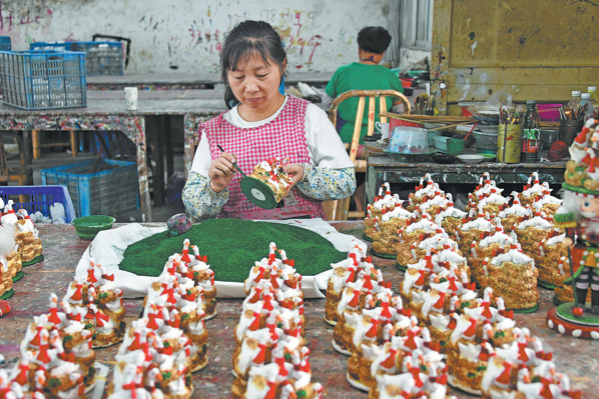
What on earth is going on downstairs?








That's The question everyone should be asking about China's ties with Africa
International aid to Africa, and the way it is being reported in the media, remains controversial.
When the British government announced recently that it would cut off aid to South Africa in 2015, choosing instead to base its future relationship with the country on trade rather than aid, it was met by a furious reaction from the South African government. This step was interpreted by some as related to South Africa's inclusion in the BRICS bloc of emerging economies and closer ties to China.
The British Foreign Secretary William Hague said the country would not "continue to give aid to countries that are raising their incomes, that have growing economies" - which is why Britain had also stopped its aid to India and China.
This announcement brings to mind the debate a few years ago following the publication of the book Dead Aid: Why Aid is not Working and How There is a Better Way for Africa by the Zambian-born, Oxford-trained economist Dambisa Moyo. She argued that the billions of dollars in international aid sent from rich countries to African countries were not making a difference to the economic prosperity of the continent. Her conservative views that favored global markets - investement and trade - above aid, have been criticized as wrong, naive and misinformed. Her positive view of China's engagement in Africa was also based on the notion that China brings an "elixir" of job opportunities, investment and trade that would transform African countries.
The distinction between trade and aid, and how China's involvement in Africa should be analyzed and understood, was again the topic of debate recently following the publication of a report by the organization AidData on Chinese aid in Africa.
This report, which was quickly picked up by global mainstream media such as the British newspaper The Guardian (which published an impressive interactive story about the report), said China had committed $75 billion on aid and development projects in Africa over the last decade.
The Guardian saw this as a sign of "Beijing's escalating soft power 'charm offensive' to secure political and economic clout on the continent". It was also seen as a challenge to what had until the report's publication been seen as China's main reason for involvement in Africa, namely the search for natural resources.
However, the report indicates that there are much fewer mining projects than health, education and social infrastructure projects. These projects include initiatives such as: a malaria prevention center in Monrovia, Liberia; a National School for Visual Arts in Maputo, Mozambique; and an opera house in Algiers, Algeria. The report also shows that Chinese government support includes sending doctors and teachers to African countries, Chinese-language classes abroad and sports stadiums and concert halls.
The Guardian concluded that Beijing's support for these social and cultural projects, and the relatively small proportion of what would qualify as "official development assistance", have provided evidence to commentators that see China's involvement in Africa as being underpinned by a stronger geopolitical agenda than the "dominant narrative" has suggested.
However, the AidData report was immediately criticized as creating a misleading impression about Chinese development help to Africa. Deborah Brautigam, professor and director of the International Development Program at Johns Hopkins, damned the figures in the report.
The figures were "way off", she said on her blog. The main problem with the AidData figures, Brautigam said, was the methodology used to arrive at the conclusion about China's soft power efforts. The AidData report relied largely on media reports of Chinese project financing. Brautigam acknowledges that the data may provide a good start for research into Chinese development aid, but that even while valuable as an exploratory attempt, the report cannot yet hope to provide any conclusions.
In the debates about the report, it was also pointed out that the AidData report and the surrounding media discourses do little to shine a light on the non-state engagements between China and Africa that are bound to become much more influential.
In a recent book chapter in the South African Human Rights Commission's publication State of the Nation, Yoon Jung-park and Chris Alden distinguish between what they refer to as the "upstairs" and "downstairs" dimensions of China in South Africa. While the "upstairs" dimension - official ties between South Africa and China - is of increasing importance, the "downstairs" dimension of Chinese migrants in the country is bound to intensify whatever official relations exist.
The media usually concentrates on the "upstairs" engagement between states, on the level of political and economic ties, but it is the "downstairs" relations that will shape the way that people experience and view the China-Africa dynamic in years to come. As the journalist Howard French said in a podcast following the AidData controversy, the interpersonal contact between Chinese migrants and Africans are likely to become increasingly important in how the relationship between Africa and China will play out in years to come.
The creation of new communities of Chinese migrants in Africa, the everyday interactions between Chinese and Africans in Guangzhou and Johannesburg, and how these will change the social landscape of Africa and also China, is an area that is worthy of much more media attention.
The author is professor and deputy head of the School of Journalism and Media Studies at Rhodes University, South Africa. The views do not necessarily reflect those of China Daily.
(China Daily Africa Weekly 05/31/2013 page10)



Today's Top News
- ROK leader's visit to help boost bilateral ties
- China's new plan, world's new opportunities
- Expert: US actions, words don't match
- China's diplomacy to blaze new trails
- Visits point way to better future for all
- PLA tests joint combat strength for second day