Some analysts like to see things as zero-sum game







Chinese President Xi Jinping wrapped up his nine-day trip to Latin America on July 23, attending the sixth BRICS summit, visiting four nations and meeting more than a dozen leaders from the region.
The announcement to launch the BRICS bank has been seen a major achievement for the emerging economies to make their voice heard and to address their concerns in development, such as in infrastructure construction.
Despite their differences, the BRICS nations of Brazil, Russia, India, China and South Africa all want a multi-polar world not dominated by a single superpower.
Xi's visit to Brazil, Argentina, Venezuela and Cuba was equally fruitful. China signed 150 agreements, worth $70 billion, with the four countries, covering every field from energy, mining, electric power and agriculture to science and technology, infrastructure, finance and manufacturing.
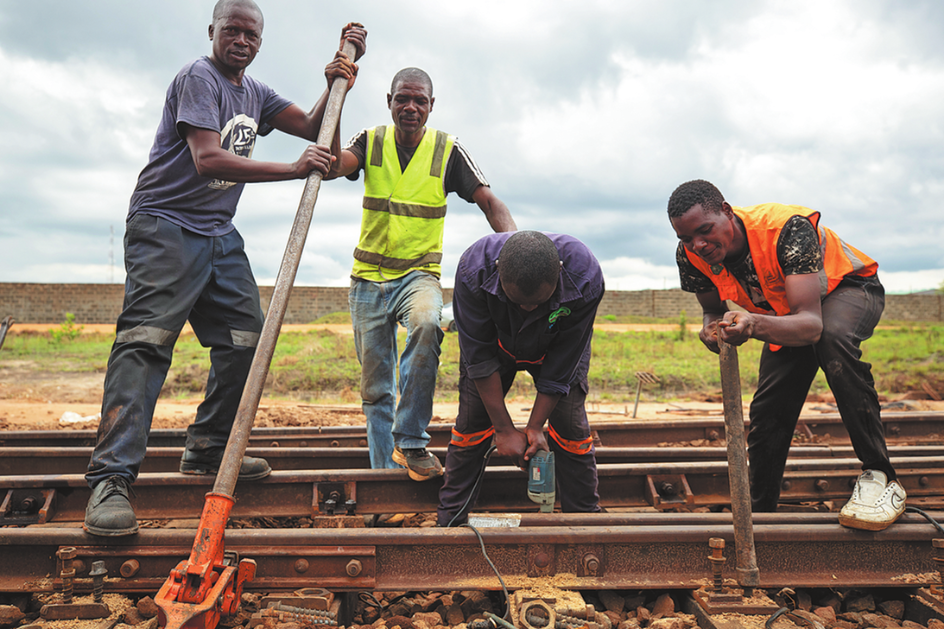
China, Brazil and Peru pledged to join hands in building a railway linking the Peruvian Pacific and the Brazilian Atlantic coasts, potentially benefiting not just Peru and Brazil but every other nation in the region and the world.
All these agreements are win-win in nature and have been welcomed by leaders and people in these countries.
Brazilian President Dilma Rousseff applauded the transcontinental railway for its "important role in promoting Brazil's economic growth and lifting the region's development."
She described economic exchange between China and Brazil as extremely important, saying that the two economies are developing in a stable, bright and strategic fashion through Chinese investment in Brazil and deepening cooperation in a wide range of areas.
During the trip, Xi also vowed to reach $500 billion in total annual trade between China and Latin America within a decade as well as $250 billion in total Chinese foreign direct investment there.
Trade and investment were just part of the trip. China also signed agreements in education, sports and cultural exchanges to boost people-to-people ties. For example, China promised 6,000 Chinese government scholarships to Latin Americans and holding a grand China-Latin American culture exchange year in 2016.
China and Latin American nations, which are all developing countries, share the same aspiration to improve their people's living standards, and they see huge potential in cooperation based on mutual respect and win-win principles.
While win-win has become a catchphrase in China, many people in the West still see things in a zero-sum game.
For a long time, China's trade and investment in Latin America has been interpreted as a bid to counter the US influence, despite the fact that the US remains the largest trade partner for Latin America and their trade continues to grow fast. Chinese activities have also been described as extracting resources despite the fact that Chinese investment is increasingly diversified.
Now with Japanese Prime Minister Shinzo Abe embarking on a five-nation tour to Latin America, many Western analysts have interpreted the trip, only days after Xi's visit to the region, as one to counter China's influence.
To these people, one country's gain must be another country's loss and there is no win-win game. But that is not true as Latin American nations have enjoyed growing trade and investment with many countries in the world.
To many Chinese, many of these analysts are either ignorant or biased against China. While they characterize China's trade as resource extraction, none of them has described Abe's trip as extracting resources despite the fact that Japan's imports from Latin America are largely commodities. Commodity trade also features prominently in US trade with both Latin America and Africa.
Xi has said repeatedly that the Pacific Ocean is big enough for China and the US. Latin America is clearly big enough for everyone as countries in the region expand their trade and investment relations with the rest of the world.
Unlike some other countries, China harbors no geopolitical ambitions in the region, such as building military bases or intervening in these nations' domestic politics, principles on which China has stood firm over the years.
In fact, China maintains strong trade and investment ties with both the US and Japan despite their differences.
China has remained Japan's largest trading partner, both in imports and exports, after tensions between the two countries escalated over the Diaoyu Islands in East China Sea following the Japanese government's nationalization of the islands in late 2012.
China has also remained the second-largest trading partner for the US, trailing Canada, despite their bickering over cyber security and a number of other issues.
It is true that Chinese are not ready to support Japan's bid for a seat at the United Nations Security Council, or not even a non-permanent seat. That is also true for South Korea, which, like China, is deeply disturbed by Japan's attempt to whitewash its World War II atrocities.
However, to interpret every leader's trip as countering another's influence looks quite simple-minded.
Contact the writer at chenweihua@chinadailyusa.com