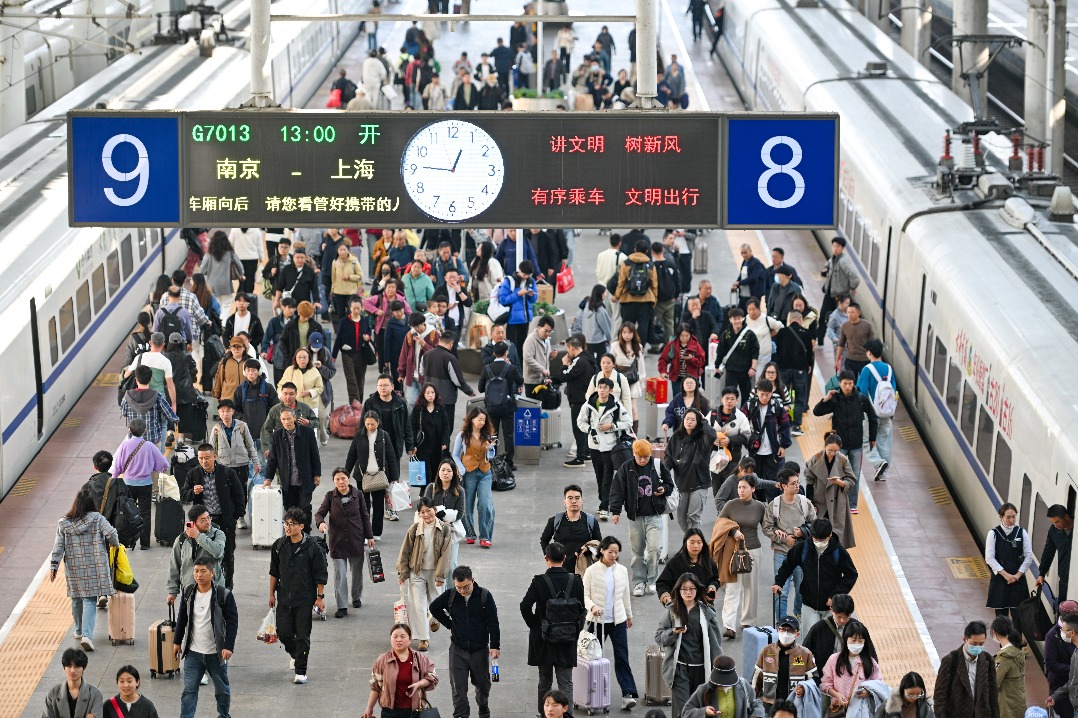
Is this fall symbolic or substantive?







Policies and rationales which lie behind the shift in China's foreign exchange reserve warrant much closer attention
China's foreign exchange reserve, the largest in the world, fell below the critical level of $3 trillion (4.10 trillion euros; £3.50 trillion) for the first time since the start of the country's exchange rate reformon August 11, 2015.
Apparently, the $3 trillion mark is no different from any other arbitrarily set mark, such as $3.1 trillion or $2.9 trillion, and should not be used to evaluate the adequacy of China's foreign reserve-or assets denominated in foreign currency.
Even at the $3 trillion dollar mark, China's foreign reserve still stood at a much higher level than that of Japan, which claims the second-largest foreign reserve in the world.
Further, it is probably encouraging to China's policymakers that the speed at which the foreign reserve dwindled has indeed slowed recently, instead of speeding up, which is reassuring to both domestic and international investors and corporations, signaling the potential for further stabilization of capital account flow and the RMB exchange rate.
That said, several more substantial matters loom more clearly.
First of all, the $3 trillion mark may indeed serve as an important watershed in an unexpected way. Depending on varying assumptions and criteria implemented, many believe China's optimal or equilibrium foreign reserve should be somewhere between $1.5 trillion and $2 trillion. Unlike what many may have imagined, foreign reserve is not something that can be completely exhausted, without wreaking some havoc on a country's financial stability and economic growth.
If one were to use the rule of thumb mark of $2 trillion as the optimal level of foreign reserve, then the $3 trillion mark suddenly becomes not only meaningful but important. The $3 trillion mark roughly indicates how China's foreign reserve has come from its peak down to its optimal level.
Given the largely one-directional downward movement in China's foreign reserve in the past 18 months, someone applying a simplistic linear projection may rush to the conclusion that the reserve will drop further to $2 trillion in another 18 months, or even further down within three years to $1 trillion. This is, however, a level that is substantially lower than what many believe is necessary to support China's foreign financing or even current trade activities.
Of course the slowing of downward movement in the most recent past is reassuring and helpful to prove that the above linear projection is naive. Nevertheless, it is also important to bear in mind that the slowdown also came at a time when China's policymakers are stepping up the implementation of many existing controls on the capital account, which, by definition, can stop the hemorrhage in foreign reserve.
In addition, if one were to pay closer attention to the change in the foreign reserve, it becomes clear that the recent weakening of the US dollar and the strengthening of the yuan's exchange rate, has also done its magic of making the reduction of foreign reserve seemless.
Put differently, if there had not been changes in the yuan's exchange rate against the dollar, China's foreign reserve would have stood at a lower level than what was recently reported.
With an increasingly uncertain global and domestic economic situation, and with the yuan reportedly reaching its equilibrium exchange rate level, future fluctuations in the exchange rate may make the foreign reserve appear smaller, rather than greater-the opposite of what has happened during the past month.
Probably the bigger question is: With decreasing foreign reserves, will China still have the resolve and resources to push forward a series of critical economic and financial reforms, such as the reform of state-owned enterprises, fiscal and tax reforms and the reforms in the country's healthcare and social security systems?
Internationally, the strategically ambitious Belt and Road Initiative requires substantial investment support, which also requires increasing deployment of foreign reserves into longer-term, less liquid projects, further reducing the size of the foreign reserve.
In sum, even though the $3 trillion mark may seem symbolic and perceived as not carrying much weight by itself, the policies and rationales behind the shift warrant much closer attention.
The author is oceanwide professor of finance at Tsinghua University in Beijing. The views do not necessarily reflect those of China Daily.
(China Daily European Weekly 02/24/2017 page8)





Today's Top News
- Xi congratulates Doumbouya on election as president of Guinea
- Xi says major countries should take lead in abiding by intl law, UN Charter
- Xi meets Taoiseach of Ireland
- New Year holiday drives travel peak
- ROK leader begins state visit to China
- AI must serve humanity, not endanger it