Schedules and roadmaps to be made to open finance industry







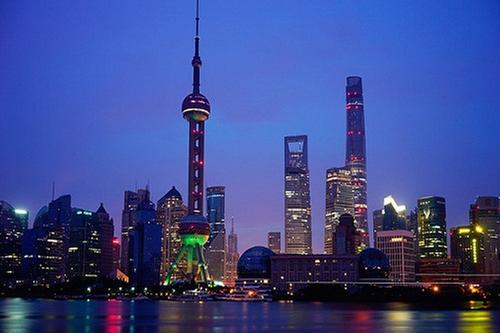 |
| Lujiazui, the main financial hub in Pudong, Shanghai. [Photo/VCG] |
On August 16, the State Council issued A Notice on Measures to Promote Foreign Investment (Document No 39), stating schedules and roadmaps will be made to further lower market access thresholds in industries including as special vehicle and new energy vehicle manufacturing, ship design, aircraft maintenance, international sea transportation and railway passenger transportation, along with business sites of internet access services, call centers, gas stations, artist booking agencies, banking, securities and insurance. The document, which follows a State Council executive meeting on July 28, is the second piece designed to attract foreign investment and issued within the year. It is rare for the State Council to issue two documents on foreign investment within one year.
Based on experiments in Free Trade Pilot Zones, China has started to grant pre-entry national treatment with negative listing to all foreign investments from October 2016 nationwide. This is an important unilateral proactive investment liberalization measure. In principle, foreign investors face the same requirements as local investors when setting up businesses; however, exceptions are listed on the negative list. More than 95% of cases of foreign invested enterprises do not need to go through the application and approval procedure as in the old regime any more, and only a simple registration procedure is required. A revised Catalogue for the Guidance of Foreign Investment Industries, which includes a negative list, has been implemented since July 28. The new catalogue has lowered the investment market access thresholds, leaving only 63 items on the negative list down from 93 items in previous versions. A negative list, with an even lower threshold, has also been implemented for free trade pilot zones since July 10.
While China has made progresses in investment liberalization and facilitation, certain industries, otherwise known as sensitive industries, are still with significant entry barriers to foreign investment. Finance is such a sensitive area. For life insurance, securities brokers, investment fund management companies, futures investment companies, foreign ownership shall not be more than half. Although wholly foreign-owned banks are allowed in the banking industry, the total share of foreign capital as originators or strategic investors in a single Chinese commercial bank shall not exceed 25%.
Regulators have started to loosen restrictions since the beginning of this year. US funded firm Fidelity International was awarded a license allowing it to invest in China's financial markets on behalf of Chinese investors in January. In March 2017, China Banking Regulatory Commission (CBRC) further opened up the banking industry by allowing wholly foreign-invested banks and joint venture banks to deal with certain business, such as underwriting treasury bonds without applying to CBRC for permission; instead they only need to report to CBRC within five days of the deal completing.
However, China's finance regulators are also concerned with the risk brought about by opening up finance industry. China's foreign exchange reserve plunged from almost $4 trillion in June 2014 to around $3 trillion in January 2017. Certain measures have been adopted to curb capital outflow. The quinquennial national financial work conference, which ended on July 15, has decided to set up a new financial stability and development committee to strengthen regulation to root out systemic risk in the financial sector. With more stringent regulation, a doubt has arisen as to whether China will further open up its finance industry.
On a meeting of Central Leading Group on Financial and Economic Affairs on July 17, President Xi Jinping reaffirmed China's plan to open up the finance industry while he stressed the importance of regulation. The State Council Document No 39 is the latest signal to show China's determination of further opening-up. Schedules and roadmaps to open up certain industries shall be published soon. According to the State Council executive meeting on July 28, such schedules and roadmaps shall be made no later than the end of September in principle.
We will have to wait and see what these schedules and roadmaps will look like. For the finance industry, certain foreign share restrictions may be eliminated. Some industries may be opened first in free trade pilot zones before other regions. Regulations may be revised or made if necessary. No matter what the plan is, businesses will face fewer roadblocks and enjoy more opportunities.
The author is a professor at the University of International Business and Economics, and Non-resident senior fellow with the Center for China and Globalization.