A New Era of Cooperation for Central Asia







Central Asia is a dynamic and fast-changing region. Over the past couple of decades, it has shown that increased regional cooperation is indispensable to achieving development goals.
The Central Asia Regional Economic Cooperation program started operations in 2001 and has made significant contributions to the region's growth. The program has grown steadily to 11 member countries and has financed more than $30 billion of investments to enhance transport and energy linkages and boost cross-border trade. Over a third of this amount, or $10.5 billion, has come from the Asian Development Bank, which has supported CAREC since its inception.
Despite their rapid development, countries in the region face significant challenges. The spillover impacts of global economic and financial crisis and of lower oil and gas prices have been acute. Climate change is a major global and regional challenge. These issues do not respect borders and underscore the value of working together to navigate the shifting development landscape.
The CAREC program needs a scaled-up mandate to become more effective and relevant in the years ahead.
Its CAREC 2030 strategy, unanimously adopted on Oct 27 by member countries in Dushanbe, Tajikistan, shows the region is ready to fully achieve its enormous potential by connecting its people, policies, and projects. I see four key ways in which it can create the conditions for future growth, stability, and prosperity.
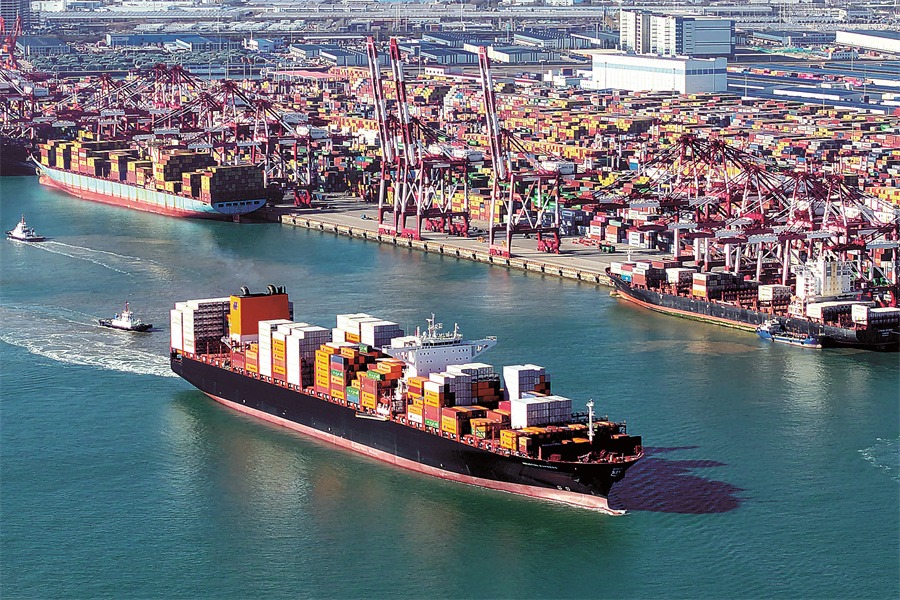
Firstly, it will deepen support for traditional areas of cooperation, such as transport, energy, and trade facilitation. Regional cooperation can't be achieved without the basic building blocks of good roads and railways, reliable power supplies, and the ability of businesses to seek new markets.
Infrastructure investments that integrate new technologies, coupled with appropriate regulatory reforms, will help accelerate the region's integration with global value chains and support the adoption of clean and renewable energy.
Secondly, there is a pressing need for macroeconomic policy dialogue among member countries to promote economic and financial stability. The CAREC program has provided a practical and flexible platform for infrastructure investment and policy planning.
Through initiatives such as a planned forum for countries to share experiences on banking and market regulation, CAREC 2030 can also help improve the region's investment climate, sustain economic growth, and manage the impact of cyclical economic downturns.
Thirdly, for Central Asia to truly prosper it must commit to cooperating in new areas. CAREC 2030's support for regional initiatives in tourism, agriculture, water resources, health and education will help countries achieve their sustainable development goals. Deeper cooperation will also help countries reach their targets under the COP21 climate agreement.
Cross-border tourism, value-added agricultural exports, and educational exchanges have tremendous untapped potential in Central Asia. But these can only be unlocked through a regional agenda where countries work together and share expertise.
Finally, development in Central Asia will depend crucially on building the capacities of its own people. Enhancing people-to-people contacts will help deepen intra-regional understanding and increase personal mobility. Enhanced business-to-business contacts are vital to increase private sector development and create jobs.
Greater labor mobility will allow people to improve their skills and obtain new jobs. It is encouraging that CAREC 2030 has embraced in principle a regional labor market information system focusing on skills needs and regional job search and placement, as well as cross-border higher education and technical training.
CAREC's new strategy will enhance its convening power for high-level policy dialogue among ministers and senior officials on key development issues. This dialogue needs to be backed with high-quality research by the CAREC Institute, which recently became an intergovernmental organization, and from member countries and development partners to build capacity in areas including education, health, and financial and economic stability.
The broader scope of CAREC 2030 provides new space for development partners like ADB to further support the region's prosperity. It also opens the prospect of exciting new partnerships with other regional programs such as the Belt and Road Initiative.
ADB will commit $5 billion to support CAREC 2030 in the next 5 years. We have just approved a new $800 million Multi-Tranche Financing Facility for CAREC road corridor development in Pakistan. Next year, we will finance the first phase of the Turkmenistan-Afghanistan-Pakistan transmission line project for $150 million. ADB has also already begun discussions for regional projects in agribusiness, tourism, and railways—areas covered in CAREC 2030.
We seek the strong support of all member countries and development partners for the financing and successful implementation of the new CAREC strategy.
By harnessing the collective energies of CAREC member countries, the new strategy will help the region to capitalize on its unique geographical position and proximity to global markets. There is vast potential to improve connectivity and trade between the region's countries, to Europe and beyond.
CAREC 2030 is an opportunity to promote growth, stability, and prosperity in Central Asia. By working together, countries and development partners can secure the future that the region and its people deserve.
Takehiko Nakao is President of the Asian Development Bank