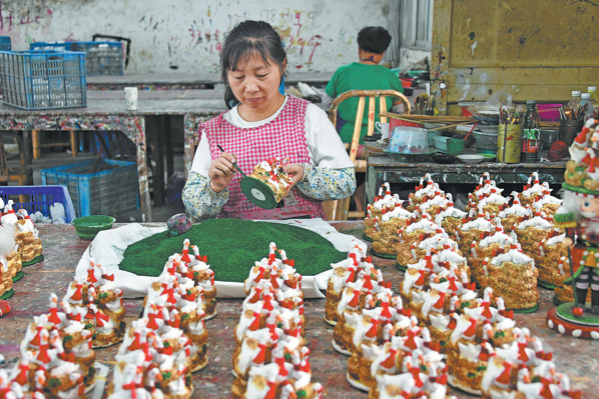
Living standards for our young and old are intertwined







Depending on which statistics you use and how you define "territory", Hong Kong either has the lowest or one of the lowest fertility rates in the world, at about 1.2 children per woman. It also has one of the latest ages of marriage in the world, and one of the highest rates of childlessness.
Demographically this matters because when combined with the world's highest life expectancy, Hong Kong is aging very rapidly. Unlike some of our neighbors, however, we use migration as a tool to prevent rapid population decline. This is economically positive but many see it as a threat to the maintenance of "Hong Kong culture" and social cohesion.
However, as a demographer and as a citizen, I am more concerned about why Hong Kong has the lowest fertility rate in the world. Do people in Hong Kong not like children? Are we disproportionately beset by a "millennial" individualism which puts consumption and travel over the family or the next generation?
While it might be easy to think this is the case, the reality is rather less dramatic; but at the same time more complex. Surveys repeatedly tell us people not only want to have children and would like to have more than they already have or the average number for the territory. People want to get married and have a home for themselves.
Contemporary Hong Kong is just not an easy place to start - and grow - a family for a huge variety of reasons. Think about housing; childcare; the struggles to find school places; the cost of living; the challenges of obtaining, and keeping, a decent job and the impact upon careers for new parents, especially mothers. Rather than being a problem in itself, then, the low fertility rate simply reflects these challenges. The very low fertility rate, then, reflects frustrated ambitions rather than a selfish eschewing of generational responsibility.

The chief executive's Policy Address and Agenda published recently represented an opportunity to explore what the government intends to do to help families and young people to achieve their aspirations. In the Policy Agenda section explicitly entitled "Providing Better Support for People to Start a Family", vague promises were made about "providing more public housing and maintaining the steady and healthy development of the private property market". (How many readers would regard the recent development of the private property market as "steady and healthy"?)
However, this promise of more public housing was tied to the Housing Authority's Harmonious Families Priority Scheme which encourages young families to "live with or near their elderly parents-dependents". This is in order to establish "a family-based support network" to "promote mutual care among family members". Grandparents play a crucial role in care in Hong Kong but it is naive to think that as society changes, preferences for inter-generational living will stay the same. Also, think of the practicalities of a three-generation household in a 400 square foot flat, and then consider the decision to have a second or third child?
As well as filial piety being a cornerstone of Chinese culture, grandparenting has been widely shown to be hugely beneficial for both children and the grandparents themselves. Grandparents love their grandchildren; children love their parents. That hasn't changed. But it is again naive to think the world has not. Marrying doesn't just mean a wedding and a certificate. It can involve a complete reorientation in life. With little tangible support from the government, the financial, physical and social care of the elderly rests on the shoulders of precisely the same people who are either reticent to start a family, or hesitant to have more than one child. As such, policies which support older people are, perhaps counter-intuitively, policies which support the young by alleviating some of this burden.
But life has also changed for older people. The days of a life of work followed by a short disease and death are gone. Opportunities for leisure, travel and a full and rewarding retirement have grown alongside improved health and incomes. Of course, grandparents (usually) adore spending time with grandchildren. But for this responsibility for full-time care to be taken as a given is not only a liberty, but is likely to be unsustainable as lifestyles change.
Hong Kong's long-term interest demands that the government and employers adopt a much more proactive role in supporting the family unit across generations. Workplace conditions and attitudes toward gender roles need a drastic rethink so that women are not forced to make a choice between their career and motherhood. More extended maternal and paternal leaves and expanded nursery care services are good starting points.
At the end of the day, our society and government need to prioritize social harmony and quality of life over the blind pursuit of economic growth. We need to have a conversation over these long-term issues and I believe the vast majority of our citizens would opt for the former given a choice. As the famous psychiatrist Milton Greenblatt once said: "First we are children to our parents, then parents to our children, then parents to our parents, then children to our children." Supporting and strengthening these intergenerational linkages, rather than seeing them as obligations to be shouldered solely within families, would be a good place to start.
The author is an associate professor of social science and public policy at the Hong Kong University of Science and Technology.
(HK Edition 11/10/2017 page12)



Today's Top News
- President Xi to deliver New Year's message to ring in 2026
- Xi's diplomacy in 2025: Shedding light on a world at crossroads
- China to apply lower import tariff rates to unleash market potential
- China proves to be active and reliable mediator
- Three-party talks help to restore peace
- Huangyan coral reefs healthy, says report