APEC and the future of trans-Pacific free trade







 |
Regional integration and free trade have been high priority areas for quite some time. In fact, the proposed Regional Comprehensive Economic Partnership has made considerable headway over the past few years and shown much promise. Unfortunately, it does not include any country from the Americas, which limits its potential to enhance trans-Pacific trade, although there is no reason why this could not be remedied in the future, say, by opening it up to "non-regional" members.
Then there is the Free Trade Area of the Asia-Pacific, APEC's grand project, whose feasibility study was submitted to the members at the 24th APEC Economic Leaders' Meeting in Lima, Peru, in November last year. But still there is a long way to go before it is realized. Another is the "TPP 11", a variant of the Trans-Pacific Partnership, minus the United States. A fourth includes the four members of the Pacific Alliance (a Latin American integration scheme), that is, Chile, Colombia, Mexico and Peru, plus Australia, Canada, New Zealand and Singapore, whose joining the alliance as associate members is currently being negotiated.
As can be seen from the veritable smorgasbord of alternatives on free trade and regional integration in the Asia-Pacific region, neither is particularly easy to implement or all-encompassing in its reach. Yet that is no reason not to keep pushing for them or for not exploring their complementarities.
Beyond these mega-regional agreements, which seemed to be the wave of the future only a few years ago, but now face serious obstacles, we should keep in mind that the cause of free trade can also be propelled bilaterally, one FTA at the time, as it were.
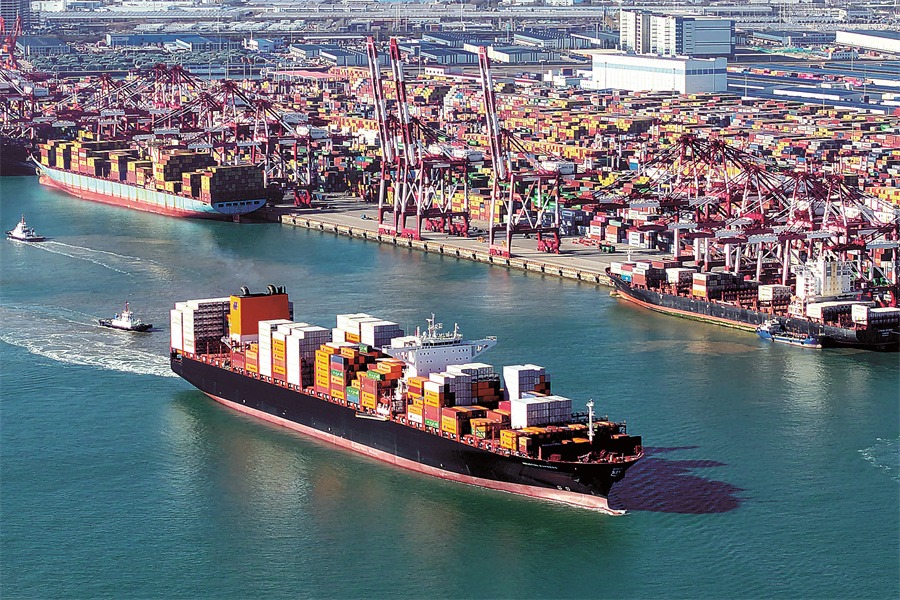
That is exactly what Chile and China did when they signed their FTA way back in 2005, the first such agreement China inked with any single country. Bilateral trade has increased fourfold since then, reaching $31 billion last year, and is widely considered a great success.
Yet much has happened in these 12 years, and the FTA text has been upgraded to widen its focus from just trade in goods to also cover services which is fast moving closer to center stage (in fact, services already represent more than half of China's GDP). This upgrading was done in the course of four negotiating sessions this year, and a protocol dealing with such cutting-edge disciplines as e-commerce, government procurement and competition policy has been agreed on and will be signed in the presence of Chilean President Michelle Bachelet and Chinese President Xi Jinping in Da Nang during the APEC meeting, thus deepening and strengthening the FTA.
There is a lesson here for all those who want to see it. At a time when protectionism and isolationism have raised their ugly heads in a number of countries, China and one of its leading trade partners in Latin America are moving forward to further liberalize trade and open themselves up to trans-border commerce.
Starting in the 1990s, Chile has been at the forefront of developing what has come to be known as a "lateral" international trade policy, based on the pursuit of bilateral or "plurilateral" FTAs with as many economies as possible, and today it has the largest number of FTAs of any country (25 with some 64 countries). In the early 2000s, this was new terrain for China, but it has been catching up fast, as subsequent FTAs with New Zealand, Australia and the Republic of Korea show. However that may be, China and Chile both are considered to be among those that have made the most of globalization by opening up their economics and seizing the many opportunities offered by the global economy.
Yes, we must continue to push for inter-regional trans-Pacific agreements that facilitate and promote more trade and investment across the world's largest ocean, and APEC is a critical forum for this purpose. But we should not forget that free trade should be propelled on all fronts-bilateral, "plurilateral" and multilateral-and no instance is too small for that.
The author is the ambassador of Chile to China.