Australia needs to better understand China







With the promotion of highly complementary structures in trade, relations between China and Australia made great progress in the 21st century, and until last year, China had been Australia's largest trade partner for eight straight years.
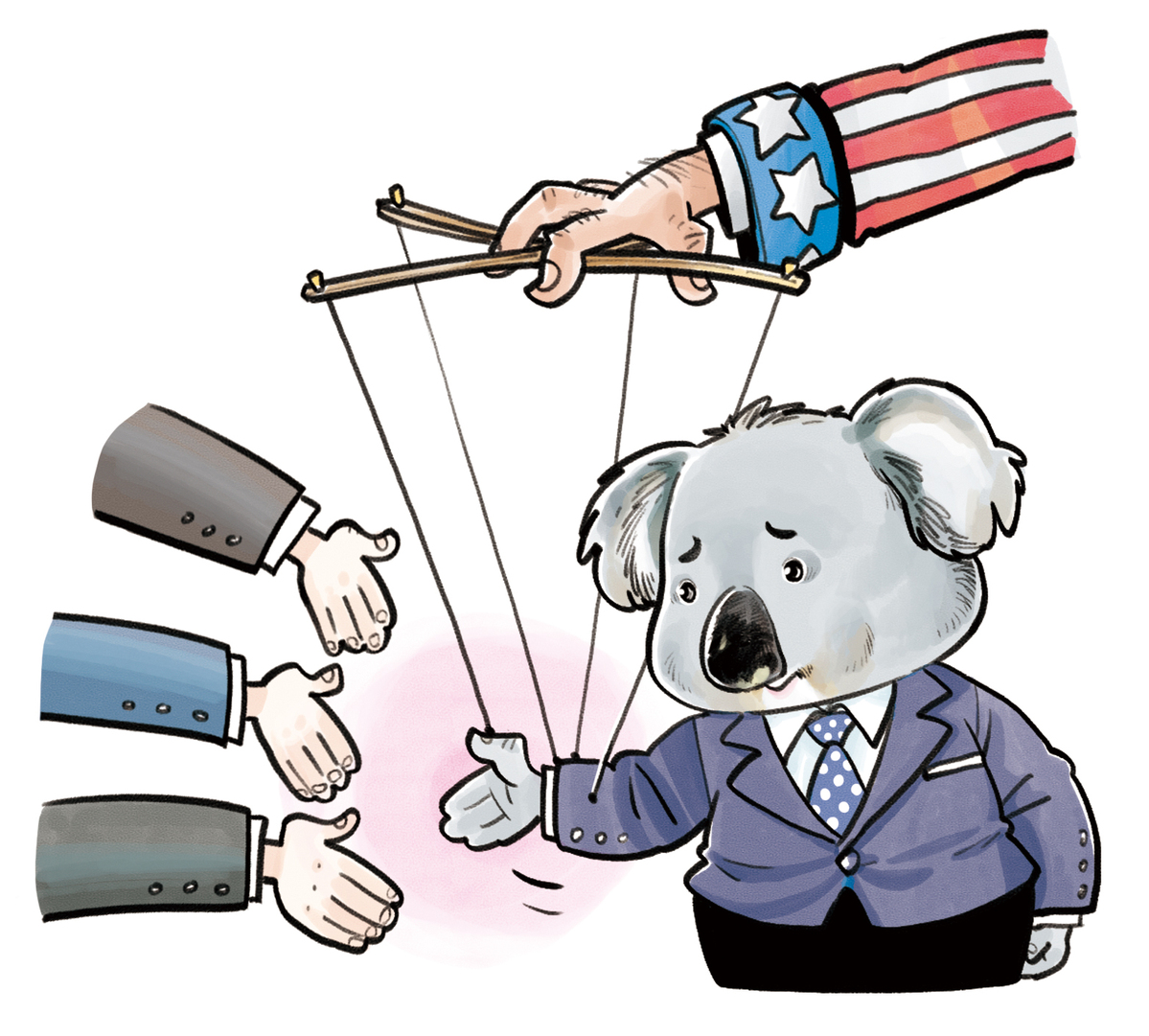
But the close economic cooperation and the comprehensive strategic partnership between the two countries helped little in developing bilateral political trust. For a lack of deeper understanding of their different situations in different fields, Australia has maintained strict vigilance against China.
Australia's identity recognition influences its politics. As part of the British Commonwealth of Nations, the culture of Australia has been deeply influenced by European immigrants, British immigrants in particular. No wonder Australia defines itself as a Western country in the Asia-Pacific region, for which it toes the line of Western political institutions and treats the differences with other cultures, including Chinese, from the perspective of a Western country.
A Western country adhering to a multi-party political system often has difficulties in understanding socialism with Chinese characteristics under the leadership of the Communist Party of China. And Australia's identity recognition makes it support the interests of the West, in addition to its own benefits.
Therefore, Australia may not agree with China's efforts to improve the current world order that was established by the West. When the United States rose in power and status in the 20th century, especially after World War II, Australia became one of its important partners.
The long distance from countries with a similar culture in the West notwithstanding, Australia became more sensitive to other Asia-Pacific countries with different cultures. It has viewed China's rapid development over the past four decades with both amazement and concern.
Beijing's actions in recent years to assert its sovereignty and territorial integrity have been misunderstood by Canberra as expansion. As a result Australia now wrongly doubts that China's peaceful rise will have a negative impact on the world order and compromise Canberra's interests.
China's large share in Australia's foreign trade made Australia enchance its vigilance against China, based on unwarranted fear that Beijing would take advantage of its economic strength to derive political benefits from Canberra. Thus, Canberra attaches more importance to the US-Australia alliance not only because of identity recognition but also to strengthen its security.
To some extent, thanks to the effects of Western culture and the Cold-War mentality, Australians have misunderstood China and thus prefer excluding China from their equation. As for the Australian government, its attitude toward China has been swinging. For example, Australian Prime Minister Malcolm Turnbull said China posed no threat, though it is capable of doing so.
China is committed to peaceful development, for which it seeks win-win cooperation. So Australia has no reason to have such doubts. But if Australia refuses to understand China and accept the development of non-Western countries, the underlying doubts could become insurmountable obstacles for further cooperation between Australia and many other countries, not just China.
So China should improve communication with Australia, striking a balance between trade cooperation and political trust by better presenting China's commitment to peace and the great contributions China-Australia cooperation has made to their respective development. And more attention should be paid to civil and academic communication, which can help Australians to better understand Chinese people and policies.
The author is an adjunct researcher at the Center for Australia Studies, China University of Mining and Technology.