Media games won't hurt Belt and Road planned projects







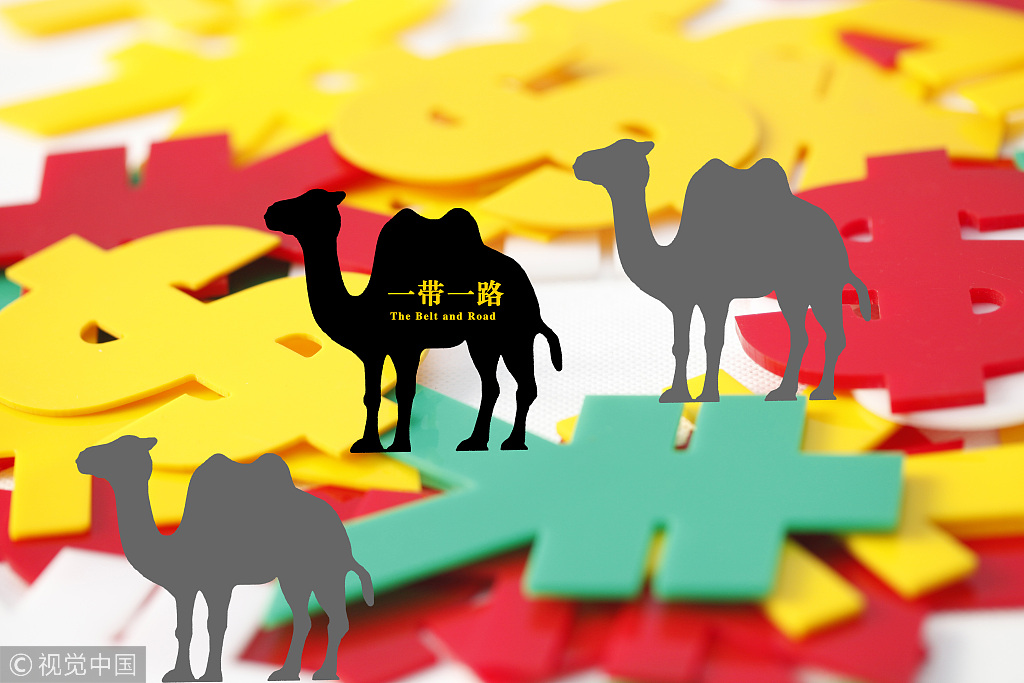
Last week, a sensational headline, "EU ambassadors band together against Silk Road", appeared on Handelsblatt Global, the digital edition of the German business newspaper Handelsblatt, saying 27 of the 28 ambassadors of European Union member states to Beijing have sharply criticized China's "Silk Road" projects. The ambassador from Hungary was reportedly an exception.
Such misleading media tactics are appalling, to say the least.
If the ambassadors truly "band together against" the Belt and Road Initiative, they would risk not fulfilling their responsibilities entrusted by their state leaders. French President Emmanuel Macron, British Prime Minister Theresa May, Dutch Prime Minister Mark Rutte and Austrian President Alexander Van der Bellen have all pledged to deepen cooperation on the Belt and Road Initiative during their visits to China in the recent past.
In fact, President Xi Jinping and May reiterated their commitment to the Belt and Road projects, among other consensuses, during their conversation on the phone on Thursday. The EU countries have gradually accepted the initiative since Xi proposed it in 2013.
Against this backdrop, it is more likely that the ambassadors of the EU states to Beijing are coordinating their actions to better cooperate with China, by summarizing the experiences and lessons gathered during the previous years. After all, China has entered into synergy agreements within the Belt and Road Initiative framework at both the EU and member-state levels. The ambassadors cannot afford to block the initiative-simply because EU countries already have high stakes in and benefited a lot from it.
Last year, I traveled to couple of European countries to know their expectations from and suggestions on the initiative. True, the projects were just unfolding because the proposal, to better connect Asia, Europe and Africa, was less than four years old then. But there were also excellent examples of breakthroughs and successes, such as the freight trains linking China and European cities and Chinese investment in European ports.
Most of the European countries are founding members or members of the Asian Infrastructure Investment Bank, in which China has invested a lot but vowed not to use its funds to finance its own projects. Besides, Greece, a EU member, has greatly benefited from Chinese shipping giant COSCO's operation in Piraeus.
If the ambassadors really meant to oppose the initiative, they would be playing the same game as US President Donald Trump, in a bid to gain the upper hand at the negotiation table with China, which would be deplorable.
Apart from the projects, the initiative has also encouraged the less-developed countries to take advantage of their geographical locations to develop themselves into regional hubs. Their ambitions and dreams are inspiring, which is one of the most important roles the initiative has played.
Like China, the EU too faces challenges of regional balance and inclusive development. Greece, Hungary, Poland and the Czech Republic have started to redesign their national programs by looking eastward and setting up goals to catch up with Western Europe thanks to the Belt and Road projects.
Talking with people on the ground in Europe, I have seldom come across those opposing the Belt and Road Initiative, although Europeans in general need more detailed information about it.
Lest the skeptics forget, the Belt and Road projects are not China's alone but belong to the whole world. So every participant in such projects bears the responsibility of spreading the right message and shape agreements.
Apart from the infrastructure and connectivity projects, healthcare, education, tourism and even digital cooperation have been integrated into the Belt and Road proposals.
In a split world which is being damaged by isolationism, unilateralism and trade protectionism, even military muscles, the voices that nurture trust and promote cooperation are valuable. And that is exactly what China and the EU should do: nurture trust and promote cooperation to boost regional integration and multilateralism.
The media are no exception to that rule.
The author is deputy chief of China Daily European Bureau.