'Contingency' remarks threaten peace in the Asia-Pacific







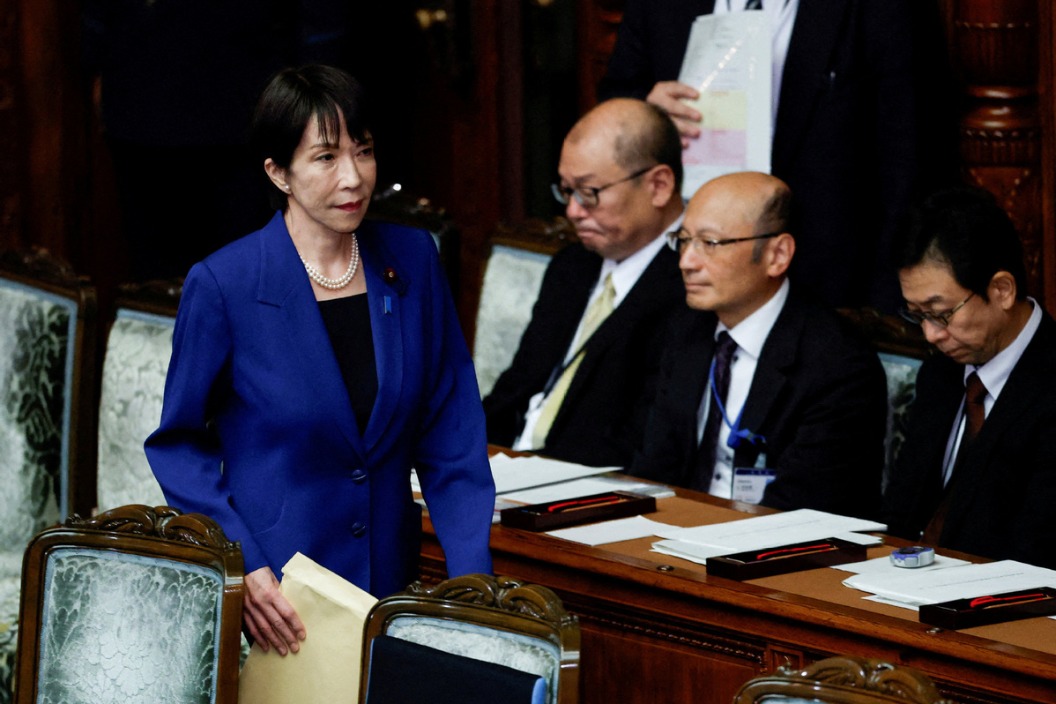
Japanese Prime Minister Sanae Takaichi insists that her now-infamous remarks — that Japan may deploy military force if a "Taiwan contingency" leads to a "survival-threatening situation" for Japan — are merely an articulation of Tokyo's defense laws. However, Beijing heard something entirely different: Japan declaring itself a co-belligerent-in-waiting in any Taiwan contingency, stepping squarely into what China considers the most sensitive internal matter of its sovereignty.
Beijing has not been subtle in showing its displeasure. It filed a complaint with the United Nations, issued travel and study warnings for Chinese citizens traveling to Japan, hardened its rhetoric on "crushing foreign interference" and sustained maritime pressure in the Diaoyu waters through coastguard and drone deployments. Takaichi's remarks have opened a geopolitical Pandora's box, with implications that go far beyond Japan and China, shaking the very stability of the Asia-Pacific.
Japan's security posture since 1945 has rested on three pillars: constitutional self-restraint through Article 9, strategic ambiguity toward Taiwan and careful hedging between deterrence and diplomacy. Takaichi's statement blows a hole through all three.
The claim that Japan must consider using force if there is pressure on the Taiwan island might sound defensive to a domestic audience. But for China — and for many in the region who still remember Japan's militarist history — this is not a neutral clarification but a unilateral reinterpretation of self-defense that dramatically expands the conditions under which Japan can enter a conflict.
Takaichi tied Japan's military response to a subjective condition: any situation that "threatens Japan's survival". That phrase is elastic enough to mean almost anything. In other words, Japan has given itself discretionary authority to join a conflict over an internal issue of China even without Japan being attacked. This is not a defensive strategy, but a preauthorization for intervention.
China's anger was expected. Beijing formally asked the UN to condemn Japan's remarks. This elevated the dispute to the global stage. China's Taiwan Affairs Office warned that it will crush any attempt by foreign actors to intervene in Taiwan's political status. This was followed by new People's Liberation Army and coast guard formations transiting through the Diaoyu Islands area, exactly the kind of signaling meant to warn Japan of the consequences. China also advised its citizens to avoid travel to and study in Japan. There are early signs that this economic pressure is working. Chinese tourism to Japan has fallen drastically, airlines have reduced flights and China is no longer Japan's second-largest tourist market.
Japan responded by sending an envoy to Beijing to "calm the situation", a sign that Tokyo recognizes the crisis is spinning beyond its control. But Beijing has not softened its tone. The message is unmistakable: Japan has crossed the line. And the region feels it.
Asia-Pacific is one of the world's tensest regions. Now, with Japan and China locked in a political and diplomatic duel, it is drifting into a new era of entangled crises. First, Taiwan is now explicitly linked to the East China Sea. For decades, the Taiwan question and the Diaoyu dispute were treated separately. That firewall is now collapsing. China's coast guard patrols in the East China Sea after Takaichi's remarks show that both theaters are interconnected.
Second, the US-Japan alliance is turning the so-called "first island chain" into a single strategic battlefield. Washington has quietly urged Tokyo not to escalate further, proof that even the US sees the danger of Japan hardening its stance too quickly. The US wants deterrence, not a Japan-triggered casus belli. The problem is that Japan's statement binds it politically to a Taiwan conflict, reducing the US' ability to manage escalation.
ASEAN states, on the other hand, see a dangerous precedent. If Japan can justify intervention in a Taiwan conflict by stretching the definition of "survival-threatening situation", what stops other countries from invoking similarly flexible pretexts? The end of non-interference in the internal affairs of a sovereign state can be a nightmare scenario in a region full of sovereignty disputes, ambiguous borders and overlapping exclusive economic zones. The risk of accidental war rises sharply.
Also, the South China Sea becomes more volatile. The so-called "China encirclement" has now become more apparent. Japan leans more directly into so-called "Taiwan's defense", the Philippines has its defense sites pointed north toward Taiwan, the Philippines and Japan have signed the Reciprocal Access Agreement, deepening interoperability and solidifying the US-Japan-Philippines military alliance, while the US is expanding its regional presence.
Indeed, Asia is entering an unprecedented period of geopolitical uncertainty. Regional leaders must understand that words are weapons, and irresponsible words can trigger military conflicts.
By inserting Japan into a hypothetical Taiwan conflict with vague and subjective language, the prime minister undermined Japan's own constitution, inflamed Chinese patriotism, rattled ASEAN, and weakened the diplomatic architecture that has preserved peace in Asia for decades. This is not leadership. This is brinkmanship disguised as principle. If Japan truly wants to safeguard regional stability, it must return to prudent diplomacy, measured language, and respect for the gravity of Asia's strategic balance. Because one reckless sentence can destroy far more than a diplomatic apology can repair.
The author is vice-president for external affairs and director of the Asian Century Philippines Strategic Studies Institute, a Manila-based think tank.
The views do not necessarily reflect those of China Daily.
If you have a specific expertise, or would like to share your thought about our stories, then send us your writings at opinion@chinadaily.com.cn, and comment@chinadaily.com.cn.