A trade war means back to the beginning







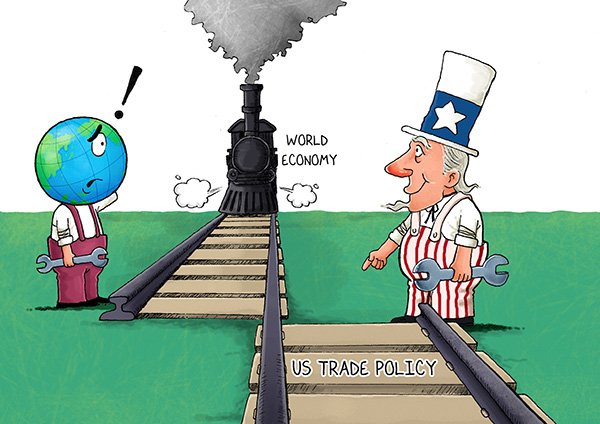
A trade war is increasingly becoming a reality. Even after the United States announced it would raise tariffs on its steel and aluminum imports in March this year, there were hopes that negotiations might help stall the additional tariffs. Unfortunately, such hopes didn't materialize.
US trade actions have begun evoking retaliatory actions from various economies. And a full-blown trade war now seems all but imminent.
Countries are free to choose the way they treat their imports. The World Trade Organization has pursued a multilateral program of phased tariff liberalization by urging its members to treat each other as MFNs (most favored nations) and imposing same tariffs on identical imports from all members.
However, the WTO members have had the scope of "binding" their tariffs. In other words, all WTO members are allowed to raise their tariffs up to a ceiling that they have committed to. They are also allowed to react to sudden surges in imports by raising tariffs as "safeguards". Despite all these protections, it is not clear why the US decided to unilaterally raise tariffs on steel and aluminum imports. Any concerns by the US in this regard could well have been addressed within the WTO's rules. Thus the US actions have set off a dangerous precedent that has the potential of undermining the fundamentals of modern trade.
The most worrying part of the US tariffs is the equation of economic security to national security. Section 232 investigations under the Trade Expansion Act of 1962 against steel and aluminum imports, and further on automobiles, parts and components, suggest these imports are threatening US national security. It is not clear how the import of foreign cars from Mexico and other countries-assembled by US manufacturers in those locations-is hurting US national interests. The fact is, US producers are benefiting as are the consumers using those cars.
The logic extends to a large number of other imports that US businesses are using at various points of the supply chain and US consumers are benefiting from cheap imports. The logic of national security, arguably, is connected to the damage imports inflict on domestic industries and the "dependence" of the US economy on critical imports. Whether or not this is justified is a different question. But the problem is, if other countries decide to follow the US example and start raising tariffs on national security grounds, global trade will drop to a trickle.
That the US has not bothered to consult the WTO before taking such trade actions has not stopped other countries from complaining against the US at the WTO. For the US, though, unfavorable decisions at the WTO might not mean much. The Donald Trump administration's actions have made it clear that the US considers trade as a bilateral relation and would address it accordingly. Indeed, the sanctity of the WTO has never been as seriously challenged as it is by the US now. Again, this sets a precedent for a dangerous trend. If more and more countries follow the US and begin sidestepping the WTO, multilateral trade rules would become irrelevant.
The US does not appear to be in a mood to change its position. As it keeps slapping more and more tariffs on a range of imports from China and various other countries, business relocation is an obvious outcome. Already, US companies like Harley-Davidson have announced or are planning to move part of their operations to other countries to circumvent the retaliatory tariffs imposed by the European Union on US imports, including cars and motorbikes. Such possibilities are manifold as businesses try to work out the impact of multiple tariffs that are coming up on all sides. Within a few years, geographical decentralization of assembling operations in many industries might be very different from what they are now.
From an overall perspective, the trade disputes, now confined to tariffs, between the US and the rest of the world might become wider by including non-tariff barriers and spreading to other countries. This most unfortunate outcome might mean the end of the work that has been done for more than three decades in freeing up trade by removing barriers.
More important, it would turn around history to a point where work on trade would have to begin from where it began many years ago.
The author is a senior research fellow and research lead (trade and economic policy) at the Institute of South Asian Studies in the National University of Singapore.