Income tax reform offers a sense of gain







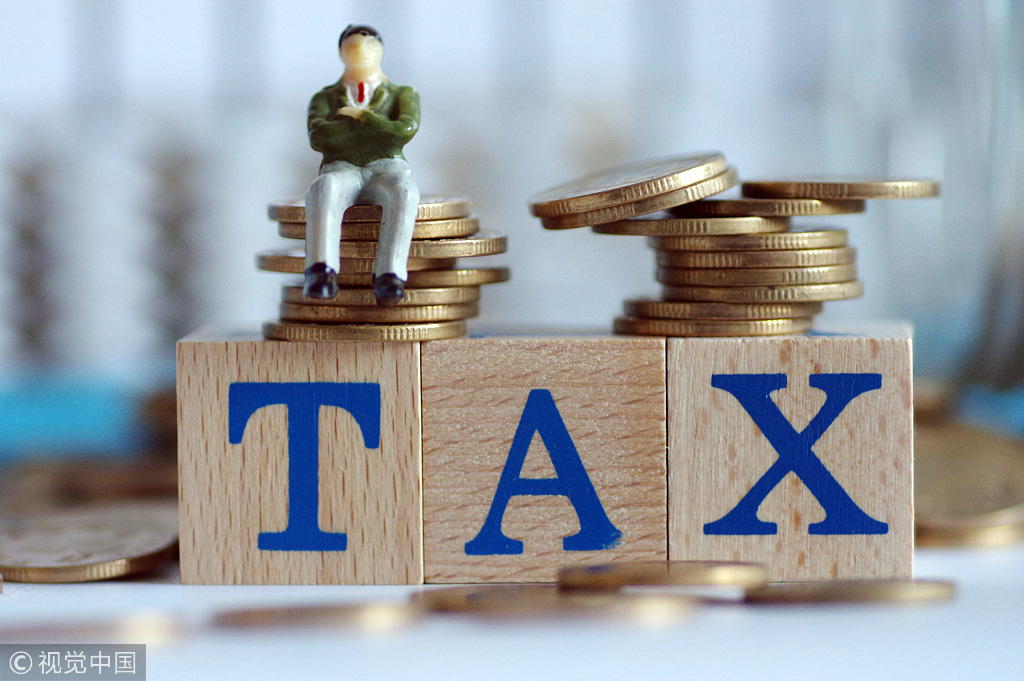
The Standing Committee of the National People's Congress, China's top legislature, is soliciting public opinion on the draft amendment to the Individual Income Tax Law through July 28. The draft amendment responds to not only people's appeal to raise the threshold of individual income tax, but also focuses on gradually building a personal income tax system that is both comprehensive and able to accommodate diversity, which the government has been emphasizing for years.
Several elements stand out in the draft amendment. First, it uses international experience to differentiate resident individuals from non-resident individuals. The draft says a resident individual is one who has lived in China for more than 183 days, compared with the one-year period previously, and thus expands the jurisdiction of the tax authority.
Second, it imposes a unified tax rate on incomes from various sources, including salary, remuneration and royalty, taxing an individual's annual income instead of monthly income. This means the reform is aimed at building a new personal income tax system that takes into account both separate income sources and the total income of an individual.
Third, the draft amendment optimizes the tax rate structure, remarkably lowering the tax burden of low-and medium-income groups (individuals who pay income tax below the 25 percent rate). But it reduces only slightly the tax burden of high-income individuals (those in the 30 percent, 35 percent and 45 percent tax rate brackets).
However, as part of the comprehensive imposition of tax on various sources of incomes, some taxpayers whose remuneration and service fees account for a majority of their individual or household income (such as senior experts and intellectuals), may have to pay much more as income tax because their remuneration and service fees will be subjected to different tax rates.
And although the five-level progressive tax rate targeting the incomes of businesses remains unchanged, the threshold of the highest tax rate has been increased from 100,000 yuan ($14,996.42) to 500,000 yuan, remarkably reducing the tax burden of businesses run by individuals and contractors.
Fourth, the draft amendment raises the threshold for personal income tax from 3,500 yuan a month to 5,000 yuan a month (or 60,000 yuan a year), reducing the tax burden of low-and medium-income groups.
Fifth, the draft also allows deduction of special expenses such as children's education, treatment for serious diseases, and payments of mortgage interest and rent from the taxable income of individuals. This will make China's individual income tax adjustment more differentiated, targeted and reasonable, promoting a fair tax system.
The draft amendment also has more clauses on anti tax evasion, which will help the tax authorities to better manage the individual income tax system. In other words, the draft amendment truly facilitates tax reform.
In the next stage, the top legislature could discuss whether some preferential tax rates could be imposed on incomes such as remuneration and lecture fee, in order to show the country attaches great value to learned people and intellectuals.
Still, some people are worried that if China's top legislature approves the draft amendment, the government's fiscal revenue would drop.
Individual income tax accounts for less than 7 percent of China's overall fiscal income. So even if the tax reform puts some pressure on China's fiscal revenue in the initial stages, in the ultimate analysis it will not have a huge impact on the fiscal revenue if the authorities manage to build a sound taxation system.
Moreover, the socio-economic trend is one of rising individual incomes. And if individuals' incomes continue to increase, the amount of personal income tax collected will also increase, offsetting the pressure created by a possible reduction in tax revenue owing to the personal income tax reform.
The author is chief economist with the China Academy of New Supply-side Economics.