


Reading the fifth







US archaeologist's newly translated book explores the next phase of human societal development and how the lessons of the past can help predict the future. Wang Kaihao reports.
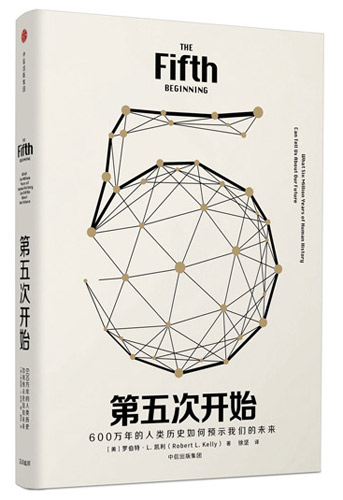
"I have seen yesterday. I know tomorrow." The words taken from an inscription on the tomb of the ancient Egyptian Pharaoh, Tutankhamen, provide the opening line to the original English version of the most recent book by American archaeologist Robert L. Kelly.
The somewhat prophetic, yet at the same time reflective, proclamation sets the tone for The Fifth Beginning, in which Kelly attempts to show what six million years of human history can tell us about our future.
Now, Chinese readers can also enjoy Kelly's insightful tome, as it has been translated into Chinese and published through China CITIC Press this month.
In the book, Kelly identifies four pivotal points in human history: the beginning of technology, culture, agriculture, and the concept of the nation-state, as he puts it.
"Archaeology relies on 'things' to tell story, (like) broken pieces of pottery, stones or collapsed walls," he explains in a video clip introducing the book for Chinese readers. "Changes in these things over time tell us about changes to the organization of human societies.
"I think the future archaeologists will see another beginning, the fifth beginning, which began about 500 years ago," he says.
In his point of view, the fifth beginning is that of global migration and the global movement of goods, which have been brought about by new transportation and computing technologies-so-called "globalization", which is thus framed in a larger historical context.
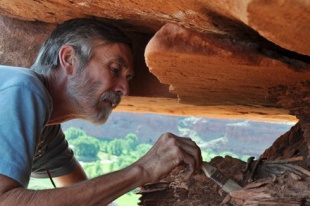
Kelly is a professor of anthropology at the University of Wyoming, and was the president of the Society for American Archaeology. He has conducted archaeological research throughout the western United States for 45 years.
Returning from another field excavation, he quickly responded to an interview from China Daily via email.
"Looking at all of world prehistory, I could see that technology, culture, agriculture and the state each marked major transitions in how humans organized themselves and related to each other," he says. "Of course, (they) are still important today.
"We could not survive without technology," Kelly explains. "Culture is a crucial element of human adaptation, while agriculture is equally important, because a world of almost eight billion people could not live as hunter-gatherers. The state was a way to organize large numbers of people ... in a world of increasing competition for resources."