US itself to blame for trade deficits







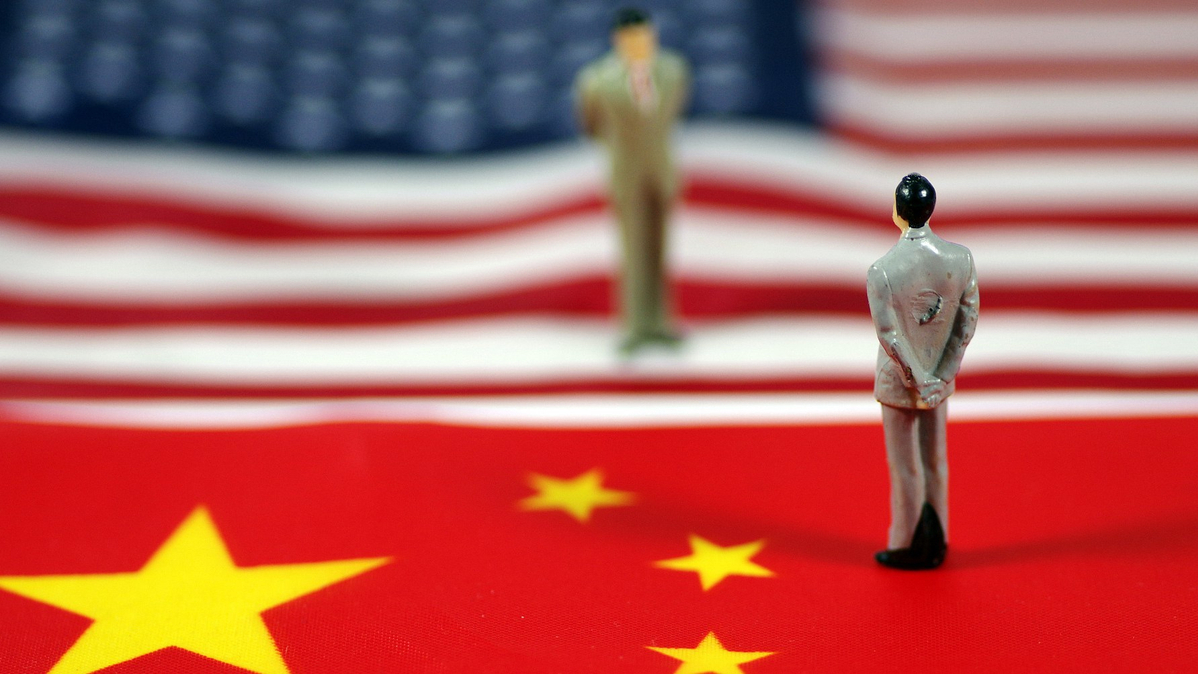
Holding China responsible for the US' trade deficits and unemployment, US President Donald Trump has launched what could turn into a full-blown trade war against China, by imposing high tariffs on Chinese products and strictly restricting technology transfer. But data show the US itself is responsible for its trade deficits, and cannot solve the problem without undergoing a radical economic transformation.
The US trade deficit has its roots in Washington's expansionary monetary policy that started with the United States unilaterally canceling the direct convertibility of the US dollar to gold in 1971 (known as the "Nixon shock"). President Richard Nixon took a series of measures in 1971 that effectively rendered the Bretton woods system inoperative, and by 1973 the US replaced the Bretton Woods system de facto by a system based on freely floating flat currencies.
Consumption-reserve gap raised US deficits
Financial liberalization in the US led to the granting of excessive loans. The low bank reserve ratio and free capital accounts, along with the dollar's access to the overseas markets, helped US financial companies to boost the flow of the dollar in the international market. Bubbles in the real estate and stock markets created by increasing quantities of money accelerated consumption and decreased reserves. And the widening consumption-reserve gap increased US trade deficits.
Worse, given the dollar's role as an international reserve currency, the US has had to maintain a trade deficit by printing more currency notes to buy foreign products.
Thanks to abundant capital, capital-intensive industries have developed well in the US, while its labor-intensive industries have depended on cheap labor available overseas, mainly in East Asia since the 1970s, to maintain, even increase productivity. This is what has caused huge US trade deficits with East Asian countries.
To exploit cheap labor, labor-intensive companies moved from Japan to the Republic of Korea, Singapore, and Hong Kong and Taiwan after the 1960s, and from the so-called Asian tigers to the Chinese mainland and the Association of Southeast Asian Nations member states in the 1980s. The production transfer also caused a transfer of surplus from the US to new production centers.
Owing to this shift, the US trade deficit with China has increased since the 1990s, while its deficit with other East Asian economies has dropped from 83.3 percent in 1995 to 63.1 percent in 2016. The large volume of foreign direct investment, too, increased China's trade surplus with the US.
Using wrong method to evaluate imbalance
The US has exaggerated the trade imbalance with China, though, by evaluating it using total trade volume instead of added value, which is the difference between the cost of intermediate inputs and revenue of final consumption goods.
Thanks to its deeper involvement with the global production network, the mainland has enlarged product processing, increasing imports of intermediate products from Taiwan and the ROK, and exporting final goods to other economies including the US. The domestic added value of the Chinese mainland's processing is only a part of the total trade value, in addition to the value of intermediate products produced by other economies.
In fact, the mainland now earns a relatively low proportion of income from the global production chain. The added value of the mainland's exports decreased from 87 percent in 1980 to 63 percent in 2009. And the proportion of added value in China-US trade declined from 81 percent in 1990 to 66 percent in 2009.
To be more specific, the trade imbalance between Washington and Beijing is largely in technology-intensive manufacturing industries, where the mainland mainly participates in the labor-intensive production transferred from the ROK and Taiwan.
The Chinese mainland's added value surplus of labor-intensive products with the US increased from less than 45 percent in 1995 to 55 percent in 2009, while the added value of technology-intensive industries to the US dropped after China joined the World Trade Organization, to about 35 percent in 2009.
China's trade surplus will gradually reduce
Since China's comparative advantages in terms of labor cost have shrunk because of rising salaries in the country, the result could be a gradual reduction in the US' trade deficit with China, leading to a new round of international production relocation. From 1998 to 2010, the annual increase in wages in China was 13.8 percent, but it has accelerated after 2012. In 2015, the average salary in the manufacturing industry was more than $9,000 a year, which was twice that in Thailand.
As a result, some processing companies have moved to other economies where the labor cost is lower, such as Vietnam, Cambodia, Bangladesh, India, Indonesia and African countries.
In more sense than one, the imbalance in US-China trade is attributable to bilateral economic complementarity. And even though the US has imposed stiff tariffs of 25 percent on Chinese products that US enterprises stopped producing at home after the 1960s, it is highly unlikely that labor-intensive companies will move back to the US. The reason: they would prefer shifting their production base to the economies where the cost of labor is lower than in the US. The irony is that in any event, US consumers, the very group of people the Trump administration wants to make happy, will suffer most as they will have to pay for the high tariffs on imports-and the US trade deficits will hardly reduce.
Therefore, if the US really wants to reduce its trade deficit with China, it should undergo economic transformation by adjusting its economic structure.
Justin Yifu Lin is honorary dean of the National School of Development, Peking University, and Wang Xin is an assistant professor at the Institute of New Structural Economics, Peking University.