Import expo a harbinger of progress







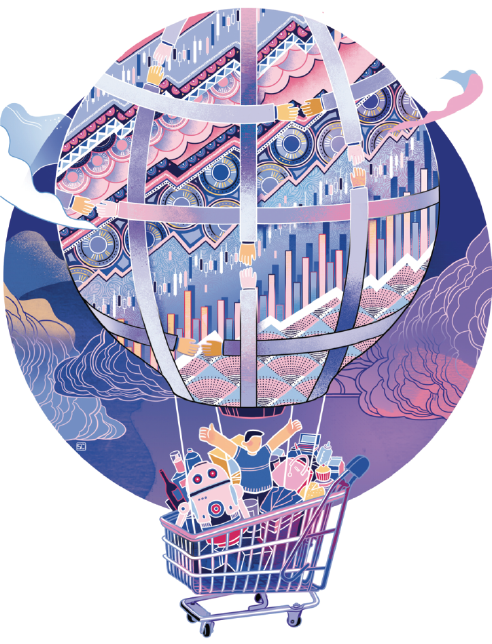
For many years, China has occupied the pole position in international trade rankings as the world's biggest exporter. What is less well known is that China-a market of more than 1.3 billion consumers-is also the world's second-largest importing nation, and one that is growing at a fast rate.
An expanding middle-income group is fueling a strong demand for foreign products. In 2017, the value of global exports to China rose by 18.7 percent year-on-year to 12.5 trillion yuan ($1.8 trillion). The Chinese demand for foreign goods shows little sign of weakening and is predicted to continue its double-digit growth over the next five years.
Before the current debate on trade protectionism took hold globally, the Chinese government, thanks to its farsightedness, decided to hold the first China International Import Expo to proactively open up its domestic market to the world, especially developing countries, so as to create considerable opportunities for all to benefit from the country's rising prosperity. The expo will focus on the opportunities provided by China's growing demand for foreign goods and services.
Indeed, engaging in global trade is an effective way for countries to accelerate green industrial growth, a prerequisite for reaching a higher level of development. As China opens up its domestic market, foreign companies are encouraged to export more to China: developing countries can raise investment, and thus create new industries and jobs and increase incomes and people's living standards.
The Chinese government also has adopted a South-South partnership approach-a term that refers to mutual assistance and learning between developing countries, with trade being a central pillar of this approach.
Will raise awareness on import regulations
The import expo complements China's other high profile South-South cooperation initiatives, such as the Belt and Road Initiative and the China-Africa Cooperation. With representatives and companies from about 150 countries expected to take part in the first import expo, the event promises to be very successful, also in raising awareness for China's standards and technical regulations on imports, and to provide advice on overcoming exporters' common obstacles.
For many developing countries and their companies, especially small and medium-sized enterprises, engaging in cross-border trade remains difficult because of a lack of awareness and capacity to meet the technical, quality and regulatory requirements of importing countries. Overcoming these barriers has the potential to unleash trade from developing countries, creating a virtuous cycle of growth, which in turn will facilitate poverty reduction efforts.
In the context of producers meeting the requirements of global value chains and trade flows, quality infrastructure (QI) is particularly relevant. A QI system comprises the institutions responsible for regulating markets, assuring compliance to quality requirements and facilitating trade. Quality infrastructure, designed to provide safety, and protect human health and the environment, and ensure conformity to global standards, covers a wide range of activities-from the precise measurement of food, electricity and water to inspections of components found in cars or aircraft engines.
Weak QI systems constrain trade and exports, and hinder the development of value added products and diversification of products and markets. Small and medium-sized enterprises, particularly those in developing countries, face many hurdles when it comes to meeting the requirements of global buyers, including private standards. Therefore a strong national QI system will help integrate into global value chains.
For more than 40 years, the United Nations Industrial Development Organization has supported partner countries to increase their competitiveness through quality and compliance with standards by developing QI systems through targeted interventions that enhance national capabilities for standardization, metrology, conformity assessment, accreditation and market surveillance to develop productive capacity, expand their export base, and increase domestic and foreign investment.
For example, in Nigeria, the most populous country in Africa, UNIDO and its development partners are helping develop a holistic national QI system, through interventions addressing good governance, at quality policy level and building technical capacity of QI institutions so that they can provide internationally recognized services to their enterprises.
At the regional level, UNIDO supports the Economic Community of West African States to harmonize standards and quality policy, and establish a common framework for regulatory activities, contributing to reduced non-tariff barriers within the region, strengthening competitiveness of the private sector, and ultimately promoting trade and economic integration in the community.
Similarly, UNIDO supports national efforts in a number of Asian economies. One of them is Pakistan, where more than 80 laboratories have now received international recognition through accreditation, and more than 1,900 tests have been recognized internationally. This has reduced the costs of conformity assessment for exported and imported products by about 40 to 60 percent and thereby made conformity assessment services affordable to a much broader base of small and medium-sized enterprises.
Quality infrastructure promotes global standards
The results from these projects show that a functioning QI system benefits everyone. Consumers benefit because they can be confident of the products and services they buy. Manufacturers and suppliers benefit because QI promotes their use of international standards to ensure that their products and services meet state-of-the-art requirements and standards recognized worldwide.
Regulators benefit because QI helps them to identify and specify the standards and conformity assessment processes they can use to ensure that public interest requirements, such as health, safety and environmental protection, are being met. Thanks to a strong record in helping countries to meet international standards for trade, UNIDO is well placed to support the development of national QI systems and build the capacity of exporters to access the Chinese market.
With other international organizations, UNIDO is an official supporter of the China International Import Expo and will hold, in collaboration with China's State Administration for Market Regulation, a side event on "Trade Facilitation for a Better Life: Quality Infrastructure Promotes Trade Facilitation and Sustainable Development". The session is aimed at enhancing awareness of China's QI for standardization, conformity assessment, and market surveillance, and at showcasing best practices for meeting the regulatory and market requirements of the Chinese market.
In collaboration with China, UNIDO is building QI capacity in countries along the Belt and Road, and beyond. In China, UNIDO is ready to assist in establishing a QI training center to support the country's initiatives to promote QI collaboration among the countries involved in the Belt and Road Initiative. UNIDO could also help with strengthening market surveillance, improving the quality of products and services, and facilitating trade flows, which will ultimately contribute to a structural reform and to better serve the demands of the Chinese people for high-quality products and services.
As we deepen partnerships, UNIDO, China and others will aim to take South-South cooperation to a higher level in the coming years, accelerating the implementation of the 2030 Agenda for Sustainable Development in China. By continuing to expand its role as a global import champion, China's own development will create new opportunities for economic and social progress in developing countries.
The author is the director general of the United Nations Industrial Development Organization. He contributed this article to China Watch, a think tank powered by China Daily.