Technology makes the grade on the subject of homework







Teachers around the world may soon rejoice at the fact that the end of arduous homework-marking is on the horizon.
A common pet hate that is universal across the education industry, many teachers claim that excessive marking is time-consuming, and say it does little to promote high-quality, efficient learning among students.
A significant speedbump in education globally, such sentiments have been carried from the classroom all the way up to national policymakers around the world.
Sean Harford, national director of?education at the UK government’s Office for Standards in Education, Children’s Services and Skills, has been quoted lamenting the situation.
“There is remarkably little high-quality, relevant research evidence to suggest that detailed or extensive marking has any significant impact on pupils’ learning,” he said.
The rapidly growing field of education technology is also fighting against this ever-growing mountain of unmarked papers.
In the last few years, innovations such as cloud technology and handheld mobile apps have greatly cut down on the time tasks take. For example, instead of having a young child wasting time desperately trying to decode a teachers rushed, illegible written feedback, teachers are now able to orally record feedback on devices for students to listen to. This can half the amount of time taken for the feedback to be communicated. When this means a 3-hour tasks takes just 90 minutes, the focus can then be directed toward quality contact time in the classroom.
Taking the entire homework process online is another solution. Virtual learning environments are an array of digital learning tools that use the internet as a platform for the learning process. Typically, the curriculum is broken down into segments that may be assigned and assessed electronically, which makes it easier and faster to check students’ progress. Since their widespread adoption from early 2013, such technology is gradually taking over from more traditional and slower approaches.
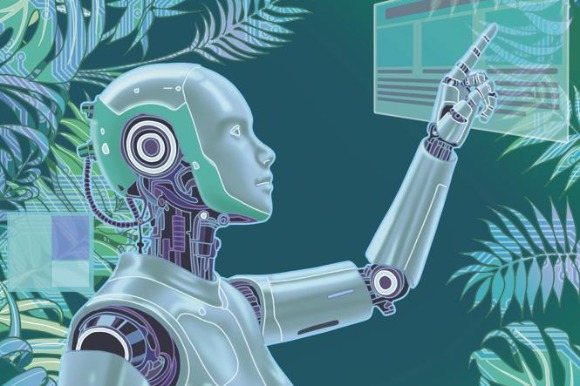
In the East, artificial intelligence is yet another weapon in the arsenal for time-stretched educators. In Beijing, tech startups are developing software that is capable of checking basic arithmetic problems through a photo or scan of a child’s paper. By using the AI function to cross reference the child’s answer with an internal database, answers can quickly be processed as right or wrong. Launched by Tencent, apps such as Xiaoyuan?Kousuan are becoming hugely popular among Chinese educators. Spokespeople for such apps claim that their software is capable of checking an average of 70 million math questions a day, and has saved users countless hours.
This process of using AI and databases to streamline the marking process has other implications.
“By checking nearly 100 million problems every day, we have developed a deep understanding of the kind of mistakes students make when facing certain problems,” said Li Xin, co-founder of Yuanfudao, another AI education startup. “The data gathered through the app can serve as a pillar for us to provide better online education courses.”
We can therefore expect AI solutions to grow, both in popularity and sophistication.
In the next few years, AI may even get to the point where written essays and reading comprehensions can be marked using artificial intelligence, rather than it only being used to grade simple arithmetic. However, we may then also get to a point where we risk losing the human touch, something that makes teachers indispensable. The ability for a teacher to inspire pupils with a passion for knowledge is something a robot will never be able to match. It may therefore be tempting for time-pushed teachers in future to be seduced by powerful and quick AI solutions, but a balance between AI and human intelligence must be kept. It is up to the teachers therefore, to convert this advantage into increasing quality human interaction time in lessons, and prevent the learning process from becoming too mechanical.