New species may shake mankind's family tree







The determination of a new species and possibly one of our ancestors is raising questions about existing theories of evolution and the nature of the human tree.
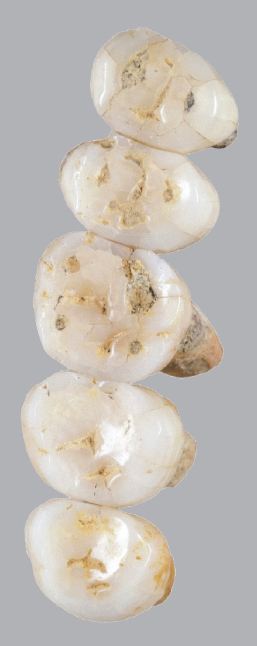
An international research team determined that seven teeth and six bones found in limestone caves in the Philippines belonged to two adults and one child of a new ancient species.
The newly discovered Homo luzonensis species has been named after Luzon, the largest and most populous island of the Philippines, where the fossils were discovered in 2007, 2011 and 2015. According to a paper published in the journal Nature, the Homo luzonensis fossils are estimated to be around 67,000 years old.
"It's probably the biggest discovery in a while and adds new elements to theories of human dispersal," Patrick Roberts, group leader of the stable isotope laboratory in the Department of Archaeology at the Max Planck Institute for the Science of Human History in Germany, told China Daily.
"This finding is significant because it provides more evidence for the complexity of human evolution in East Asia," said Shara E. Bailey, an associate professor and associate chair of the Department of Anthropology at New York University.
"It is particularly exciting because nearly every new species announced in the past 15 years has indicated that either there were many more species than just Homo sapiens during the Late Pleistocene, or that we have been underestimating just how morphologically variable currently accepted species are."
Homo luzonensis was likely between 3 and 4 feet tall, as indicated by the size of its small jaw and teeth.
Since the size of teeth is thought to be indicative of body size, it is possible that Homo luzonensis might even be smaller than Homo floresiensis, a short species also from Asia. The two, however, are not necessarily related.
Homo luzonensis is thought to have walked upright and used stone tools. It had feet shaped in a way that made climbing easier, and a distinct anatomy different from modern humans. Roberts noted that features like the curved finger and toe bones hint that climbing may have been an important aspect of Homo luzonensis' survival on a tropical island, which gives insight to both the environment of the time and adds to the possibility that this is its own unique species.
The digits may have been like those of Australopithecus, ancient primates that populated the Earth millions of years before Homo erectus left Africa.
"The family tree is now more complicated. So they were hominids that were able to successfully reach the island, adapt and change their physicality," said Armand Salvador Mijares, a Filipino archaeologist who led the expeditions that discovered Homo luzonensis, at a news conference announcing the findings.
"But there might have been a time where their physicality could no longer be sustained."
Mijares was also adamant that Homo luzonensis was not our ancestor, based on its three rooted molars. He also believes that it originally came from Africa.
Yet, the possibility of Homo luzonensis being an environmentally determined ancestor of Homo erectus, or that its genes still exist in our gene pool, cannot be completely ruled out.
For many years, a leading theory of evolution was centered on the idea that an early species called Homo erectus (the possible ancestors of modern humans, Homo sapiens), started emerging from Africa between 2 to 1.5 million years ago. Another school of thought puts the arrival of Homo sapiens in Asia between 50,000 to 70,000 years ago.
"When Homo sapiens dispersed from Africa 70,000 to 100,000 years ago, they replaced or interbred with already existing archaic groups. They (Homo sapiens) may not have reached the islands, however, until much later, meaning that archaic groups could have survived longer," Bailey said.
Island populations of the past were certainly more isolated than those on the mainland. "That means there is a higher likelihood of unusual morphologies appearing and being maintained in high frequency," said Bailey. "If Southeast Asia served as a type of refuge from incoming Homo sapiens, we may find even more evidence of unusual hominid morphotypes."
The genetic makeup of modern humans is quite diverse and the family tree is increasingly messy. "The lines connecting the dots for our dispersals within and beyond Africa and our evolutionary journey are incredibly patchy," said Roberts.
The authors are freelance journalists for China Daily.





- New university in Dongguan to provide talent support for GBA
- Taiwan is inalienable part of China's territory: SCO Secretary-General
- Vice president of China's PICC under probe
- Fire relief allowance doubled to HK$100,000 for affected families in Hong Kong
- HK may ban smoking at building sites
- Academicians pledge to advance scientific innovation