Is cross-cultural understanding between US and China possible?







Can cross-cultural understanding be promoted between the United States and China? How can that happen when one country—an ever-powerful United States—has lost the shared norms, duties, behaviors and beliefs that one would normally equate with “culture,” and the other country—an ascendant China—has climbed so far and so fast that it sometimes overlooks its greatest continuing strength, a 5,000 year history and culture and all the grounding and centeredness that they imply?
So one country has political, economic and military power but lacks a shared culture. The other has risen so fast that it tends to overlook that it has both culture and newfound economic power.
In my view, the answer is simple: this cross-cultural understanding must be initiated by China. And if I may be so bold as to suggest this as a cultural anthropologist, it is by offering to exchange performance, iconography, narrative and other cultural forms that China will quietly lead the United States to rediscover and re-celebrate its own culture.
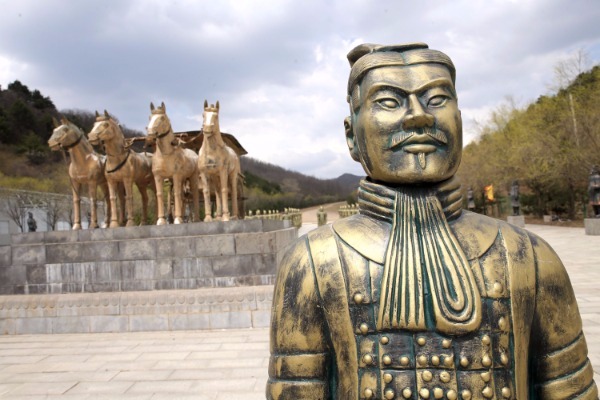
This is not the “gunboat diplomacy” which the US has by now levied upon the world for over 100 years. Nor is it the resurfacing of “ping-pong diplomacy” that once won the day and promoted peace several decades ago. And general programs like the loaning of “terra cotta soldiers” to the Smithsonian Museum in Washington DC can be very helpful, but the benefits of cultural exchange can go more deeply and directly than that. This exchange of culture must go directly to US universities and colleges where Chinese art, ritual and other shared meaning can be registered immediately by the future leaders of America—and in this way constitute “a kind of invitation or soft challenge to now tell us your meanings.” It is out of the idealism and fresh hope of American youth that the new meaning will emanate.
To be sure, the shared meanings of the US are there, waiting to be mined. But they have been abandoned, cast aside during the mad rush to video games, texting, app creation—and war. But there can still be, even now, a relearned capacity to form and celebrate culture through musicals, dance, visual art, poetry and other expressions of deep storytelling. In this way, the US can rediscover its capacity to have shared meaning—by sharing it.
Over the years, I have learned that culture is meant to be put in motion. In this way it is always changing. But at the same time, culture always harkens us back to a past, to old and treasured roots.
In this instance, China’s own universities and colleges can hasten this process of “regrounding” by the United States—not by shaming and certainly not by having one country respond to saber-rattling by a different country that lacks the security of a shared culture. Instead, the result of helping the US to know its own culture can be initiated by using the much softer approach of inviting a regeneration of treasured meanings in American universities and colleges. And all that can be sparked by simply asking, “Shall we do this together?”
This process has already begun through the work of the Guo Jie Senior Professors Science and Technology Consultation and Development Academy, which brings together some of the best intellectual talent from senior scholars of Tsinghua, Beijing, and other leading universities to develop a broad project to share core elements of China’s culture with universities and colleges throughout the US. This new project would in fact be wholly consistent with the call made on May 15-16 by President Xi Jinping at the Conference on Dialogue of Asian Civilizations for more cultural exchange as a way to reduce cultural misunderstandings and promote peace.
The wonderful thing is this. The benefits from exchange of culture with future leaders of another country are certain to outlast any change in leadership in that country. The benefits of sharing culture can even lend a degree of common humanity should a global calamity befall us, like a worldwide economic depression. But we won’t truly know or see this result until we begin the work—and we can begin this work with many small steps.
The author is a winner of the James Clavell Literary Award and a member of Board of Directors of the Himalayan Consensus.
The opinions expressed here are those of the writer and do not necessarily represent the views of China Daily and China Daily website.