China on right track to becoming greener







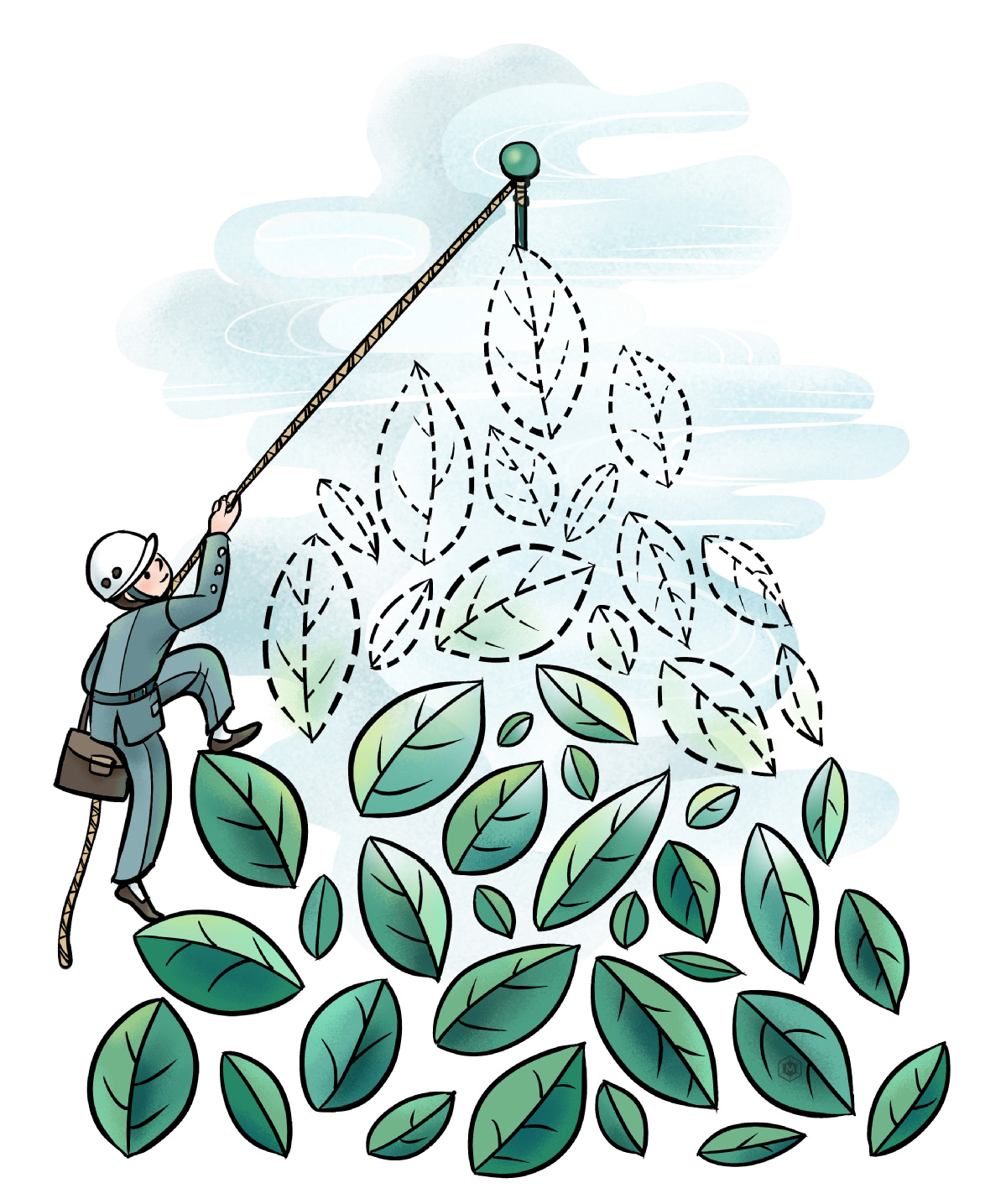
China may be the world's largest greenhouse gas (GHG) emitter, but it is also the world leader in energy production from renewable sources. It has also and has increased its budget for environmental protection to about 1.2 percent of its GDP-a figure in line with that of Western European countries.
So is China getting greener?
China has experienced an impressive period of economic growth for 40 years, during which its per capita GDP has grown more than 40 times. Today, China is the world's second-largest economy by nominal GDP, and the largest economy by purchasing power parity.
Translating economic gains into social benefits
More importantly, China has succeeded in translating its economic achievements into social benefits. It has lifted more than 700 million people out of extreme poverty, and implemented the nine-year compulsory education system. Also, life expectancy at birth has increased significantly, and the under-five mortality rate dropped drastically.
However, such rapid economic growth has had a significant impact on China's natural resources. About one-fifth of China's land resources are polluted, and about 40 percent of its land area degraded. Overuse of water resources has depleted water tables. And, globally, China has become the largest GHG emitter.
China is aware of the environmental toll it has paid for the rapid economic growth, and over the past years it has taken several measures to put its growth model on a more sustainable path.
Environmental protection one of three tough battles
In fact, the Chinese government has indicated that pollution control and environmental protection comprise one of the three tough battles for China. The 13th Five-Year Plan (2016-20) includes binding targets for several key environmental parameters, from energy consumption to carbon emission, and from air quality to forest cover. And apart from increasing its investments in ecological conservation and green technologies, China also is the world's leading renewable energy producer.
As a result, several environmental indicators have shown important improvements. According to government data, cities that implemented the new air quality standards saw their average concentration of PM2.5 reduced by 31 percent from 2013 to 2016. The 2020 target to reduce carbon intensity by 40-45 percent was reached three years in advance in 2017. And forest cover has increased by 21 million hectares in 10 years.
But challenges remain. Despite the remarkable progress China has made, it will take a long time, huge investments and political commitment for it to shift from fast-paced economic growth to sustainable and qualitative development.
Air pollution still a major problem
Indeed, air quality has improved in recent years. Yet air pollution accounts for the fourth-highest number of deaths in China, costing, according to the Organisation for Economic Co-operation and Development, an estimated 7 percent of healthcare expenditure and an estimated 8.6 percent of GDP for premature deaths.
Although urban and industrial wastewater treatment has led to improvement in water quality in some places, groundwater pollution has emerged as a major headache, affecting residential water use and agriculture production.
And the costs of soil cleaning are enormous. According to the Economist, cleaning China's 250,000 square kilometres of soil would cost $1,000 trillion-more than all the wealth in the world.
Years needed to cut total amount of CO2 emissions
And despite the remarkable progress in reducing carbon dioxide intensity in recent years, it will still take several years before China will start reducing the total amount of CO2 emissions because of the projected growth in energy demand, the still relatively high share of coal in the current energy structure, and the economic and political costs of restructuring a heavy polluting sector.
What can be done?
China is on the right track to becoming "greener", but recent efforts need to be continued, and possibly further intensified. It has to continue investing in pollution control and environmental conservation. According to the World Bank's estimates, China already spends $130 billion on environmental protection each year. But according to the Chinese government's estimates, the country will need up to $350 billion annually of green financing through 2030. The investment is significant, but the expected rate of return (a reduction of environmental degradation and resource depletion by 6 percent of the gross national income by 2030, according to the World Bank) would justify the investment.
China also has to improve environmental information, because solid data to understand the sources, impacts and costs of pollution and environmental degradation are precondition for making good decisions.
Need to diversify green policy instruments
There is a need to diversify environmental policy instruments, too. According to the World Bank, China's past approaches focused on "end-of-pipe" control mechanisms. But such mechanisms could not sufficiently prevent environmental pollution. China mainly relied on "command-and-control" measures for environmental protection, but market mechanisms (for example, pricing to better capture environmental costs, environmental taxes, and trading systems for carbon and energy use), which have been relatively underused, can offer a different, and possibly more efficient policy tool for environmental protection.
And only with continuous political commitment can China effectively control pollution and protect the environment. The government has already demonstrated a strong commitment to a more sustainable and green development. This commitment should continue, and more ambitious goals and targets should be set.
As China's battle against poverty has shown, a great vision can lead to great results.
The author is country director and representative of the International Fund for Agricultural Development for China, Mongolia and the Democratic People's Republic of Korea. The views don't necessarily represent those of China Daily.