R&D, innovation behind Fortune 500 success







For the first time in the 29-year history of the Fortune Global 500 list, Chinese companies (129) outnumber those from the United States (121). This is also the first time that a country other than the US has more companies on the list.
Among the 129 Chinese enterprises on the list, 119 are domestic in nature whose average revenue increased 9.2 percent year-on-year-higher than the average revenue growth of Fortune Global 500 companies. These enterprises' rates of profit and net asset profit were 5.3 percent and 9.9 percent, up 0.2 percentage points and 1.0 percentage point year-on-year.
The Chinese enterprises have also taken firm steps toward high-quality development. And although they have encountered some difficulties due to the Sino-US trade frictions and the technological containment measures taken by the US government and some US enterprises, their growth has continued unabated.
Three major factors are behind the Chinese enterprises' continuous and rapid development: reform, demand and innovation. China's supply-side structural reform has improved the market competition environment, promoted qualitative supply, increased the enterprises' earning power, and enhanced their development potential and momentum.
Increasing global demand for Chinese products due to their cost advantage and rapidly growing domestic demand driven by income growth form the basis of their expanding scales. But the greatest factor driving Chinese enterprises' continuous development is innovation.
Reform will promote innovation. Innovation will generate new demand and prompt Chinese enterprises to improve their quality, while technological innovation is key to their development and expansion. And to change their long-term dependence on low-end products, the Chinese companies, with the government's active help, have invested more in research and development to facilitate their qualitative growth and expansion.
Last year, China's total investment in R&D accounted for 2.18 percent of GDP, equivalent to the average of OECD countries, with the average R&D intensity of high-tech enterprises and A-share listed companies being about 3 percent and 4.87 percent.
Higher R&D investment has increased the enterprises' capacity for independent innovation and competition advantage.
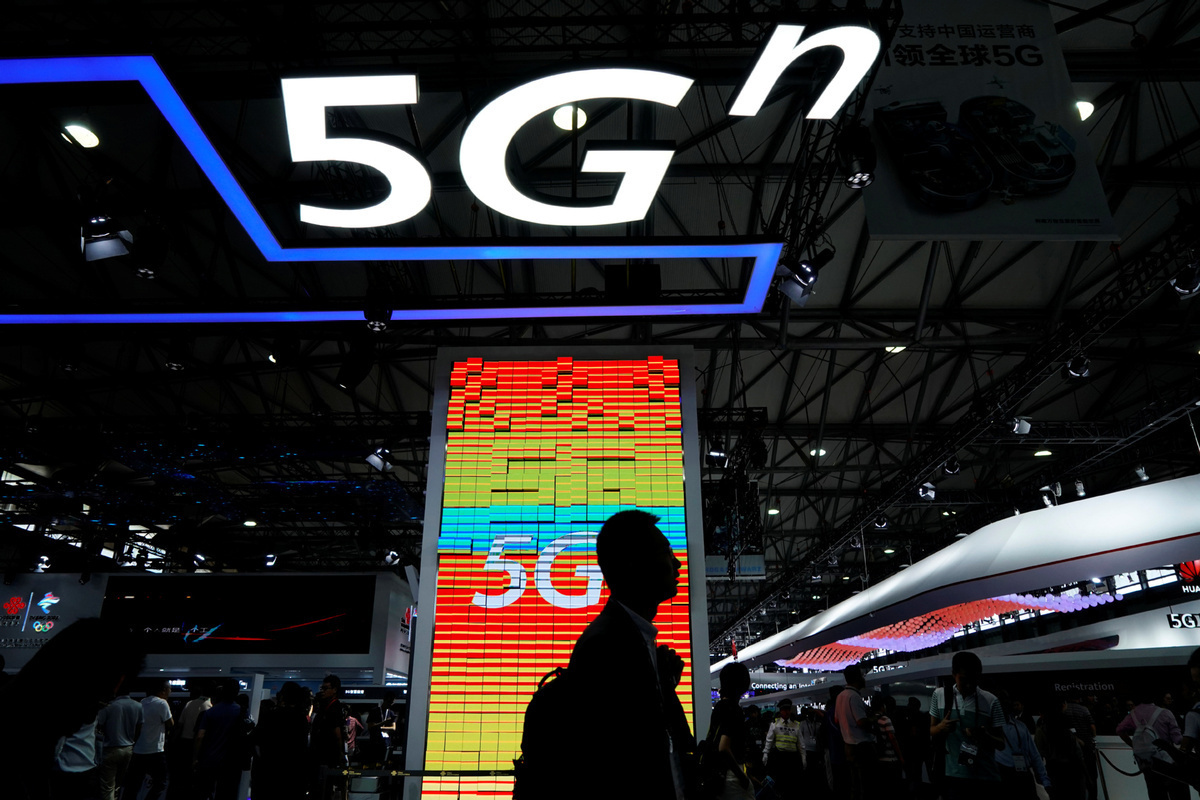
In particular, since the 18th National Congress of the Communist Party of China in November 2012, which formulated the innovation-driven development strategy and five new development concepts, Chinese enterprises have increased R&D investment and achieved remarkable breakthroughs in core technologies. In fields as important as aviation, railways and 5G technology, Chinese enterprises have even taken a leading position.
Huawei is a good example of an innovation-driven high-tech Chinese company. For years Huawei's R&D intensity has been above 14 percent. In actual terms, Huawei's R&D investment last year was 101.5 billion yuan ($14.77 billion)-the fifth-highest in the world and more than that of Microsoft, Apple and Intel. Also, by the end of last year, Huawei had more than 87,800 global patents. No wonder Huawei's R&D investment and abundant innovation have placed Huawei at 61 on the 2019 Fortune Global 500 list.
And despite Washington preventing US companies from selling components to Huawei in the first half of this year, the company's mobile phone shipment grew continuously.
Since the beginning of this century, Chinese companies have been applying or trying to apply modern information technology to improve production and operations. The Internet Plus strategy has helped expedite the integration of enterprises and the internet. And many enterprises have achieved rapid growth by making use of innovative business models thanks to IT.
When it comes to fast-developing Chinese companies, Xiaomi is an apt example, because just after eight years of its establishment in 2010, it has made it to the Fortune Global 500 list, becoming the youngest company to do so.
Xiaomi's "hardware plus internet" business model has helped it to avoid direct competition with other mobile phone companies and achieve high-speed growth through internet marketing. Later, it changed its business model to "hardware plus new retail plus internet", which organically integrated retails with the internet to further propel the company's growth.
Yet we should be aware of the gap between Chinese enterprises and their European and American counterparts. For example, the net asset income rate of Chinese companies is remarkably lower than that of European and American enterprises-which means there is much room for improvement in China's industrial structure.
So Chinese enterprises should accelerate the development of strategic emerging industries and the modern service industry, and achieve upgrading through reform and innovation, in order to climb up the global industrial and value chains.
The author is a researcher at Chinese Enterprise Confederation. The views don't necessarily represent those of China Daily.