World is heading toward multipolarity. But what kind?








The year of the 70th anniversary of the People’s Republic of China - now one of the key players in world politics and global development - offers a good occasion for a discussion of the current state and further evolution of the international system.
However, various turbulences of day-to-day politics make such a discussion difficult. The trade war launched by US President Donald Trump against China is testing China’s resilience and has caused a slowdown in global growth. The technological competition has focused much international attention on the tensions around 5G technology, on the restrictions that the US has imposed on the export of some of its technological products to China and on the legal wrangling around the Huawei company. These developments are occupying much international attention and create an impression that the world is now witnessing an incipient “cold war” between the US and China.
But is this an accurate perception? The American tariff hikes have a limited impact on the global economy. Technological progress can be slowed down as a result of American restrictions, but it cannot be stopped no matter how hard the current US president tries. The world has changed and the era of a seeming unipolarity with the US at the top is irreversibly over. The real question is what kind of multipolar world will emerge in the 21st Century. Its contours can be detected already and it will be, to a large extent, defined by China.
Serious reflection is called for. A new multipolar world will not emerge instantaneously and it will not be dominated by a single power. While international systems in the past two centuries have been described with a reference to a single leading power - Pax Britannica in the large part of the 19th century and Pax Americana in the second half of the 20th century - no such characterization is likely in the 21st century. A “Pax Sinica” is neither desired by China nor likely in the emerging multipolarity of the 21st century. For one, China is committed to its domestic agenda: Developing China’s internal market, promoting entrepreneurship and innovation, improving the environment and overall coordinating economic progress and social development. These are demanding tasks that will enjoy the highest priority. They belong to the domestic agenda, but will also require another generation of opening up of China. At the same time, the international system will involve several agile great powers and a series of smaller players. It will increasingly include countries of the developing world, in continuation of the process started with decolonization seven decades ago. All this makes repetition of history highly unlikely.
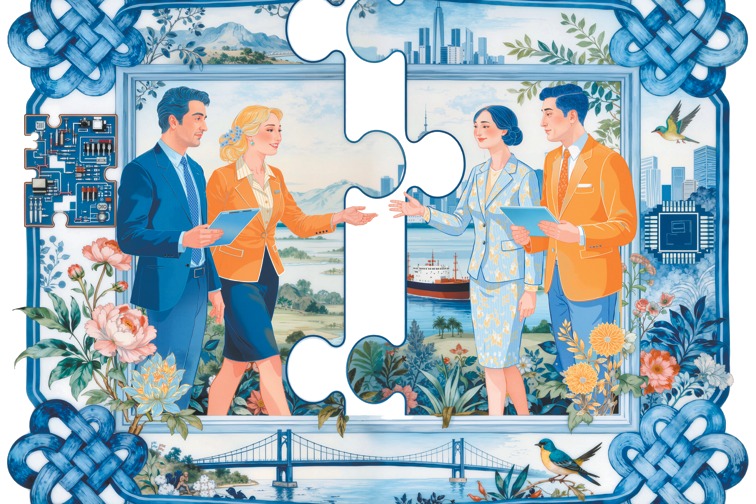
So what kind of multipolarity should be expected? The multipolarity of our era is reaching more deeply than traditional power politics and balance of power considerations. It will be characterized both by deep interdependence and, at the same time, by significant diversity of conceptions of modernity, domestic order and legitimacy of the state. Multipolarity in our era already includes different development models that are nevertheless capable of productive cooperation and cross-fertilization.
This represents an opportunity for the 21st century, an opportunity that must not be missed. In the emerging world there are no natural enemies and no forever allies. States have to be able to cooperate and compete at the same time. Political alliances are likely to be flexible, short lived and judged by actual achievement. There will always be more than two powerful players involved in every question of global significance. The world of the 21st century is likely to be a world of constant interaction among a variety of players, some old and some new ones. While the relations between China and the US will be important, they are highly unlikely to lead to bipolarity, let alone to binary patterns known in the Cold War era.
Obviously, the crystallization of a new system of international relations will take time and will require sensible management. Is this possible within the existing global normative and institutional order? Unsurprisingly, the answer is - yes. The basic normative framework of the world, enshrined in the Charter of the United Nations, represents the necessary normative platform and contains nothing that would impede global development in the 21st century. It is based on the principle of respect for sovereign equality of all states, the rule of international law and on the objective of an ever more intense global cooperation.
Significantly, the institutional framework of the UN Charter allows for an evolution that can be of great help in developing the international system of the 21st century. Chapter VIII of the UN Charter speaks about regional arrangements that can be put in place to resolve regional problems, in conformity with the basic principles of international law and the UN Charter. Since the creation of the UN in 1945, the number and variety of regional arrangements have grown and offered answers to the new needs of international cooperation. China has contributed imaginative innovations. The creation of the Shanghai Cooperation Organization in 2001 is an example. The more recent creation of the Asian Infrastructure Investment Bank is another. Organizations like these two are regional in their immediate geographic reach, while at the same time they offer answers to some of the questions of global importance. They represent a valuable supplement to the existing global institutional architecture. In addition, they provide a welcome element of competition and an incentive for reform of the global institutions such as the World Bank and the International Monetary Fund.
Chapter VIII of the UN Charter poses no limits to innovation and creation of new institutional frameworks needed for an intensified international cooperation. The experience in the implementation of the Belt and Road Initiative, launched five years ago, offers opportunities for further innovation. These opportunities should be at the center of thinking about the evolution of the international system at the time of the 70th anniversary of the People’s Republic of China.
Danilo Türk was president of the Republic of Slovenia from 2007 to 2012. He is currently non-resident senior fellow at the Chongyang Institute for Financial Studies at Renmin University of China.
The opinions expressed here are those of the writer and do not represent the views of China Daily and China Daily website.