Urbanization has helped greatly improve people's living standards







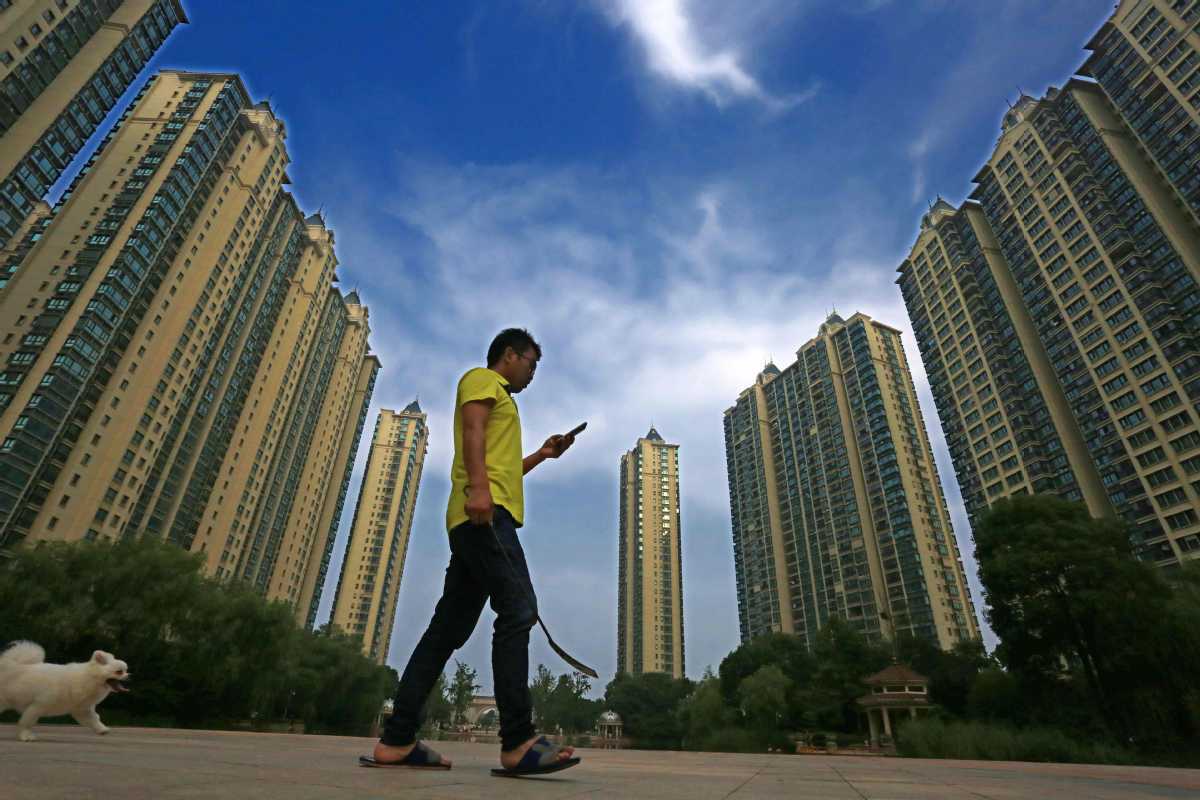
China has urbanized at a rapid pace since the founding of New China in 1949, especially in the past 40 years. Seventy years ago, China's urban population accounted for only 10.6 percent of the total, much lower than the global average of 29 percent at that time.
By the end of 2018, China's urbanization rate in terms of household registration was only 43.4 percent, but the permanent urban resident population had reached 59.6 percent of the total-higher than the global urbanization rate of 55 percent. Over the past 70 years, China's urbanization rate has increased 49 percentage points, and 773.72 million people have shifted from rural to urban areas, a rare phenomenon worldwide.
Since 1996, China's annual newly increased urban population has exceeded 20 million. In 2014, a new type of urbanization policy replaced the concept of simply pursuing rapid urbanization with a people-oriented urbanization concept based on the integration of urban and rural infrastructure and equalization of public services.
As a result, China's urbanization has entered a high-quality development stage. The 2019 Government Work Report and the key tasks of a new type of urbanization issued by the National Development and Reform Commission further emphasize the significance of promoting high-quality urbanization.
From 1949 to 2018, the number of Chinese cities increased from 132 to 672, and the network of urban structure gradually improved. With the spatial expansion of urban built-up area and the establishment of new areas from the national to the county level, China's urban built-up area increased from 7,400 square kilometers in 1981 to 56,200 sq km in 2017.
Thanks to rapid urbanization, China has formed a series of city clusters with strong global economic influence including the Yangtze River Delta city cluster, Pearl River Delta city cluster and the Beijing-Tianjin-Hebei city cluster, which are significant spatial carriers of the high-quality development of China's urbanization.
Rapid urbanization has not only attracted huge investments to China and raised consumption demands, but also significantly furthered reform and opening-up, accelerating human capital accumulation, optimizing the industrial structure, adding to the economic development momentum, narrowing the urban-rural gap and improving people's livelihoods.
At the end of 1949, China's total employed population was 180.82 million, with an urban employed population of 15.33 million and urban unemployment rate of 23.6 percent. But by the end of 2018, China's total employed population had reached 775.86 million, with 27.6 of them engaged in the secondary sector and 46.3 percent in the tertiary sector thanks to the transfer of surplus rural labor to the two sectors. Which means employment and economic development has become the new normal of urbanization.
In the initial years of New China, the dual structure of urban and rural areas impeded the development of rural areas, and the income gap between rural and urban residents was much wider than in developed countries. But China's rapid urbanization has broken the urban-rural boundary of factor market, promoting the free flow of development factors and narrowing the gap between rural and urban areas.
In particular, since the implementation of the new type of urbanization and rural rejuvenation strategies, coordinated development of urban and rural areas has become the goal of urbanization.
While China's per capita disposable income was only 49.7 yuan ($6.98) in 1949, by the end of last year it had reached 28,228 yuan. And per capita consumption expenditure increased 28.5-fold from 1956 to reach 19,853 yuan in 2018.
The continuous increase of residents' income and consumption expenditure shows Chinese people's living standards have greatly improved thanks to the urbanization-induced changes.
Wang Yeqiang is a researcher at the Institute for Urban and Environmental Studies, Chinese Academy of Social Sciences, and Hu Hao is a researcher at the Center for Modern Chinese City Studies, East China Normal University. The views don't necessarily reflect those of China Daily.