UNDP will strengthen partnership with China to achieve SDGs







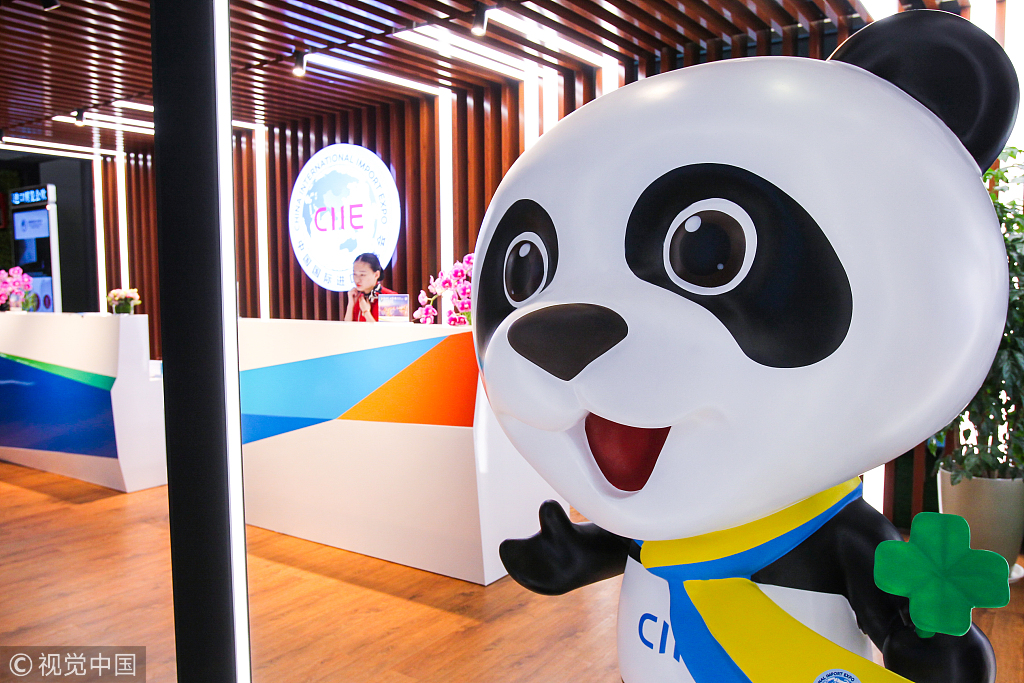
The 2019 China International Import Expo being held in Shanghai this week coincides with the United Nations Development Programme's four-decade development partnership with China. About 1 million people are expected to see new products and technologies being showcased by more than 150 countries from different industries all around the world. The expo, in its second year, is in many ways representative of China's increasingly important role in international trade and global engagement.
Indeed, China's trade volume is the largest in the world, and the country has become one of the world's leading export markets. This rise has also created an opportunity for China to be an important international financing and development partner. In 2017, China's total foreign direct investment was more than $100 billion. And China's official development assistance is helping partner countries around the globe in reducing poverty and improving people's livelihoods, while supporting advancement in areas such as agriculture, health, education and energy.
China's own development journey has been truly unprecedented. Just over 40 years ago, its economy was smaller than that of the Netherlands, now it is the world's second largest. More than 750 million people have been lifted out of poverty and per capita income has increased over 20 fold.
China is also the only country to have progressed from the low to high category on the human development index since the UNDP introduced it in 1990.
Over the course of four decades, the UNDP has been a privileged partner supporting China's development. From introducing the overall concept of sustainable development to China and fostering its acceptance and integration into governmental policies, to working for the achievement of the Millennium Development Goals, and now the Sustainable Development Goals, the UNDP has made important contributions to the country's transformation.
As China launched economic reform and opening-up, the UNDP was the first international organization to establish an office in China (in 1979) and assisted China with the transfer of global technologies, ideas and knowledge. This contributed, perhaps most notably, to the piloting of the first special economic zone in Shenzhen. Throughout the 1990s, we helped foster talents and strengthen capacities of the country by drawing on international experience and mobilized international financing.
The UNDP also supported China's accession to the World Trade Organization in 2001 by working with the State Intellectual Property Office to increase the government's capacity to handle intellectual property issues on global standards. Great emphasis was placed on energy and the environment, with the UNDP working on multiple initiatives to lower carbon emissions including the development of a national emissions trading system.
Today, the SDGs lie at the heart of the UNDP-China relationship. The 17 SDGs represent a global promise: to end poverty, reduce inequality and ensure the future of life on earth. These goals align with the Chinese government's goals of ending poverty and pursuing "open, innovative and inclusive development that benefits everyone".
Although some advances have been made toward achieving the SDGs, many obstacles still remain. Globally, progress is insufficient to reach the zero-poverty goal by 2030 and inequality within countries is rapidly rising. While China is on track to eradicate extreme rural poverty by next year with currently only 1.7 percent of the population living below the national poverty line of 2,800 yuan ($398) a year, inequality in China is on the rise.
Climate change is also an impediment to the pursuit of sustainable development everywhere. The past five years have been, collectively, the warmest on record with carbon dioxide emissions relentlessly rising. The world is not on track to keep global warming below 1.5 degrees Celsius. China, given the size of its economy, is one of the biggest emitters of greenhouse gas emissions despite massive investments in renewable energy.
Moving into 2020 and beyond, the next focus for China will be on reducing multidimensional poverty, taking into account education, health and living standards, and protecting the ecological balance to make the SDGs real for everyone, everywhere.
In addition to partnering with China to address development challenges at home, the UNDP's goal will increasingly also be to support China in helping other countries to pursue their sustainable development ambitions. With ambitious visions such as the Belt and Road Initiative, China has already become a significant driver of growth in many developing countries, particularly through South-South cooperation.
The "future is not what it used to be". Our New Era is increasingly complex and interconnected. Changes in all respects-economic, social and environmental-have accelerated much faster than change in institutions.
Meeting the UN's 2030 Agenda calls for integrated approaches to sustainable development and strengthened cooperation among all stakeholders. We need coordinated efforts and accelerated actions by countries, cities, civil society, academics, innovators and companies, to turn the SDGs into a shared reality.
The world has come a long way over the last 40 years, but there is more work to be done. In the future, sustainable development can be an integral part of life, in every city and every village. A planet that can sustain everyone, and a society that can include everyone: that is our next destination.
And China is key to reaching it.
The author is the resident representative of the United Nations Development Programme in China. The views don't necessarily represent those of China Daily.