Why night lights should set off red warning signs







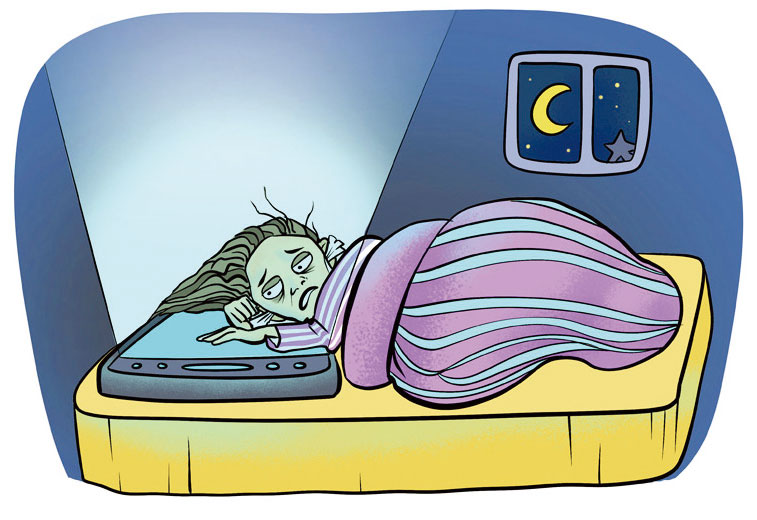
Bright lights and screen time are often associated with damaging sleep and insomnia, especially among children.
Various apps and features on our phones claim to reduce the damaging "blue light" emitted by our phones, which is said to keep us awake at night.
However, recent research suggests that screen time does not affect adult sleep and insomnia as much as we think, and that apps that change the color filter on our phones may seem more comfortable, but may actually be making the issue worse.
In China especially, the link between screen time and sleep hygiene is full of urban myths, and so navigating this sea of advice is often difficult.
It is a popular belief that blue light from electronic devices is the root of the problem. However, researchers from the University of Manchester have conducted a study indicating that this may not be the case, after exposing mice to varying levels of light settings in order to see how they reacted.
Human beings are diurnal, meaning that they are awake during the day and asleep at night. The natural waking and sleeping cycle, which we all adhere to, is governed by our body-clock synchronizing with our environment, so that we may feel sleepy or awake enough at the appropriate times of the cycle. It has been suggested for many years that so called blue light is responsible for disrupting this process.
The study with the mice in fact indicates that bright lights of either color had a stimulating effect, rather than a sedating one, and in dim settings blue lights were actually more restful than yellow lights.
Considering that the vast majority of electronic devices that have night mode settings turn light to blue when activated, this new discovery is at odds with the tech manufacturing status quo.
Researcher Tim Brown told the BBC: "During the daytime, the light that reaches us is relatively white or yellow and has a strong effect on the body clock and around twilight, once the sun sets, the bluer the light becomes. So, if you want to avoid light having a strong effect on your body-clock, dim and blue would be the way to go. At the moment, often what people are doing is adjusting the color of lighting or visual displays and making screens more yellow, our prediction is that changing the color is having exactly the wrong effect."
It is not just electronic screens that may now hold outdated concepts given this discovery. Many sleep lighting specialists and light bulb vendors run off the same traditional thinking, with the vast majority of online retailers marketing red or yellow lights as "warm" and good for sleep, especially for children.
As animals that have spent the vast majority of our evolution without artificial lights, the last few decades have proven to be extremely disruptive for our sleep cycles. Whether the light is warm or cold, yellow or blue, it seems that the brightness of the light is the determining factor for whether our brains remain stimulated at unnatural hours or not. Our modern-day 24/7 workplace culture demands that we make a compromise with our biology, adding feature after feature to our electronic devices to ensure we can stay connected late into the night with the promise of as little disruption as possible to our natural cycle. For the time being though, as more and more research comes through and consumer technology gradually takes note of scientific discoveries, darkness before bed may be the best form of light, as it has been for millennia.