No serious impact of virus on BRI projects







To contain the novel coronavirus outbreak, all provinces and municipalities in China have launched strict emergency health measures. And after declaring the novel coronavirus epidemic a public health emergency of international concern, the World Health Organization has released relevant suggestions regarding personnel, goods, containers and transportation vehicles.
Containing the spread of the novel coronavirus has now become a challenge for the entire international community. As the world's second-largest economy, China contributed 30 percent to global economic growth in 2019. Which means China remains the prime engine of global growth.
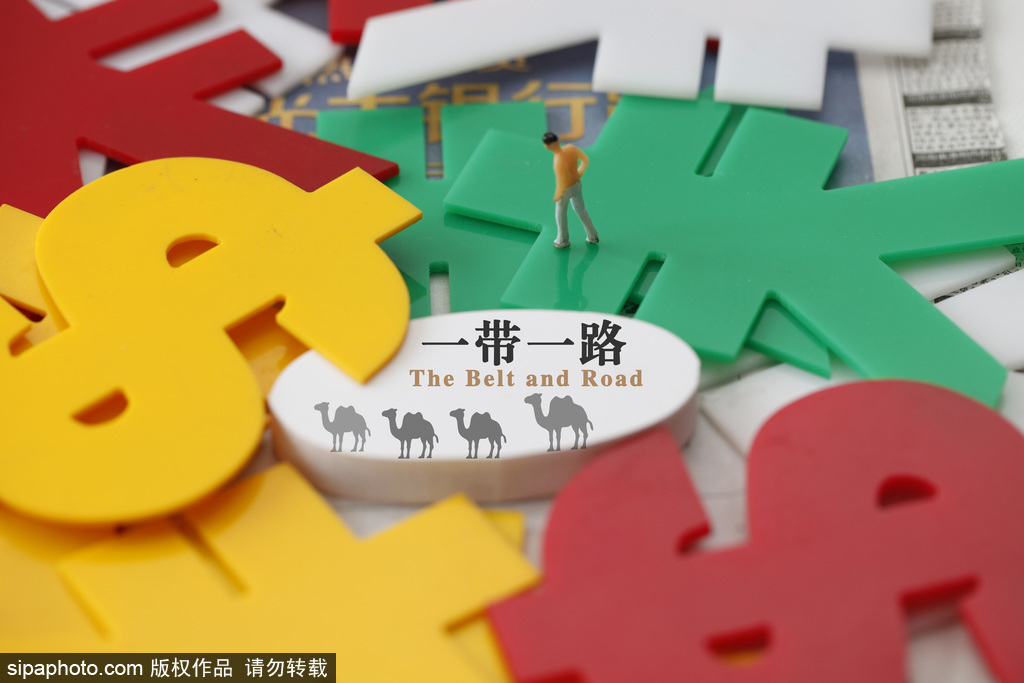
As such the outbreak will affect not only China but also other countries including those associated with the China-proposed Belt and Road Initiative. But despite threatening to reduce China's economic growth, the epidemic is likely to have only a temporary impact on the Belt and Road projects.
First, China's efforts to control the epidemic have begun to yield results, as the number of newly confirmed cases has continued to decrease. It would thus be fair to say that the spread of the virus has been effectively suppressed. In fact, on Feb 26, WHO Director-General Tedros Adhanom Ghebreyesus said that for the first time, the number of new cases outside China exceeded those within China.
Since the operation rate of more than 20,000 major production-oriented subsidiaries supervised by the State-owned Assets Supervision and Administration Commission exceeds 80 percent, and that of small and medium-sized enterprises is close to 30 percent, the negative impact of the epidemic on the overall economy could be controlled in the short term, which means the national economy has a strong chance of bouncing back to normal.
Second, the Chinese economy has great resilience, potential and vitality. In 2019, China's total GDP was close to 100 trillion yuan ($14.30 trillion) and grew by 6.1 percent. Although the growth rate was lower than 6.6 percent in 2018, it was significantly higher than the global growth rate. Besides, China's per capita GDP has now exceeded $10,000.
That China's exports have grown by 5 percent despite the Sino-US trade dispute shows not only the resilience of the Chinese economy but also the continuous optimization of its domestic business environment, which manifests the endogenous power of China's foreign trade. Stephen Roach, a senior researcher at Yale University, has said that the People's Bank of China has continued to inject liquidity into the market in recent days, indicating that the country has sufficient policy tools to meet the challenges. And the 40 economists Reuters interviewed recently said they were optimistic about China's economic outlook and believed that the Chinese economy would rebound rapidly in the second quarter of this year.
Third, only a few employees of the Belt and Road projects have contracted the novel coronavirus, essentially because such projects have a high localization rate. The Belt and Road projects have created hundreds of thousands of local jobs in the host countries. At present, 85 percent of the employees of State-owned enterprises' overseas branches are local employees, with the employment localization rate of many enterprises exceeding 90 percent. Petro-China's subsidiary in Indonesia and China Mobile's branch in Pakistan, for example, have hired almost 99 percent of their employees from among the local population.
Moreover, most of the Chinese working on overseas projects did not return to China during the Spring Festival holiday. This means the chances of them carrying the virus are minimal.
And fourth, most of the Belt and Road partner governments are working with the Chinese government to reduce the impact of the epidemic. Since the Belt and Road Initiative was proposed in 2013, trade between China and other Belt and Road economies has been continuously expanding, with the accumulated trade value reaching about $6 trillion.
Since 2013, China has made direct investment of more than $100 billion in Belt and Road partner countries, and paid $2 billion in taxes. The Belt and Road projects have been playing a positive role in promoting the development of the local economy in the host countries, and these countries know that supporting China is good for their own economic growth. No wonder leaders of more than 160 countries and 30 international organizations have sent letters of support to China.
Although some countries have suspended air and rail services, and personnel exchanges with China, these restrictions are short term and will be lifted gradually as the epidemic is contained. Thanks to the preventive and control measures China has taken, the epidemic will not seriously affect economic and trade cooperation between China and other Belt and Road countries.
As International Monetary Fund Managing Director Kristalina Georgieva said recently, if the epidemic is controlled quickly, China's economy will rebound soon.
Hopefully, international cooperation will help contain the epidemic soon, and there is much to expect beyond the epidemic. China will continue to work with all Belt and Road partner countries to contain the epidemic and ensure high-quality cooperation in the future.
The author is a research fellow at the China Center for Contemporary World Studies. The views don't necessarily represent those of China Daily.