What awaits China in oil geopolitics?







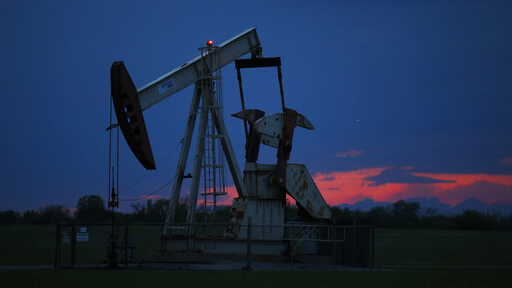
As the world is in a long battle with the COVID-19 pandemic, the international oil market, being an area that is highly susceptible to geopolitics, emergencies, and fluctuation in the economy, is a key area that has been affected too.
International oil prices are at a crawl due to the implications of the pandemic and the competition between countries, namely Saudi Arabia, Russia and the United States.
According to former chairman of Sinopec Fu Chengyu's analysis, neither Saudi Arabia nor Russia can bear low oil prices long-term. They know that the oil prices are determined by the pandemic though they are also aware that it falls on them to go great lengths to maintain the prices.
Unfortunately, both Saudi Arabia and Russia have their own economic demands and political interests to look after too. To achieve their economic goals, both countries would have to put up with US' shale oil whilst separately pursuing their political goals.
Saudi Arabia hopes to obtain the Royal House of Saud's protection to ensure a smooth transition of Prince Mohammed bin Salman's crowning while Russia wishes to exchange interests with the United States in Venezuela and Nord Stream 2 sanctions.
Meanwhile, US President Trump wants both Russia and Saudi Arabia to commit to the largest ever production cut agreement so as to protect American employment and save American shale oil companies.
The pandemic has enabled the three-way competition that outlines the basic structure of the current international oil market.For a country like China who happens to be the world's largest energy consumer, it would have to bear with latest changes in the market. Also, considering the changes are driven by geopolitical factors, the term"oil geopolitics" would be a fitting name.
How should China adapt to the new oil market driven by geopolitics? And how should it adjust its energy security strategy?
On a macro perspective, there may be some important points that require China's attention:
First of all, China must up its game in controlling its oil and gas resources better and ensure safety of the international energy transportation channels.
In the future when China becomes the world's largest consumer in energy and net importer of oil and gas resources long-term, it would need to meet its requirement of energy security within a global framework.
With that context in mind, it is crucial that the country maintains "control" of its oil and gas resources, namely its investment, extraction and transportation capabilities. It goes without saying that the United States is the only country dominating the transportation of global oil and gas resources currently. Put simply, China's goal now is to have enough resources, harvest them, and transport it back to the country.
Secondly, China needs to increase the capacity in its oil and gas reserve resources.
Establishing one's own oil and gas reserve resources is a key strategy to ensuring a country's short-term energy security. Thus, China should act quickly and strengthen its oil and gas reserves, including strategic reserve, commercial reserve etc., and form a strategic oil reserve model similar to that of the United States soonest. That way, it will not only ensure the country's oil and gas safety for a period but guarantee market regulation ability too.
Energy self-sufficiency needs to be made a long-term goal for China. Energy security under globalization is different from that of energy security under "inverse globalization." Ultimately, China can only ensure its energy security by increasing its rate of energy self-sufficiency. Fu Chengyu once suggested that China has to make up its mind to achieve basic energy self-sufficiency in 10 years or so - that is, more than 70 percent of the energy should resolve itself by then as the majority of increase will come from new energy and renewable energy, which will carry great strategic significance for China in the future.