


Space for new discoveries







In 2018, Wang led a space archaeology research team, including scientists from Tunisia, Italy and Pakistan, to discover 10 ancient Roman archaeological sites in Tunisia. They were unearthed at the western end of the maritime Silk Road after two years of remote sensing image processing and field investigation.
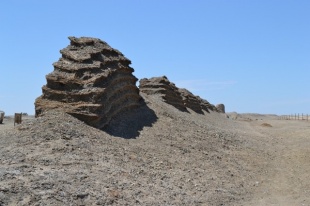
Tunisia was an important port for maritime trade under the Roman Empire. The archaeological sites they discovered are located in three Tunisian provinces-Gafsa, Tataouine and Medenine-the 10 sites include three sections of Rome Limes, two military fortifications, one agricultural irrigation system, three tanks and a burial site.
According to Wang, the discoveries are of great significance for not only the study of the empire's military defense systems, agricultural irrigation systems and the relationship between nomadic nationalities and ancient Rome, but also changes in ancient oases and environmental evolution.
"The Lime wall and fortress were used to defend and protect the border and prevent the harassment by the nomads from the south and the west. Meanwhile, the agricultural irrigation system and the water tanks for storing fresh water were used to ensure grain production and serve the living needs of the border soldiers," Wang says.
"It has a similar function to the Great Wall," he adds.
Wang's team used high-resolution satellite remote sensing imagery to judge the suspected sites on the basis of historical information and ancient maps, as well as employing a comprehensive geographic information system for spatial analysis.
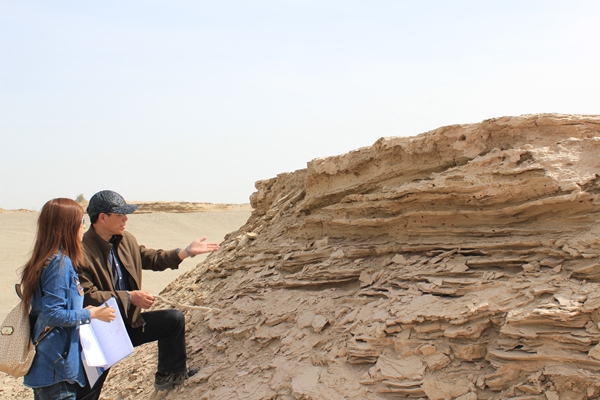
In the following field verification process, a joint team of remote sensing experts and archaeologists conducted the survey and verification.
"The precise locations of the site were identified by using the satellite remote sensing along with navigation and positioning systems," he adds.
It was the first time that a Chinese scientist had led such a project-involving major countries in Asia, Europe and Africa-to discover foreign archaeological remains and conduct systematic research by using space information technology in the field survey.
Bai Guangming, a cultural counselor at the Chinese embassy in Tunisia, said in a previous China Daily report that the country's advanced remote sensing technologies will provide great scientific support and strengthen cultural exchanges among countries involved in the Belt and Road Initiative.
This project is funded by the Digital Belt and Road Program, of the Chinese Academy of Sciences.
According to Wang, multiple international cooperation projects have been undertaken by his team. While the COVID-19 pandemic has delayed their plans for international field trips this year, the research and analysis work are still in full swing.