Has China made the world's key waterways less safe?
Mike Pompeo: China made the world's key waterways less safe for international commerce.







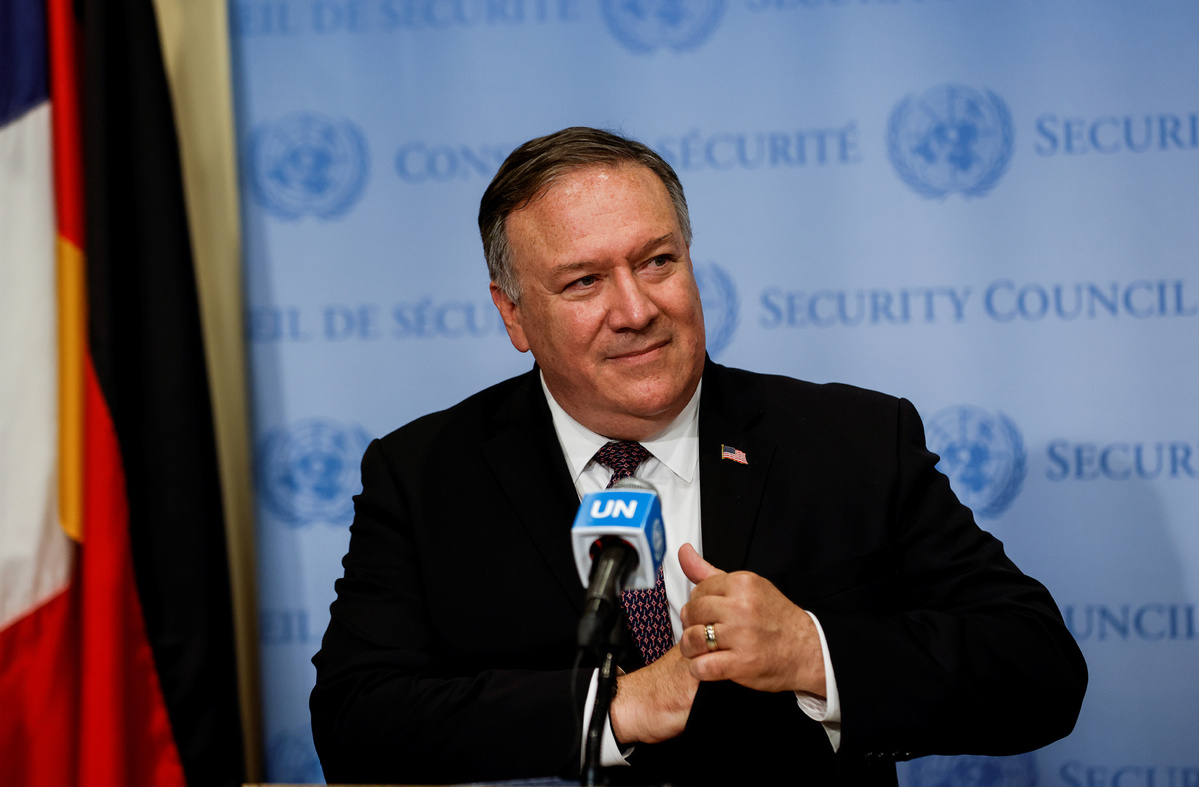
US Secretary of State Mike Pompeo, in his recent speech at the Richard Nixon Presidential Library, negated every aspect of China-US relations, maliciously attacked the leadership of the Communist Party of China (CPC) and China's political system, and attempted to drive a wedge between the CPC and the Chinese people. He also wantonly criticized China's domestic and foreign policies, spread the so-called "China threat", and called for an anti-China alliance to contain China's development.
Pompeo's baseless, fact-distorting speech misrepresents history and the reality. It is full of ideological prejudice and driven by a Cold-War mentality. His remarks have not only been condemned by the Chinese people, but also criticized and opposed by sensible people in the United States as well as the international community.
To debunk the lies fabricated by Pompeo, let the facts speak for themselves.
Rumor:
Mike Pompeo: China made the world's key waterways less safe for international commerce.
Fact:
As a matter of fact, China has been making great contribution to the global maritime trade security. China has always been committed to building a maritime community with a shared future. China has been involved in escort and humanitarian actions in the Gulf of Aden and Somali waters for a long time. China has also been pushing forward to jointly build the 21st Century Maritime Silk Road and fully participating in making and implementing the ocean governance mechanism and relevant rules within the United Nations framework, to fulfill the sustainable development goals related to oceans and seas.
-- China has been taking actions in safeguarding global maritime transportation security. According to relevant UN Security Council resolutions, China sent naval fleets to the Gulf of Aden and Somali waters for regular anti-terrorist and anti-piracy escort missions. Up till now, China has dispatched 35 fleets escorting more than 6,800 merchant ships, more than half belonging to foreign countries and international organizations. The safe and highly efficient escort missions by the Chinese naval fleets have won trust and recognition of merchant ships from all over the world. More and more foreign merchant ships have actively sought Chinese naval escort. A Panamanian merchant ship captain sent a mail to the Chinese naval fleet, expressing sincere thanks for the Chinese help.
-- China has been developing international cooperation through ocean. The Chinese naval hospital ship Peace Ark has carried out nine overseas missions, covering a distance of over 240,000 nautical miles. It has visited 43 countries and regions, providing free medical services for more than 230,000 people. The ship has also participated in disaster rescue operations and international military drills. Dubbed "the ship of life" and "the ship of friendship", it has left behind many touching stories of Chinese warmth and assistance.
-- China has made remarkable contributions to the epidemic prevention and control in international shipping. During the COVID-19 outbreak, China's Ministry of Transport compiled and issued operational guidelines on COVID-19 epidemic prevention and control for ships and crew, and emergency rescue and treatment guidelines for infected seafarers. The International Maritime Organization (IMO) has recommended the Chinese solutions to its 174 member countries. The guidelines have been a typical practice of China sharing experience in fighting against the epidemic and uniting with the international society to combat the severe challenges brought by the epidemic on international shipping.
-- From 2013 to 2016, China salvaged at least 3,396 Chinese and foreigners in distress from vessel accidents in the South China Sea area. According to the characteristics of the sea area and the actual conditions, China has set up rescue stations in Guangdong and Hainan, and deployed professional salvation vessels on duty. Since July 2018, Nanhaijiu 115, Nanhaijiu 117 and Nanhaijiu 116 salvation vessels have taken turns on duty in the southern sea area of the South China Sea. They have completed 17 rescue missions, saving 37 lives and salvaging five vessels in distress, with the value of the saved property reaching around 39 million yuan. According to a Reuters report in January 2016, some shippers believed a greater Chinese presence in the South China Sea could actually improve safety. One shipper in Singapore said that, "If China is to base search-and-rescue assets on the (disputed) islands then there would potentially be faster response times, improving the chances of rescue and survival."
-- Starting from May 2015, China successively built five large-scale lighthouses on Nansha islands and reefs. China has been providing comprehensive navigation services, and undertaken functions concerning navigation support, maritime search and rescue, navigation safety, fishery production, as well as the preparedness and reduction of maritime natural disasters. All these efforts have greatly enhanced the navigation safety support capability in this sea area. Since October 2018, China has started operating marine observation centers, meteorological observation stations and the Nansha Atmospheric Environment Monitoring Station in relevant Nansha islands and reefs, providing more public services to further safeguard the navigation safety in the South China Sea as well as life and work in the littoral countries.
-- The United States introduced the Freedom of Navigation (FON) Program in 1979 ahead of the signing of the UNCLOS. Challenging the new maritime order, the move aimed at maximizing the freedom of the US military power rampaging through the oceans. The so-called FON Program is not in conformity with the universally-recognized international law, disregards the sovereignty, security and maritime rights and interests of many littoral countries, and seriously jeopardizes regional peace and stability. Its essence is to advance American maritime supremacy under the pretext of "freedom of navigation", which has been opposed by many members of the international community, especially the developing countries.
-- The United States is the most destabilizing factor to the global maritime security, often intercepting and seizing merchant ships and oil tankers of other countries, frequently threatening naval blockade on other countries and main shipping lanes, constantly organizing military exercises in the "disputed waters," and provoking regional tensions. Some US military experts even touted the use of privateers to attack Chinese merchant ships.



- China's commercial rocket maker puts two satellites into orbit
- People in Taiwan commemorate victims of White Terror period
- China successfully launches new test satellites
- China launches Lijian 1 Y9 carrier rocket
- First cross-border event debuts at the National Games
- China Focus: National Games enhances coordination under 'one country, two systems'