Decoupling from China is a pipe dream







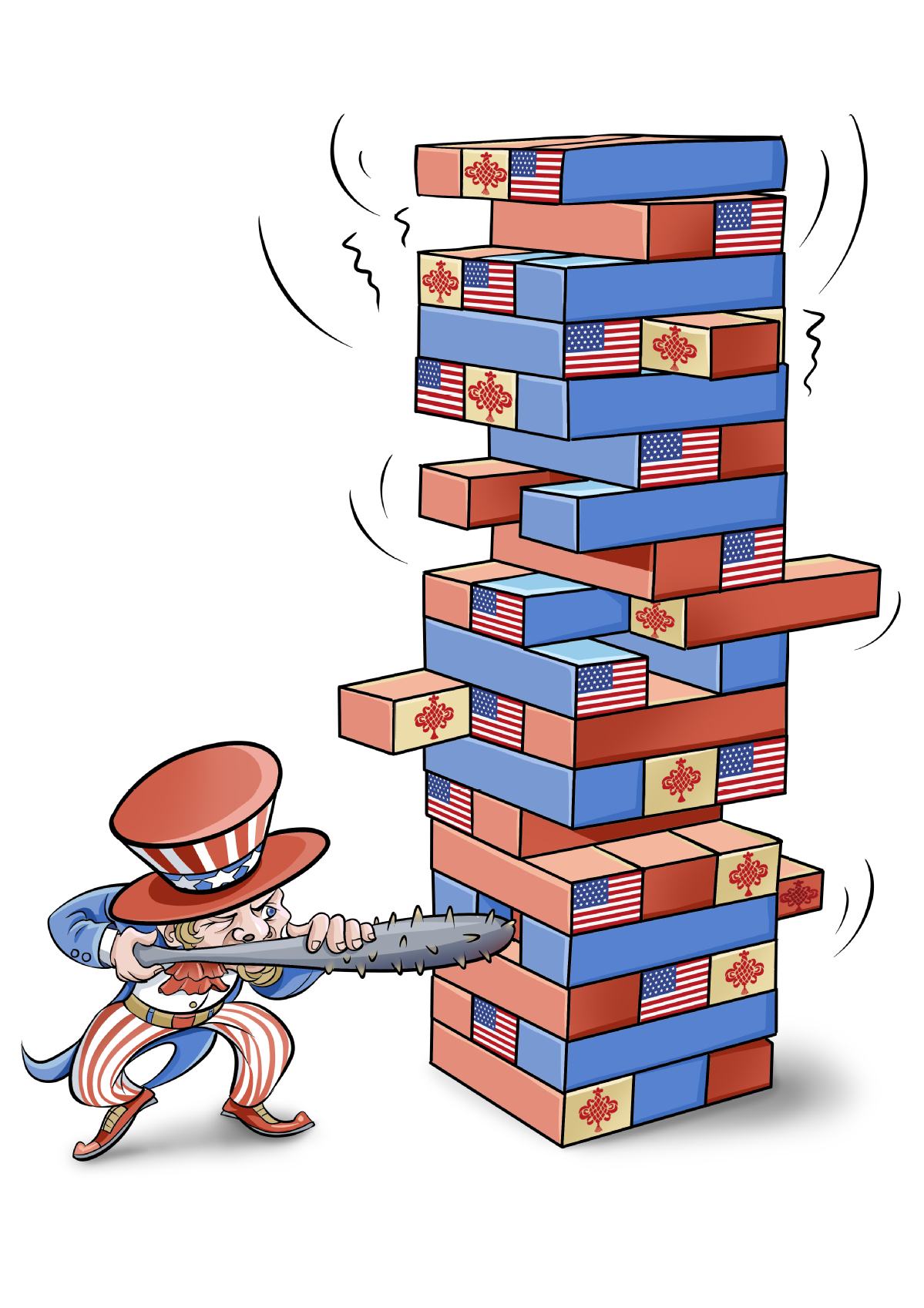
The US does not mean simply mean Washington whether under a future Trump or Biden administration, but includes the 50 states, many of which have taken a different position on federal initiatives, the business communities and the consumers. I can confidently state that that whole group cannot decouple entirely from China and that even coming close to decoupling would hurt the US more than China.
Trump has threatened to punish US firms that create jobs overseas in general and to forbid those that do business in China from winning federal contracts. Where would the American car industry be without the growing Chinese market in the last decade? What about foreign companies that invest in and create jobs in the US? I assume they would be welcome, but would they retaliate against the US restrictions? In supposedly the world's leading proponent of democracy, it does not seem like freedom to tell private enterprises where they can invest – especially if it boosts profits and creates new jobs in the US as well.
Trump has said, "We will make America into the manufacturing superpower of the world and we will end our reliance on China once and for all. Whether it is decoupling or putting in massive tariffs ….we will end our reliance on China because we can't rely on China". Most economists would say that the world has been relying on China since the 2008 global financial crisis and China has contributed up to half of world economic growth since then, and this year it is the only major economy forecast to achieve positive economic growth. By contrast, the US administration's mishandling of the current crisis has left many Western countries and US citizens worrying if they can rely on America.
There is a false narrative from Washington that decoupling from China will re-shore American jobs. The US has steadily moved away from manufacturing, which in 2019 accounted for just 11.39 percent of total output and employed only 8.51% of the workforce, according to official data. In fact, automation in manufacturing has been the trend and more jobs are likely to be replaced by robots in the future. It is service industries and agriculture that provide jobs and US farmers are looking to export more to China. Once COVID-19 is under control, could America ignore the importance of Chinese tourists, business visitors and international students to the service sectors? What about Chinese investment in the US and China's purchase of US government debt?
China itself is no longer seeking to attract foreign companies to provide low wage jobs in China while exporting the profits, instead seeking to move higher up the value chain. US multinationals have already been looking at other outsourcing possibilities and investing in production in lower wage economies in Asia – an acronym I call CLIVE – Cambodia, Laos, Indonesia, Vietnam, Etc. Spreading the low-cost production around Asia will happen to some extent, but this will not make the US the manufacturing superpower with American jobs. That ship has long sailed.
However, there will still be a powerful pull to China for US multinationals, because, unlike the other Asian options, only China has this large thriving, expanding domestic consumption market that gives American multinationals in China two bites at the cherry. Few companies can afford to decouple from that. Fortunately for US economic prospects, few intend to. The September release of AmCham Shanghai Business Report showed that, despite a rise in US-China tensions and slowing economy, American businesses in China remained profitable and 32.5 percent of companies expected 2020 revenues to be greater than in 2019. 78.6 percent of companies reported no change in their investment allocations, a 5.1 percent increase compared to 2019.
The reality is that US multinationals know that they cannot afford to decouple from China. Multinational, integrated supply chains will continue to be a feature of the global economy because they spread economic opportunities and increase efficiency. A virus can shut down local production temporarily anywhere in the world and create disruption. China has shown it has the capabilities to restart supply better than any other source. We should note that.
Of course, we have long known that US consumers cannot afford to decouple if they want innovative products, from good value items to the latest iPhone. It is the US consumer who would bear the brunt of high tariffs on Chinese imports as the demand is inelastic with few alternatives in the price ranges.
Decoupling from China is a political concept rather than an economic prospect. It is headline news - an attempt to win an election. The global economy could do without this distraction.
Colin Speakman is an economist and an international educator with CAPA: The Global Education Network.
The opinions expressed here are those of the writer and do not represent the views of China Daily and China Daily website.
If you have a specific expertise and would like to contribute to China Daily, please contact us at opinion@chinadaily.com.cn , and comment@chinadaily.com.cn