Fighting poverty with firm vision and action







Protecting lives
The political will to eliminate poverty is certainly a major driving force behind the country's successful efforts, he said.
More than 30 years ago, President Xi Jinping, then Party chief of Ningde city in Fujian province, set out to eradicate poverty. In his book Up and Out of Poverty, President Xi, also general secretary of the Communist Party of China Central Committee, stresses four important principles: avoiding a "poverty mentality" (ie, if you believe you are poor, you will be); adopting development measures that are suited to local conditions; the importance of strong leadership and coordination; and not wasting money on grandiose projects just because they may be popular. The way China has handled the novel coronavirus outbreak, for example, contrasts greatly with the thinking of some Western leaders, Brahm said.
"The attitude here is that every life is important. We are going to stop this pandemic for everyone, and everyone's going to make sacrifices together in order to achieve that. We contrast that with some of the decision-making in the West.
"Here in China every single life needs to be taken care of. We have to do this together. The country has come from a situation I witnessed, when I was here in 1981, when people were poor. They have systematically tried to pull the whole population out of poverty. Now we can see a rising middle class. The bulk of people are benefiting materially.
"And now they're looking at benefiting them environmentally. That has become a priority. The environment has become as much a priority as economic growth was before, because that's about the health of an economy. It's not just about the stock markets, it's about people and their long-term livelihoods.
"Whenever you talk to officials, education and environment are now the priorities."
This "Chinese approach or model" to development is in line with cultural sensitivities and priorities that may not be so apparent in the West, Brahm said.
"I think it's very important to look at traditions. The economic models that have been promoted by the Washington consensus, World Bank, IMF, all of these institutions for years have been models which have been based on a sort of academic set of theories.
"But people respond to other things. They respond to their own culture. They have their own sociological ideas; religion, heritage, family. These are all very important.
"The Washington consensus is based on the idea that you liberate capital markets, you open up foreign exchange, you effectively force an economic model on to societies that may not be ready for it and may not be interested in it, because it may not be the way that society functions. It may not be the way people think.
"If you think about the leadership here, many of the leaders in China have worked running enterprises, they've been in communities, they've been at the grassroots level. So they have pretty much a clear picture of all levels of government, business corporations, finance. They've been there, done that."
Still, while China has made impressive strides toward its stated goal of eliminating extreme poverty by the end of the year, major challenges remain-with the COVID-19 pandemic and its disruption to other economies and growth worldwide presenting a formidable obstacle, Brahm said.
"But the direction is set, and that's what's important. The political will is there to wipe out poverty. It's not about creating stock market fluctuations so that rich people can play arbitrage. It's not about 1 percent controlling most of the assets of a nation for their own benefit. It is about trying to create a broad-based benefit that everyone can share."

- Exhibition commemorating the epic relocation of universities opens in Fujian
- Twelve punished for scaffold collapse that killed 7 in Shandong
- Slovenian official visits whole-process people's democracy practice site of CPPCC committees
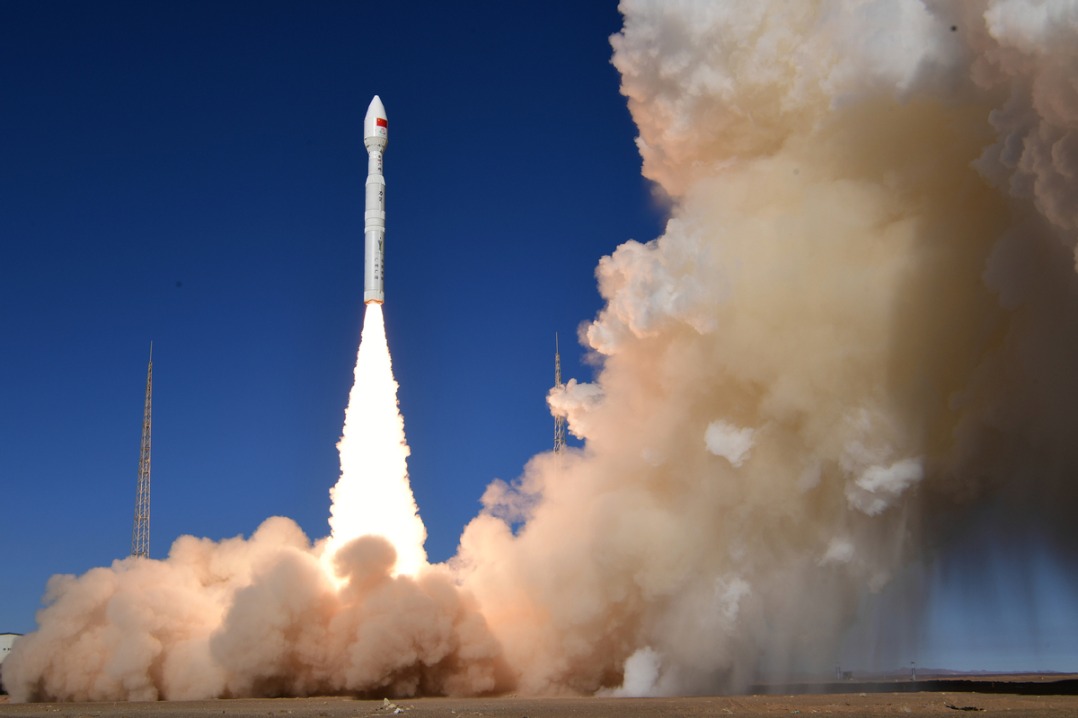
- China's commercial rocket maker puts two satellites into orbit
- People in Taiwan commemorate victims of White Terror period
- China successfully launches new test satellites