China at Davos: A steady voice for multilateralism







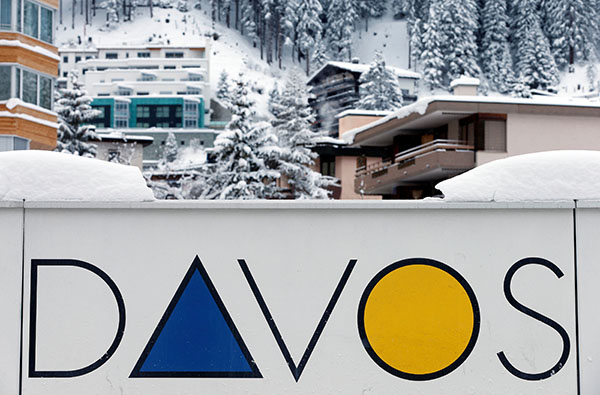
"It was the best of times, it was the worst of times." Four years ago in Davos, President Xi Jinping quoted this famous line of Charles Dickens to describe a world fraught with contradictions. He observed, "On the one hand, with growing material wealth and advances in science and technology, human civilization has developed as never before. On the other hand, frequent regional conflicts, global challenges like terrorism and refugees, as well as poverty, unemployment and widening income gap have all added to the uncertainties of the world."
Four years later, the world faces but more uncertainties brought by COVID-19. The virus has plunged many major economies into recession and battered the livelihoods of hundreds of millions around the world. While countries rightly executed strict protocols to battle the virus, these measures, to varying degrees, have disrupted the global industrial and supply chains. International exchanges, due to social-distancing, have been badly hit. At some points, international travel almost came to a halt. Flows of capital, technology, information and goods have been significantly affected. As a result, globalization and multilateralism have come under mounting skepticism.
The good news is, most in the world still believe in multilateralism. At last year's 15th G20 Leaders' Summit, countries voiced their support for multilateralism. Leaders from Germany, Russia, South Africa and Argentina called upon the world to jointly uphold multilateralism and come together in the spirit of solidarity and partnership to tackle global challenges, be it COVID-19 or economic recession.
China is as committed as ever to upholding multilateralism. Four years ago at the World Economic Forum, President Xi underscored the need to "adhere to multilateralism to uphold the authority and efficacy of the multilateral institutions". At last year's Extraordinary G20 Leaders' Summit on COVID-19, he again called on the international community to "strengthen confidence, act with unity, comprehensively step up international cooperation and foster greater synergy so that humanity as one could win the battle against the major infectious disease". In this era of globalization, mankind rise and fall together. Countries have never been as interconnected and interdependent as they are today.
Over the past year, COVID-19 has been a vivid reminder that it takes global efforts to fight a pandemic. Those who embrace globalization and multilateralism tend to have a better chance at effective containment and brighter development prospects. Imagine what it would be like if all countries looked inward and pursued a go-it-alone approach on vaccines and the economy. Imagine the consequences if all countries cut themselves off from the global division of labor and decoupled from the international economy. The pandemic would wreak more havoc, and economic reopening would be a much slower and painful process. If history teaches us anything, it is that only by working as one are we humans able to contain and ultimately defeat the threat of virus, be it SARS, H7N9 or Ebola.
In times of COVID-19, we have seen multilateralism at work: The COVID-19 Vaccines Global Access (COVAX) Facility was established to, among others, help developing countries secure access to vaccines; many governments worked diligently to facilitate clinical trials for vaccines and open "green channels" for the flow of medical supplies; countries around the world, including China, reached out to others by donating supplies, sending medical teams and sharing containment experience. All these examples demonstrate that humanity is indeed one family with a shared future.
As the world economy bottoms out from the COVID-19 recession, the signing of the Regional Comprehensive Economic Partnership Agreement, covering roughly 30 percent of the world's population and economic output, marks another victory of multilateralism and free trade and adds new impetus to the global recovery.
As aptly put by President Xi in Davos, "Whether you like it or not, the global economy is the big ocean that you cannot escape from." Globalization is the prevailing, unstoppable trend of the times. In this globalized world, one full of complexities and challenges, multilateralism is the only right way forward.