Chinese treatments benefit world







Apart from three approved indications and two indication-pending approvals that BeiGene has received in China, the drug currently spans 15 potentially registration-enabling clinical trials globally. The company has enrolled over 7,700 patients for the drug's trials, including about 2,500 patients in more than 20 countries and regions overseas.
In January, an agreement between multinational pharmaceutical giant Novartis and BeiGene was announced, which outlicensed the cancer treatment to the former.
According to the deal, Novartis will develop, manufacture and commercialize tislelizumab in the US, Canada, Mexico, member countries of the European Union, the United Kingdom, Norway, Switzerland, Iceland, Liechtenstein, Russia and Japan.
BeiGene will receive a record $2.2 billion from Novartis for the arrangement. The upfront cash payment will be $650 million and the company is eligible to receive up to $1.3 billion upon the achievement of regulatory milestones, and $250 million upon the achievement of sales milestones, in addition to royalties on future sales of tislelizumab in licensed territories.
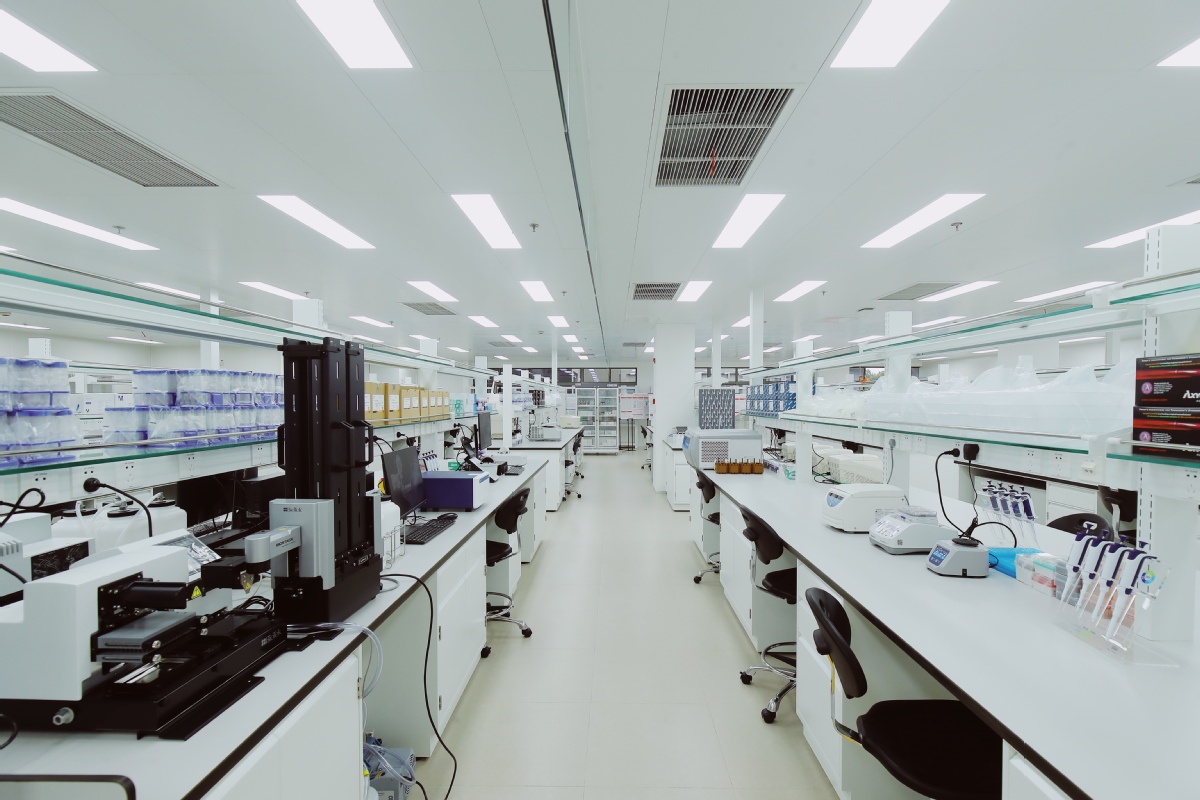
Wu said the company has established a strong global product R&D and commercialization system, as well as advanced facilities and manufacturing technique for production, to support the launch and commercialization of more innovative drugs in overseas markets.
"We expect to have up to 12 commercial-stage assets by the end of 2021, with more than 30 new assets in pipelines, and are determined and confident to build more commercial teams in the world to meet commercialization needs of those new products," Wu said.
"R&D, production and commercialization capacity are our core competence."
The company has built up commercial teams in developed countries including the US that have local employees, and in the next step, will expand presence in developing countries, especially those participating in the Belt and Road Initiative, Wu said.
Developing countries tend to have limited innovation capacity for new drug development, and cannot afford expensive drugs, and thus are often neglected, which creates opportunities for Chinese pharmaceutical companies that can offer quality drugs at affordable prices, he said.
Wang Lai, senior vice-president of BeiGene, observed Chinese pharmaceutical companies used to be followers in new drug development, but the landscape has been changing fast as many of them strengthen their innovation to develop first-in-class drugs. The increasing number of license-out deals in the Chinese pharmaceutical industry is just a reflection of such a trend, he said.
A recent report by Soochow Securities said the go-global strategy has become important for Chinese pharmaceutical companies even as they compete for domestic market share. Under the circumstances, considerable price cuts may be required for a drug to get into the national essential drug list for reimbursement.
As more Chinese pharmaceutical companies eye global markets, they are expected to have greater initiative and bargaining power in the global pharmaceutical market, said the report released in December.
A recent case is an out-license deal between US-based Eli Lilly and Co and Hong Kong-listed mainland biotech company Junshi Biosciences.
Last month, the USFDA granted an Emergency Use Authorization to Eli Lilly's combination of antibody drugs, bamlanivimab (700 milligrams) and etesevimab (1,400 mg), for the treatment of COVID-19. The therapy is authorized to treat mild to moderate COVID-19 in patients aged 12 and older who are at high risk for progressing to severe COVID-19 or hospitalization.
Lilly licensed etesevimab from Shanghai-based Junshi Biosciences in May as the antibody was poised to enter clinical testing. The antibody was jointly developed by Junshi Biosciences and the Institute of Microbiology, which is part of the Chinese Academy of Sciences.