South Korea's Musinsa expanding in China







The back-to-back opening of two stores by South Korea's fast-rising fashion group Musinsa in Shanghai this month is more than an offline expansion in the Chinese market. It reflects a broader shift in how overseas fashion players are entering the market, betting on local partnerships, value-driven positioning and designer fashion trends.
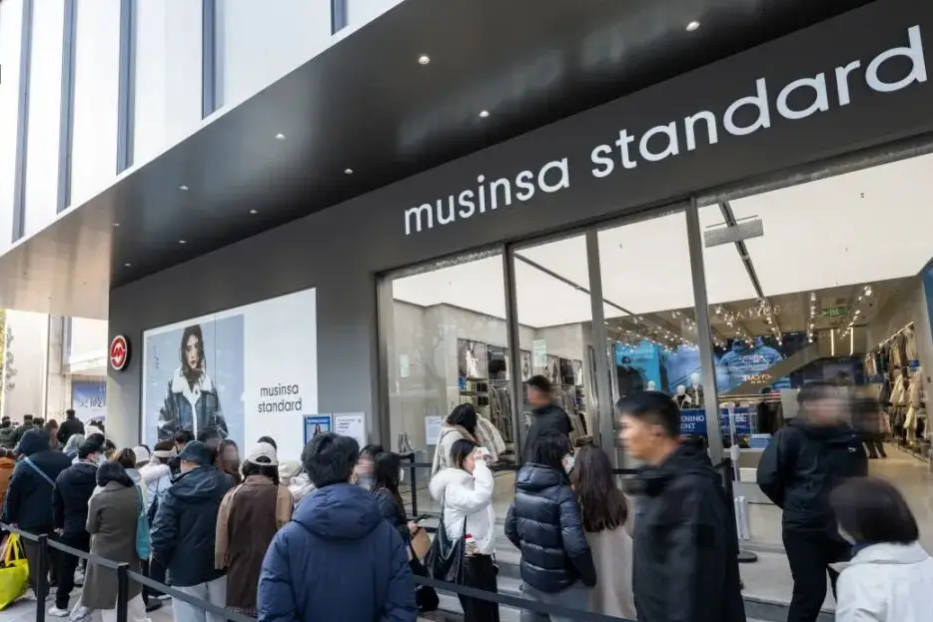
Often dubbed the "South Korean version of Uniqlo", Musinsa Standard, the group's private-label basics brand, opened its first overseas flagship store on Shanghai's Huaihai Road — located in one of the busiest commercial districts in the city.
Spanning more than 1,400 square meters across two floors, the store aims to capture the Chinese market with a highly localized strategy. It plans to strengthen seasonal and regional product assortments and deliver marketing initiatives tailored to the preferences of young Chinese consumers, said the company.
Five days later, on Dec 19, the company launched Musinsa Store, a multibrand concept shop, housed in a century-old standalone building on nearby Anfu Road.
The opening of two "international first stores" within a single week sent a clear signal of the South Korean company's long-term commitment to China. Musinsa said it plans to open more than 100 stores nationwide over the next five years and is targeting total China revenue of more than $712 million over the next five years.
Founded as an online fashion platform, Musinsa operates South Korea's largest digital marketplace for apparel, hosting over 10,000 brands. Musinsa Standard was created to deliver quality basics at affordable prices through streamlined distribution and efficient operations, catering to what the company calls an era of "value consumption".
At the Huaihai Road store, price points overlap with those of Uniqlo, with opening promotions offering discounts of up to 50 percent. By contrast, Musinsa Store adopts a more fashion-forward positioning. It carries more than 50 brands, including South Korean labels such as Osoi, Rockcake and Sculptor. Product categories range from apparel and footwear to bags and accessories.
Even before its physical rollout, Musinsa had laid digital groundwork in China. The group operates flagship stores on Tmall and Douyin, where its Tmall store has attracted more than 70,000 followers and hosts close to 30 brands. Musinsa has also said it plans to introduce China-exclusive product lines tailored to regional tastes.
Crucial to its expansion strategy is a partnership with Anta Sports, China's largest sportswear group. Under the agreement, the two companies have jointly invested in a new venture, Musinsa China, to oversee both the online and offline expansion of Musinsa Standard and Musinsa Store. Musinsa holds a 60 percent stake while Anta owns the remaining 40 percent.
For Anta, renowned for its multibrand portfolio spanning performance sportswear, athleisure and lifestyle segments, the joint venture offers exposure to South Korea's influential fashion ecosystem and the fast-growing convergence of sportswear and street fashion, said the company.
For Musinsa, Anta brings deep local expertise in retail execution, supply chains and consumer insights — assets widely viewed as critical in today's fragmented Chinese apparel market, said the company.
Still, Musinsa Standard is entering a crowded field dominated by global fast-fashion giants such as Zara and H&M, as well as local players like Urban Revivo. Meanwhile, a wave of South Korean brands — including emis, Rest & Recreation, Raive, Adererror and Satur — have accelerated their China expansion this year through flagship stores and pop-ups in top-tier shopping districts.
Industry observers said the current influx reflects a broader strategic rethink.
Cheng Weixiong, founder of Shanghai-based brand consultancy Liangqi, said:"The strong performance of South Korean-linked brands such as Kolon Sport in China in recent years — both backed by Anta Group — has encouraged more South Korean fashion labels to try their luck. Many of the newcomers are designer-driven brands whose emphasis on individuality aligns well with younger consumers' preferences."
Experts caution, however, that success in China requires patience and deep localization. While cities like Beijing, Shanghai, and Guangdong province's Shenzhen and Guangzhou, are highly internationalized and relatively easy entry points, the real test lies in expansion into smaller cities, Cheng said.
He added that consumer behavior and channel dynamics differ markedly.
"Turning short-term buzz into lasting brand equity will depend on product strength, supply-chain execution and sustained local investment."