



Education reform sets path to top-performing universities







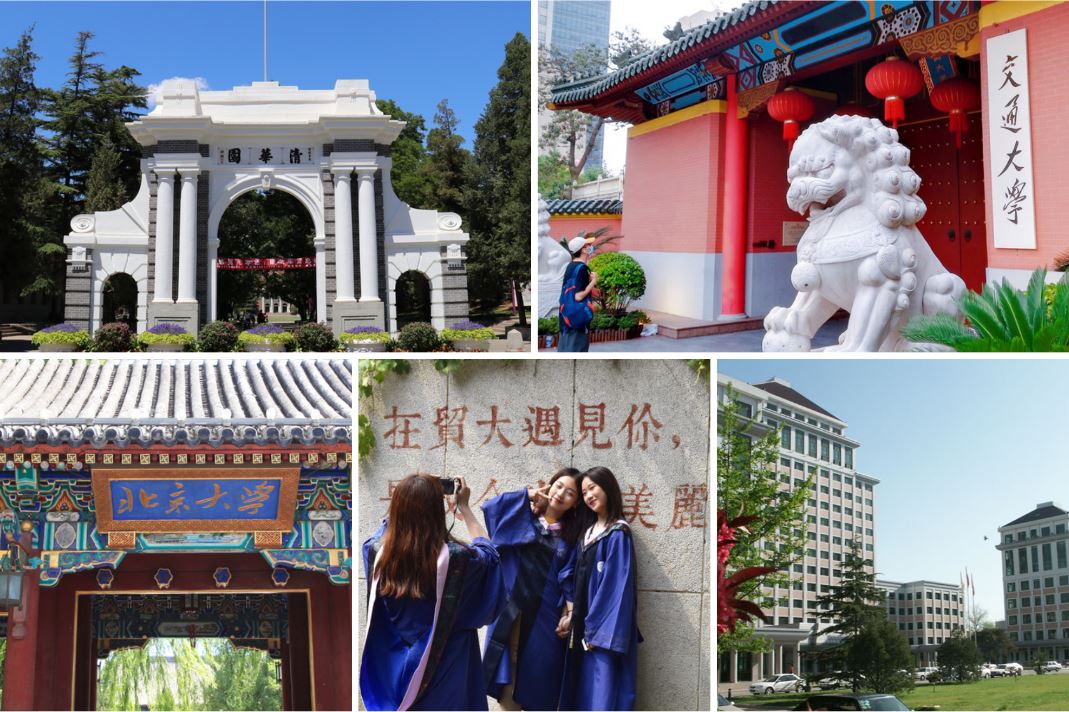
July is a life-changing time for many young people in China as they will receive letters of offer from universities, which imply better employment opportunities and greater prospects for their career and life, and even the better livelihood of their families.
Ke Yafang, born to a farmers' family in Xiamen, received an offer from Tsinghua University, China's top-performing university. Twelve years ago, she went to Wuli School, a public school in which the majority of students are migrant children.
In many countries around the world, it is assumed that the quality of school education is associated with student parents' social economic status. Nonetheless, this is not true in China. No matter children's family background, such as rural-urban migrants in the case of Ke, they could still go to universities through various pathways.
In China, high school graduates usually go to university through the college entrance examination, a highly competitive examination regarded as the most objective and most fair university admission system in the world. Any students who fares well in the college entrance examination could win a place at the university.
In recent years, more pathways have been built to allow students from a greater variety of backgrounds (in particular, who might not be able to fare well in the high-stakes examination) opportunities to go to universities, like the Strong Foundation Program through which Ke was admitted into Tsinghua.
The Strong Foundation Program was launched in 2020 as a national initiative to improve the university admission system, as well as high education delivery to meet the skill demand of national development. The program recruits students on the basis of their performance in the college entrance examination (85 percent) as well as a university's independent assessment of a student's overall ability and special talents.
The program offers high school graduates tailor-made education programs in top-performing universities, particularly for some outstanding students who do not attain high scores in the college entrance examination, it is a pathway to top-performing universities should they have other talents that make them stand out from others.
Ke's success is also attributable to the foundation of knowledge and skills she gained in Wuli school. She led an enjoyable and fulfilling life there for nine years and upon graduation she was admitted to the Xiamen Language School, which lead her to Tsinghua University.
Wuli is a typical example of education reform in China. Originally a Grade 1-9 school with only 16 classes and 839 students when founded in 2010, it has expanded to an enrollment of 4,788 students by 2020. Not only quantity of students but also quality of education have registered substantial growth over past 10 years thanks to its strategy of school development of an initiative called new education experimentation.
In this school, Ke has enjoyed an enabling learning environment with access to books at almost every corner, a green campus with no trash cans, and a close school-parent partnership where a hundred parents visit school every day. As other new education experiment schools, Wuli highlights motivating and engaging professional development, in particular, organized reading activities and action research as a way to improve daily teaching practice.
The New Education experiment was launched at the turn of the century by Prof. Zhu Yongxin, a university professor and vice-mayor of Soochow city. Joining the resources of schools, colleges and governments, the initiative has identified a set of approaches and strategies that address students' and teacher's needs for learning, growth and well-being. So far it has rolled out to 5,571 schools in 32 provinces, municipalities and autonomous regions of China, with half of the schools located in rural areas.
The New Education experiment is not alone. There are many other initiatives invented by scholars or practitioners that supplement the education reform led by the government and played a key role in education development in terms of both quality and equity.
Through years of effort, the college enrollment ratio has increased from 10 percent in 1998 to 54 percent in 2020. Now more than half of high school graduates can get to university, and China hosts the largest higher education system in China.
Such miraculous growth is commensurate to efforts and resources devoted by various stakeholders. Indeed China has a student-centered education system in which governments, schools, parents, students all strive for one goal - a student's learning performance and their future success.
Perhaps this is key to China's development, education and overall. While government is committed to growth and people's well-being and keeps on adapting its approaches and strategies to changing contexts and needs, it allowed grassroots experimentation and innovation to energize school development and educational processes, driven and inspired by their aspiration for a better future for students, people and the nation.
Wang Yan is an associate research fellow at the Graduate School of Education, Beijing Foreign Studies University.
The opinions expressed here are those of the writer and do not necessarily represent the views of China Daily and China Daily website.
If you have a specific expertise, or would like to share your thought about our stories, then send us your writings at opinion@chinadaily.com.cn, and comment@chinadaily.com.cn.
















