Long-term insurance helpful to elderly unable to help themselves







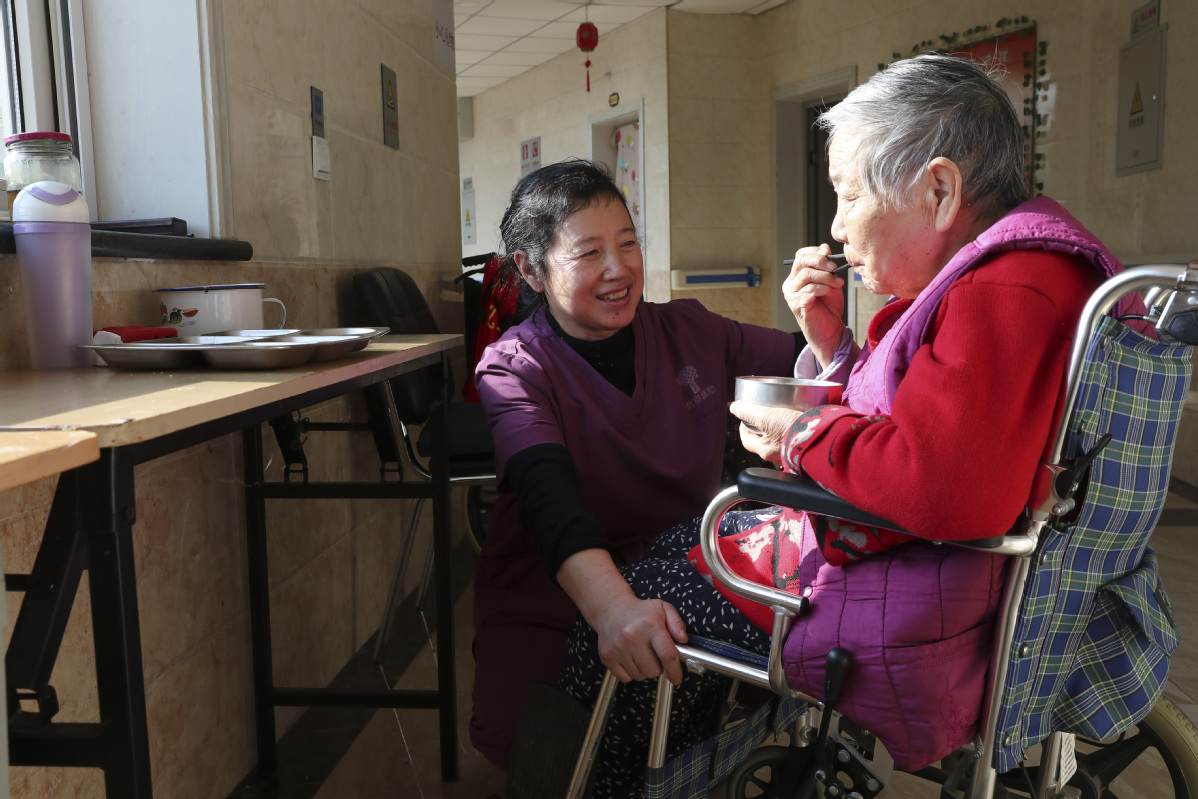
Fuzhou city, East China's Fujian province, has recently announced a list of 35 nursing agencies plus eight evaluation agencies covered by the long-term elderly care insurance, which marks a good start for that insurance in China.
According to the seventh national population census, the number of people aged 60 and above in the country has already reached 264 million, of which 40 million have lost the ability to care for themselves. Most of these dependent seniors are taken care of by their spouse, children or other relatives, while some choose to reside in hospitals.
The long-term elderly care insurance can help by covering or partially covering the cost of caring for them. Currently there are 49 cities pioneering long-term elderly care insurance, in which participants in the scheme pay a certain amount of money, with the rest coming from local social security funds and local government funds. At the end of 2020, 110 million people in the 49 cities were paying for the insurance, of which 1.36 million were benefiting from it.
Although the pilot long-term care insurance for the elderly has achieved good results, there is still a wide gap. Those who benefit from the insurance account for only about 4 percent of the 40 million seniors nationwide who cannot take care of themselves. It is necessary and urgent to expand the insurance so that more seniors can benefit from it.
That in turn requires improvement in several aspects, of which the first is the funding channels. Currently most of the funds for the long-term elderly care insurance come from social security funds and local government revenue, as well as payments from the individuals. This might not be sustainable because it relies too heavily on the social security funds. Local governments need to provide more funds and encourage more seniors to participate so as to lower the cost for all.
The second is preferential policies are needed to encourage more agencies to provide long-term elderly care services. On the one hand, tax cuts can be introduced for the sectors such as training for carers and the R&D of elderly care technology. On the other hand, insurance companies need to develop more quality long-term elderly care insurance products.
The third is introducing national standards for the sector. How to define a senior who is unable to take care of himself/herself? How to evaluate the elderly care services? What certificates must a long-term elderly care company obtain to enter the market? All these need unified standards so that the elderly care sector can grow more healthily.