New order taking shape in Middle East







A fierce rivalry between the forces of peaceful development and those of turmoil dominated the Middle East landscape in 2025. This struggle caused significant shifts in the balance of power among major regional players and realigned the regional political and security architecture, accelerating the transformation of the Middle East order.
Various long-simmering crises erupted in 2025. The prolonged conflict in Gaza killed nearly 67,000 Palestinians and injured many more. The spillover effects triggered three regional crises: a regime change in Syria, a 12-day conflict involving Israel, the United States and Iran, and an Israeli strike on the Qatari capital. Sustained strikes by Israel in Yemen, Lebanon and Syria, US military actions targeting the Houthi forces in Yemen, the escalating civil war in Sudan and the low-intensity conflicts in Libya were the other confrontations in the region.
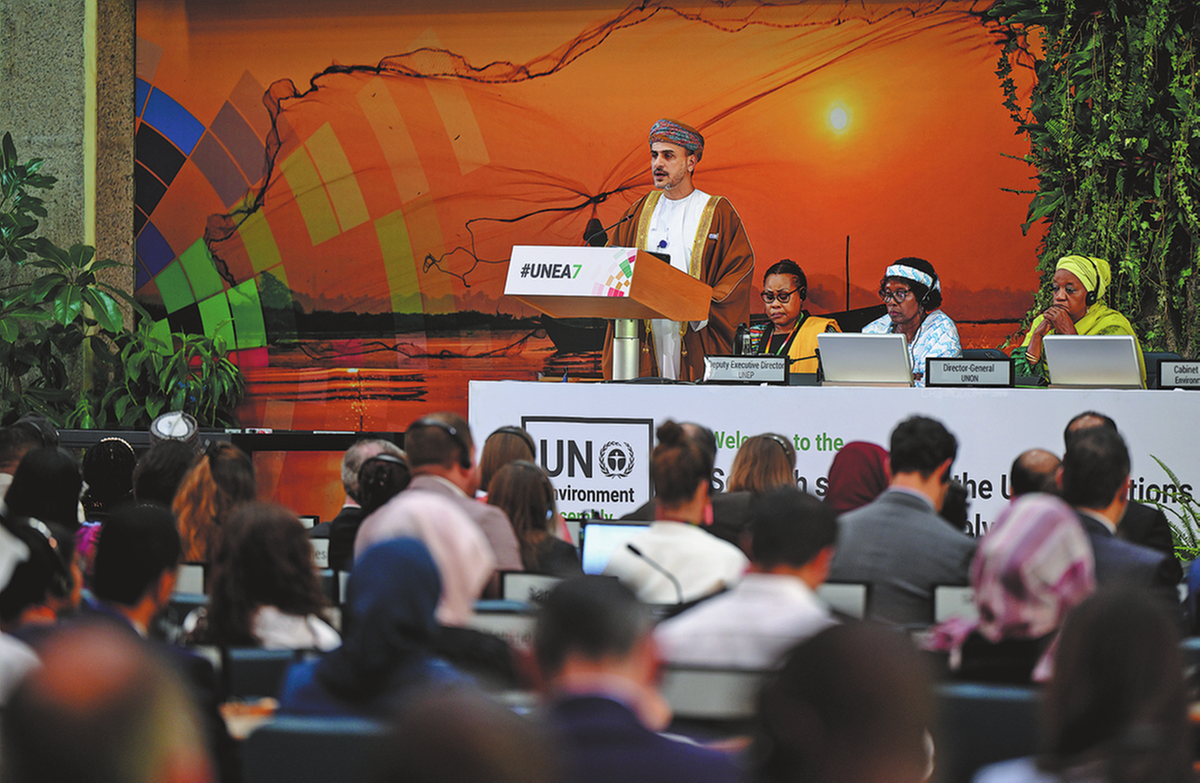
Yet, amid this turbulence, a new security architecture is beginning to take shape in the Middle East. Regional countries are exercising greater strategic autonomy while engaging with multilateral diplomacy to forge a new regional order. Mediation diplomacy has gained momentum, with many regional countries assuming the role of peace brokers and advancing conflict-resolution mechanisms independent of Western dominance. Regional countries are rolling out new national security and military strategies, while local defense industries are steadily emerging in countries such as Turkiye, Saudi Arabia, and the United Arab Emirates. As regional states redefine their ties with external powers and diversify security partnerships, the Gulf Cooperation Council is reinvigorating its collective security mechanisms, while the US initiative for a "Middle East version of NATO" faces significant challenges.
The Middle East has witnessed intense confrontation in recent years, particularly between the Iran-led regional forces and the US-Israel alliance. This dynamic reached a critical turning point in 2025. The Iran-led resistance has been significantly weakened by a severe blow to Hamas, the elimination of Hezbollah's leadership, a regime change in Syria and military strikes by the US and Israel on Iran. At the same time, Israel and Turkiye gained influence in the region.
The Arab world moves on divergent paths. While Gulf states represented by Saudi Arabia and the UAE have expanded regional political and economic influence, their security vulnerabilities have also become more pronounced. Meanwhile, North African countries have become more detached from core Middle Eastern affairs. Emerging regional powers, such as the UAE, Saudi Arabia, Egypt, Algeria, Turkiye and Iran, increasingly emphasize strategic autonomy. Wanting to play a greater role in both Middle Eastern and global affairs, these countries have become an important force in the Global South and serve as key mediators amid major power competition.
Strategic competition among major powers has accelerated the region's multipolar trajectory. In 2025, the US and Europe actively introduced new strategies for the region. Russia faced multiple challenges as it sought to revitalize its influence in the Middle East, while China continued to steadily advance economic cooperation with regional countries.
During the year, Washington took several steps on the Iranian nuclear issue, the Gaza conflict, the new regime in Syria and cooperation with the Gulf states. Meanwhile, Brussels rolled out a range of policies on West Asia and North Africa, signaling its attempt to reengage with the Middle East. Its new strategy carries clear undertones of major power competition, though skepticism remains about whether it can shift away from a perceived role as a bystander. Russia's influence in the region got dented by the Syrian regime change and the 12-day conflict, but Moscow hopes to recover lost ground and engaged with regional countries in the latter half of 2025.
The Donald Trump administration, in its second term, is also reshaping the Middle Eastern order. Strategic retrenchment remains the core of the US' Middle East policy. It aims to safeguard US interests and maintain regional dominance, while avoiding getting entangled in major regional conflicts. The 2025 National Security Strategy declares that the "days in which the Middle East dominated American foreign policy" are over.
The US Middle East policy is characterized by several key features. First, putting "America First", which narrows the definition of US interests to what are deemed core US national security priorities. Second, protecting Israel's security as a core US interest. Third, reinforcing deterrence and coercion based on "peace through strength" and showing a readiness to launch military operations when necessary. Fourth, pursuing a realist stance by downplaying ideological differences, abandoning "nation building" efforts and breaking from the post-Cold War policy of democratic transformation in the Middle East.
Together, these shifts have altered two long-standing pillars of traditional US strategy in the region: "land for peace" has given way to "Israel remains secure" while "oil for security" has been replaced by "economic and technological investment for security".
Governance in Gaza, the Iranian nuclear issue, Gulf development and security and the political trajectory of Syria will continue to be major regional hotspots capturing the international community's attention and shape the geopolitical landscape of the region.
The author is director of the Center for Middle East Development and Governance Studies of the Institute of West-Asian and African Studies, Chinese Academy of Social Sciences.
The views don't necessarily represent those of China Daily.
If you have a specific expertise, or would like to share your thought about our stories, then send us your writings at opinion@chinadaily.com.cn, and comment@chinadaily.com.cn.