Established facts
Latest IPCC report leaves no doubt climate change is human-influenced







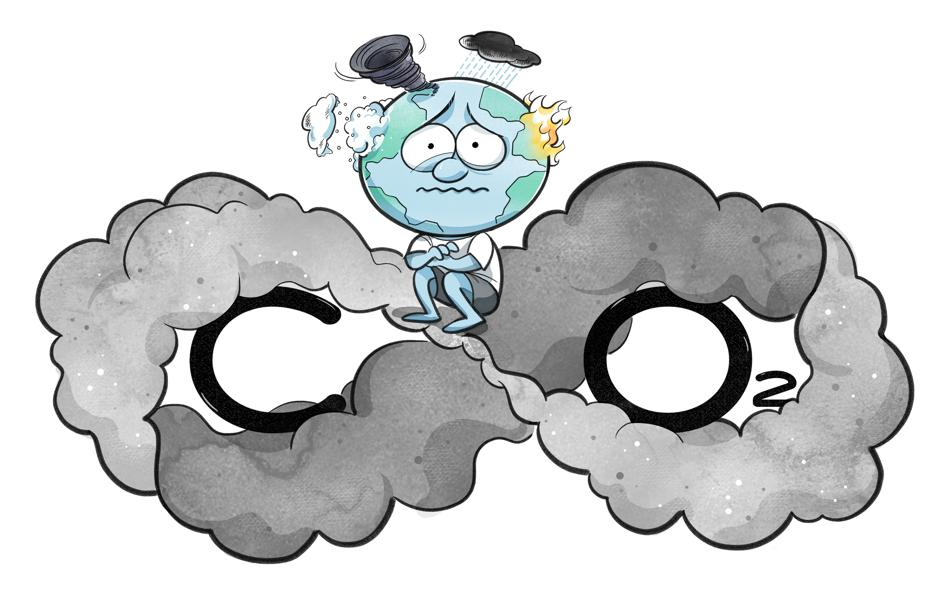
The latest landmark report that the Working Group I of the Intergovernmental Panel on Climate Change released on Aug 9 gives a clearer and more certain picture of what is causing the widespread and rapid ongoing climate change. The Sixth Assessment Report from working group I explains that its conclusion is based on a deepened understanding of the factors driving climate change, which is intensifying both in extremes and on regional scales, and is gained from longer observational datasets, improved paleoclimate information, a stronger warming signal since the Fifth Assessment Report in 2013, and improvements in climate models, physical understanding and attribution techniques.
"It is unequivocal that human influence has warmed the atmosphere, ocean and land", the report states bluntly. It is the strongest ever statement attributing the unprecedented climate warming to human activities. In contrast with the wording of previous reports which said that human influence was "likely", "very likely" or "extremely likely" to be driving global temperature rise, the use of the word "unequivocal" in its latest report leaves no room for further doubt.
The IPCC report finds a 1.07 C higher human-induced global surface temperature over the recent decade of 2010-19 than the period of 1850-1900, which is nearly equivalent to the observed warming (1.06 C) over the same period. This means that human activities are responsible for almost all of the observed increase in global surface temperature.
The higher confidence level is also seen in the role that human activities have played in some other aspects of the observed changes, such as the overall increases in atmospheric moisture and precipitation intensity, increase in ocean heat content in the upper layer, enhanced ocean acidification due to uptake of anthropogenic CO2, glacier retreat and increased surface melt of the Greenland ice sheet, among other things.
Of all the human-induced climate changes, the most easily perceived one by the public and governments is the altered frequency and intensity of extreme weather and climate events. The latest report warns that "human-induced climate change is already affecting many weather and climate extremes in every region across the globe". Since the Fifth Report in 2013, there have been enormous developments in extreme weather event attribution science, which enables researchers to spot climate change's role in extreme weather and climate extremes, including the likelihood of a change in frequency or magnitude. This technique, particularly for its application in the attribution of heavy rainfall and flooding caused by tropical storms, was chosen as the one of 10 breakthrough technologies by MIT Technology Review in 2020.Through comprehensively assessing long-term trend attribution and event attribution studies, the sixth report confirms strengthened confidence about the attribution to human influence for extremes such as heat waves, heavy precipitation, droughts and tropical cyclones.
Specifically, it is now virtually certain that human-induced greenhouse gas emissions are the main contributor to the global-scale alterations in the frequency and intensity of temperature extremes. For the intensification of heavy precipitation in land regions, human influence is almost certainly the main cause. The new report says with some confidence that human-induced climate change has contributed to increases in agricultural and ecological droughts in some regions and to the increase in the global proportion of major cyclone occurrence. Human-induced climate change has also likely increased the probability of compound events, which are defined as the combination of multiple drivers and/or hazards that contribute to societal or environmental risks.
Without human-induced warming in the climate system, some recent hot extreme events experienced over the past decade would have been extremely unlikely to have occurred. Human influence is also found to be responsible for the intensification of heavy rainfall brought by tropical cyclones.
The deepened understanding of the influence of human activities through greenhouse gas emissions on climate change once again calls for the urgent need for slashing greenhouse gas emissions.
The new report warns, "global surface temperature will continue to increase until at least the mid-century under all emissions scenarios considered". To limit human-induced global warming to a specific level and minimize the impacts from it, limiting cumulative CO2 emissions, reaching at least net zero CO2 emissions, along with strong reductions in other greenhouse gas emissions, is required. As the Paris Agreement aims to hold the global mean temperature rise well below 2 C with countries making efforts to keep it below 1.5 C above the pre-industrial level, the latest report underscores how imperative it is to make deep reductions in CO2 and other greenhouse gas emissions in the coming decades. It highlights countries need to take action as soon as possible and as fast as possible.
However, even with strong reduction actions, warming will not halt immediately because the CO2 emissions have already cumulated in the atmosphere. As the climate continues to warm, the observed changes in probability and/or magnitude of many extreme weather and climate events will become greater as the human influences on these events increase.
Therefore, besides mitigation, investing in adaptation is also important and essential to address the climate change issue. To prevent and reduce disruptions from some highly impactful extreme events, an adaption strategy needs to be tailored for each region and the corresponding investment needs to be well planned. Thus, for different types of extreme events with well-informed risks from attribution studies, a corresponding strategy on enhancing resistance can be formulated. Moreover, investing in early warning and weather observation systems is also a powerful way to reduce the cost in lives and property.
Zhou Baiquan is an assistant research scientist on climate change at the Chinese Academy of Meteorological Sciences. Zhai Panmao is a chief scientist on climate change at the Chinese Academy of Meteorological Sciences. The authors contributed this article to China Watch, a think tank powered by China Daily. The views do not necessarily reflect those of China Daily.