Better lives for all







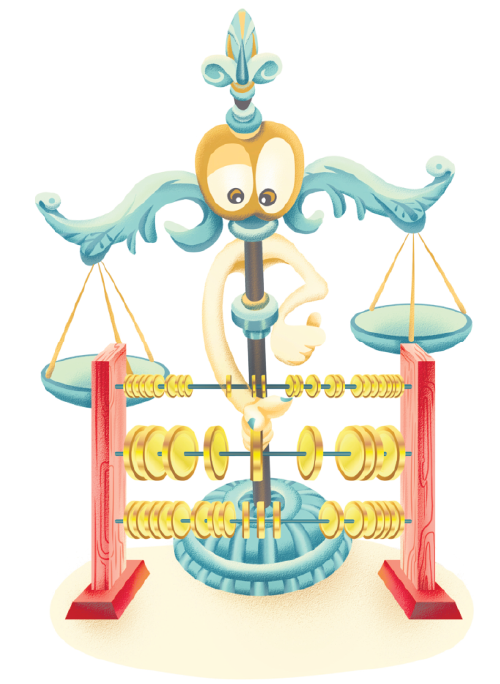
Efforts needed to ensure fairer wealth distribution while pursuing high-quality development
On Aug 17, the 10th meeting of the Central Commission for Financial and Economic Affairs of the Communist Party of China outlined steps to promote common prosperity. Common prosperity is an essential requirement for China to realize its goal of being a prosperous modern socialist country. And the meeting highlighted the need to uphold the people-centered philosophy to promote common prosperity while pursuing high-quality development.
Realizing common prosperity is a long-term task of great significance. Common prosperity should benefit not only urban residents, but also those in rural areas; not only the middle-income group, but also the low-income group; and not only the contemporary, but also later generations. That means pursuing common prosperity via a fairer wealth distribution system.
First, fairer distribution of wealth is a prerequisite for realizing common prosperity. As a country still in the primary stage of socialism, China is plagued by unbalanced and inadequate development, with wide gaps existing among regions and between urban and rural areas. One of the key tasks for comprehensively deepening reform and opening-up is to achieve balanced, inclusive and coordinated development, and to bridge the income gaps between urban and rural residents while maintaining economic growth. To ensure that the country's development fruits can be shared by all, the country should lift the proportion of labor remuneration in primary distribution, improve the mechanism for reasonable salary growth and adjust the minimum wage standards appropriately. It should perfect the distribution mechanism based on contributions made by production factors including labor, capital, technology and management, and enable everyone to secure proper incomes from labor and innovations. To achieve common prosperity also requires balanced development across regions, and coordinated development in different industries, which can be achieved through bolstering support for medium and small-sized enterprises.
Second, China should improve the basic public services for urban and rural residents. Despite a basic public service system already established, there are disparities in the institutional arrangements and standards between urban and rural areas. Efforts should be made to narrow the gaps and make basic public services equally accessible to both urban and rural residents. For example, the children of migrant workers still face hurdles in entering schools in cities. To solve the problem, institutional barriers should be demolished to ensure fairer access to quality education for all children. Another case in point is to build a mechanism that ensures reasonable income growth for less well-off people.
Third, wide public participation is required to allow social wealth to be shared by all. The country needs to develop public welfare causes, including charities, and encourage the high-income group to participate and invest in public welfare activities and assume more social responsibilities. For instance, grassroots labor union mutual funds, among other forms of mutual-aid mechanisms, should be established to form an assistance mechanism for education and healthcare. It is important to mobilize the enthusiasm of the whole of society to serve the public good.
China has witnessed a widening wealth gap as well as rapid economic growth since reform and opening-up policies were launched more than four decades ago. The income disparities between rural and urban areas, among different regions and different groups of the population remain prominent. The root cause is that reform of the income distribution system lags behind social and economic development. As the country has entered a new development stage, it is an urgent task to deepen reform of the income distribution system to achieve common prosperity.
The country needs to strike a balance between efficiency and equity in reforming the income distribution system. In the early stage of the reform and opening-up, the main problem facing China was how to make the pie bigger. Over the past more than 40 years, the priority was efficiency, which contributed to the country's rapid economic development and the building of a socialist market economy. Now that the country has entered a new development stage, more weight should be given to equity to meet people's aspirations for a better life.
To deepen the reform of the income distribution system, a new pattern that coordinates primary distribution, redistribution, and tertiary distribution should be established, in which primary distribution should focus on efficiency and the creation of wealth, and redistribution and tertiary distribution should be aimed at promoting social equity, with tertiary distribution widely participated in by the public.
In the primary distribution, emphasis should be placed on fairer distribution for different production factors. The distribution institution for various production factors such as labor, technology and management is not yet perfect in the primary distribution. For instance, the institutional arrangement on labor property rights is not in place, with labor rewards not taking up their due proportion in primary distribution. Therefore, in promoting market-oriented reform of production factors, a market mechanism that allocates payments to different production factors-labor, capital, land, knowledge, technology, management and data-according to their contributions should be set up. It is of great importance to incentivize the enthusiasm of young people to innovate and start businesses and mobilize the production enthusiasm of people from all walks of life.
Redistribution should focus on providing equitable basic public services to all residents. The government should adjust the tax system to ensure a fairer distribution of social wealth and equal access to basic public services from different groups of the population. The priority is to help the 280 million migrant workers to settle down in cities, which is critical for the goal of basically realizing "socialist modernization" by 2035.
Tertiary distribution should play an important role in pursuing shared prosperity. To mobilize the enthusiasm of the whole of society to participate in tertiary distribution is central to achieving common prosperity. The tax system should be adjusted to encourage market entities, social organizations and individuals to take part in charities and voluntary activities, and encourage those who get rich earlier to help latecomers, thus promoting social fairness and justice.
The author is president of the China Institute for Reform and Development in Hainan. The author contributed this article to China Watch, a think tank powered by China Daily.
The views do not necessarily reflect those of China Daily.
Contact the editor at editor@chinawatch.cn