China issues white paper on biodiversity conservation








BEIJING - China's State Council Information Office Friday issued a white paper (full text) to introduce the country's actions on biodiversity conservation and share its achievements in the sector.
The white paper, titled "Biodiversity Conservation in China," said that China preserves biodiversity with creative and up-to-date measures, forming a new pattern of biodiversity conservation.
Here're some of the highlights:
China aims for win-win results in biodiversity conservation, high-quality development
China cherishes the principle that lucid waters and lush mountains are invaluable assets, and sees biodiversity as the foundation, objective and means of sustainable development.
China contributes 10% of world's new plant varieties in past decade
China has contributed up to 10 percent of the new plant varieties identified worldwide in the past decade. In this period, the country has identified about 200 new varieties of plants per annum.
China takes lead to propose, implement red line strategy for ecological conservation
China was the first in the world to propose and implement the red line strategy for ecological conservation. The country has also designated priority areas in biodiversity protection. These measures have contributed to the conservation of key natural ecosystems, biological resources, and habitats for key species.
Protected areas account for 18% of China's land area
China has established about 10,000 protected areas of all types, which account for about 18 percent of the country's total land area.
The well-planned protected areas system has brought 90 percent of terrestrial ecosystem types and 71 percent of key state-protected wildlife species under effective protection.
Habitats for wild animals keep expanding
The habitats for wild animals in China have been expanding and their populations are growing.
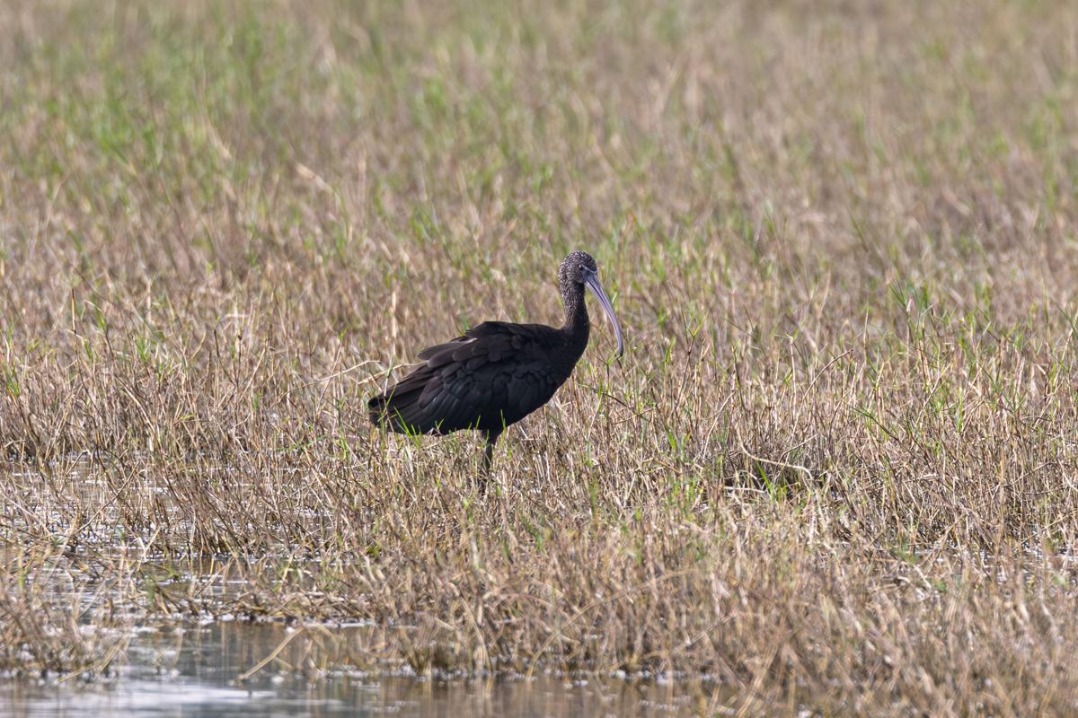
The population of giant pandas in the wild has grown from 1,114 to 1,864 over the past four decades. The crested ibis population has increased from only seven to over 5,000.
The Asian elephant population in the wild has grown from 180 in the 1980s to about 300 at present. The wild population of Hainan Gibbon has increased from no more than ten in two groups 40 years ago to 35 in five groups.
China contributes most to world's green area growth in 2000-2017
The country has contributed about 25 percent of global vegetation growth in the reporting period, the biggest share among all countries.
China's forest coverage and forest reserve have both maintained growth for the last 30 years, and the country has realized the largest growth in forest resources among all countries in the world.
Remarkable results in pollution control
The country has improved the quality of air, water and soil.
In 2020, China's average concentration of ambient particulate matters, or PM2.5, declined by 28.3 percent from 2015, while the percentage of days with good air quality rose by 5.8 percentage points from 2015.
The combined proportion of state-controlled water sections with good-quality surface water was 83.4 percent last year, up by 17.4 percentage points from 2015, while that of good-quality offshore waters was 77.4 percent in terms of area, up by 9 percentage points from five years earlier.
In 2020, the safe utilization rate of contaminated arable land and that of contaminated land both exceeded 90 percent.
China achieves remarkable results in fulfilling biodiversity obligations
China has made positive contribution to the 2020 global biodiversity targets (the Aichi targets) and the United Nations 2030 Sustainable Development Goals.
China has over-fulfilled three of the Aichi targets - establishing terrestrial nature reserves, restoring and ensuring important ecosystem services, and increasing ecosystem resilience and carbon storage - and made progress in 13 targets, including mainstreaming biodiversity, sustainable management of agriculture, forestry and fishery, and sustainable production and consumption.




- Exhibition commemorating the epic relocation of universities opens in Fujian
- Twelve punished for scaffold collapse that killed 7 in Shandong
- Slovenian official visits whole-process people's democracy practice site of CPPCC committees
- China's commercial rocket maker puts two satellites into orbit
- People in Taiwan commemorate victims of White Terror period
- China successfully launches new test satellites