Vaccines: from suspicion to confidence







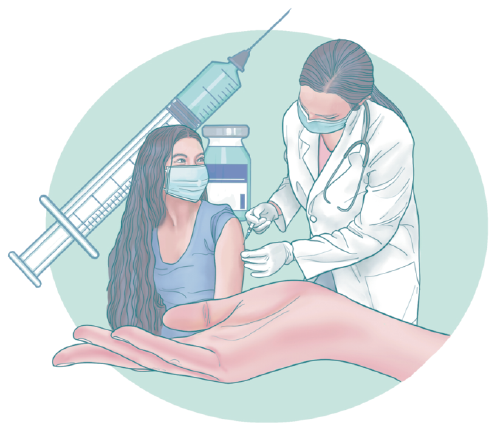
Making COVID-19 vaccines accessible to all is crucial. But it's just as important to ensure that as many people as possible feel confident enough to take them. While access to COVID-19 vaccines remains an obstacle in many low- and middle-income countries, another challenge looms: vaccine hesitancy.
Vaccine hesitancy, defined as reluctance or refusal to get vaccinated despite the availability of vaccines, has become a major global concern, threatening to fuel more virulent variants and contribute to more COVID-19 hospitalizations and deaths.
Understanding the factors driving vaccine hesitancy and developing strategies to build trust in the COVID-19 vaccines are critical to countries' on-going response efforts and to managing a virus that many experts now believe will become endemic.
What do we know about vaccine hesitancy?
In 2019, the World Health Organization identified vaccine hesitancy as one of the top 10 threats to global health, and resistance or refusal to get vaccinated is not unique to COVID-19. In the Asia-Pacific region, human papillomavirus (HPV) vaccine hesitancy among parents in Japan increased precipitously after 2013, when the vaccine was linked to reports about unconfirmed adverse effects.
In the Philippines, controversy over the dengue fever vaccine, Dengvaxia, was believed to erode vaccine confidence in the country and contribute to a dramatic fall in childhood immunization rates. Elsewhere, hesitancy peaked in the United States and the United Kingdom for the measles, mumps, and rubella (MMR) vaccine when it was erroneously associated with autism.
Many factors behind vaccine hesitancy
Vaccine hesitancy is a complex attribute, and fueled not only by concerns about vaccine efficacy and safety. Socio-cultural, environmental, economic and political factors are drivers as well. Some communities, for example, believe that vaccines can cause infertility as a form of population control.
Distrust of vaccines by minorities and disadvantaged communities who have suffered from marginalization and discriminatory practices (for example, ethnic minorities, migrants, people fleeing conflict or persecution) is yet another barrier to vaccine uptake. For others, vaccine complacency, not considering vaccination necessary or a priority, has delayed uptake.
What is driving vaccine hesitancy in the era of the COVID-19 pandemic?
Reluctance to get vaccinated is driven by similarly complex factors. It persists despite the vaccines' wide use and real-world effectiveness, and the high number of COVID-19 cases and deaths around the world.
Studies have shown that in many high-income countries, COVID-19 vaccine hesitancy can be attributed to a combination of factors, including suspicions about the safety of the mRNA technology used to develop the Pfizer and Moderna vaccines; fears that the highly compressed "fast-track" research, development and approval process has compromised the quality and integrity/safety of the vaccines; religious beliefs; the influence of traditional and social media in spreading misinformation; and the politicization of COVID-19.
In low- and middle-income countries, studies have suggested that the widespread acceptance of routine childhood immunization, including against many vaccine-preventable infectious disease, appears to translate to a higher acceptance of the COVID-19 vaccines.
However, hesitancy within specific communities remains a challenge and has been driven by several factors. These include previous negative experiences with foreign-led vaccination campaigns (in Pakistan for instance), religious beliefs (for example, in Indonesia), and worries about fake COVID-19 vaccines (in the Philippines for example).
In high- and low- as well as middle-income countries, myths, misperceptions and misinformation about vaccines abound, fueled via social media. At the same time, external events, such as early reports of the side effect of clotting from the AstraZeneca and Johnson and Johnson vaccines, have also contributed to vaccine hesitancy.
How can vaccine confidence be built?
The distribution of COVID-19 vaccines has been plagued by equity issues, supply constraints, structural barriers, and logistical challenges. As a result, significant coverage is yet to be achieved in many low- and middle-income countries in the Asia-Pacific region. Yet this delay has created an opportunity.
Valuable lessons for governments
As countries in the region have waited for the COVID-19 vaccines to trickle down, they have also been able to prepare and test-run their vaccine distribution, administration and monitoring systems. These lessons, along with those learned from the rest of the world, have provided governments with valuable information that can be used to strengthen vaccine confidence, which refers to trust in recommended vaccines and the range of entities (such as government, health providers and the private sector) behind it.
As experience in wealthy countries has shown, making the vaccines accessible is only one part of the solution. Moving from willingness to uptake of vaccination requires multi-pronged strategies that integrate individual, social, and environmental factors. Current evidence suggests that the following three interconnected approaches could be used to address vaccine hesitancy and expand COVID-19 vaccine uptake:
The first is strengthening trust in the vaccines using established sources. Healthcare workers are a highly trusted source of information, and healthcare provider-patient encounters provide an opportunity to reinforce vaccine safety and efficacy concerns. Training healthcare workers to strengthen their role in increasing awareness, knowledge, and dispelling myths at an interpersonal level is critical to promoting vaccination uptake. In several countries, other cadres (community-based workers and volunteers) have also been recruited and trained to support outreach and vaccination.
Second, it is essential to develop contextually targeted risk communication campaigns. Hesitancy about the vaccines has been exacerbated by a raging "infodemic"-or deluge of unreliable information-primarily via social media. Analyses of "infodemic" trends can identify the gaps in knowledge, myths and misinformation, which can inform contextual approaches to risk communication.
In the Philippines, for example, where the country's vaccine supply includes a mix of vaccine brands but public trust of certain brands was higher, vaccine confidence improved after the government launched an information campaign that promoted the safety and efficacy of all nationally approved vaccines regardless of the brand.
Evidence also shows that aspects such as tone/delivery style (for instance, authoritative versus emotional, and personal story versus information-based) and communication medium (that is, digital, radio, print) have proven to be particularly important in shifting attitudes, and should therefore be carefully considered for the audience.
And third, there is a need to leverage partnerships between the public and private sectors and civil society and enforce vaccine mandates. In many countries, institutional and social pressure is growing to address COVID-19 vaccine hesitancy.
This has led many businesses to require either a negative COVID-19 test result or proof of vaccination in an effort to persuade or "nudge" people toward uptake. In other cases, vaccine mandates, while controversial, have been used as a strategy to increase vaccination rates.
What next? Betting on vaccines for the future?
Rejection of the vaccines threatens to extend the global pandemic spiral. And with many experts now projecting that the virus is unlikely to disappear and will probably become endemic, vaccines offer the best protection from COVID-19. Vaccines will help ensure that COVID-19 becomes less of a threat by significantly lowering the risk of death and severe disease. They will also help keep variants in check.
Through unprecedented collaboration, we've already witnessed what many thought was impossible: developing several safe, effective COVID-19 vaccines and delivering more than 6 billion doses within a span of year. Now governments across the globe must apply that same steadfastness and spirit of collaboration to ensure that everyone has access to vaccines and that as many people as possible feel confident to take them.
The author is chief of Health Sector Group, Sustainable Development and Climate Change Department, Asian Development Bank.
The views don't necessarily reflect those of China Daily.
If you have a specific expertise, or would like to share your thought about our stories, then send us your writings at opinion@chinadaily.com.cn, and comment@chinadaily.com.cn.