Exhibition reveals cultural impact, legacy of London's docks on modern city







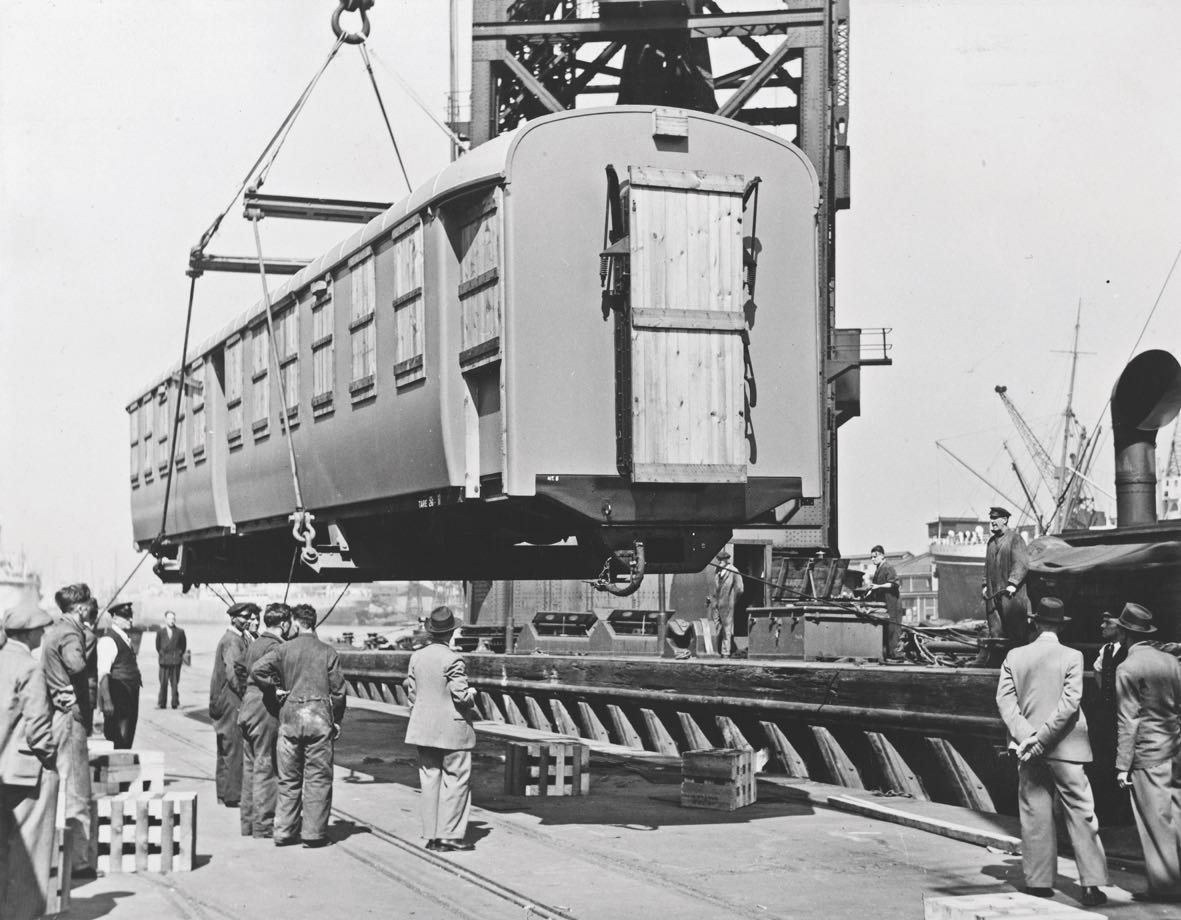
From Rangoon Street to Swedeland Court, from India Street to Garlick Hill, London's street map bears the marks of people who have, throughout history, come to the capital from all over the world, bringing goods from their homelands.
Its public transport map underlines the point even more, with station names such as Cyprus and West India Quay on the Docklands Light Railway, and Canada Water and Canary Wharf on the London Underground.
For many years, the docks of now long-gone Port of London were the entrance point for these new arrivals-and they included London's first Chinese community.
An exhibition at the Museum of London Docklands, entitled London: Port City, tells the story of the river, the port and its lasting legacy for modern London.
"Due to disparities in record-keeping … the first mention of Chinese people in London is difficult to corroborate," Siufan Adey from Goldsmiths College, and co-founder of architecture collective Afterparti, told China Daily.
"But records show that British trading company the East India Company began trading with the region in 1676 and established its first factory in Canton in 1762. The first Chinese people came to London in the early 1780s."
The new arrivals settled in a dockside area known as Limehouse, which became the community's London base for more than a century.
"They were in two small, distinct pockets on either side of West India Dock Road," Adey continued.
"Sailors from Shanghai lived on the north side in Pennyfields, while Cantonese sailors congregated on the south side, along Limehouse Causeway and Gill Street. At first, the all-male Chinese community was viewed with benign curiosity but racial tensions grew as they established businesses and gained economic independence … this affected their perception and integration in London."
The Chun Yee Society, a Limehouse-based charity established in 1906, organized Chinese New Year celebrations and the Qingming Festival for the locals, but heavy bombing of the docks during World War II saw Limehouse Chinatown destroyed, and in search of a new home, the community moved across town to the then run-down Soho.
British soldiers who had picked up a taste for local food serving in Asia encouraged its restaurant industry, and helped the new Chinatown develop into the tourist destination it is today.
The legacy of the Limehouse Chinatown endures, though, in place names such as Canton Street, and Amoy Place, which takes its name from the old name for Xiamen, which in the 19th century was the main port for shipping tea to Europe.
Next door to Limehouse, in Poplar, London's trading past lives on through names such as Malabar Street and Coriander Avenue.
The English language also owes the port a debt. "To know the ropes", meaning to gain mastery of a subject, comes from learning a ship's rigging, "to give a wide berth", meaning to avoid something, comes from ships being moved to allow one another room to turn, and most pertinently today, the word "quarantine" comes from the Italian word for the number 40, which was how many days ships with infectious diseases on board were made to wait off shore in isolation, when the bubonic plague was ravaging Europe in the 14th century.
The exhibition also focuses on other aspects of the port's role in London's past and its modern reinvention as a location used by the makers of films including the Harry Potter, James Bond and Star Wars series.
From its origins as the Roman settlement of Londinium, through to the urban renewal of the 2012 Olympic Games, which transformed the east of the city, much of it close to the old docks, London continues to be changed by locals and new arrivals alike.
Proof of this is the development of London's Chinese New Year celebrations, from one stage and a small crowd in Soho in the early 1970s, to the present day event that draws hundreds of thousands of people to what is reportedly the biggest celebration outside Asia.
Normal life may be temporarily on hold, but when the world starts turning again, it will not be long before, once again, locals and visitors write the next chapter of London's story, and redraw its ever-changing map.