Xinjiang policy beneficial to local people







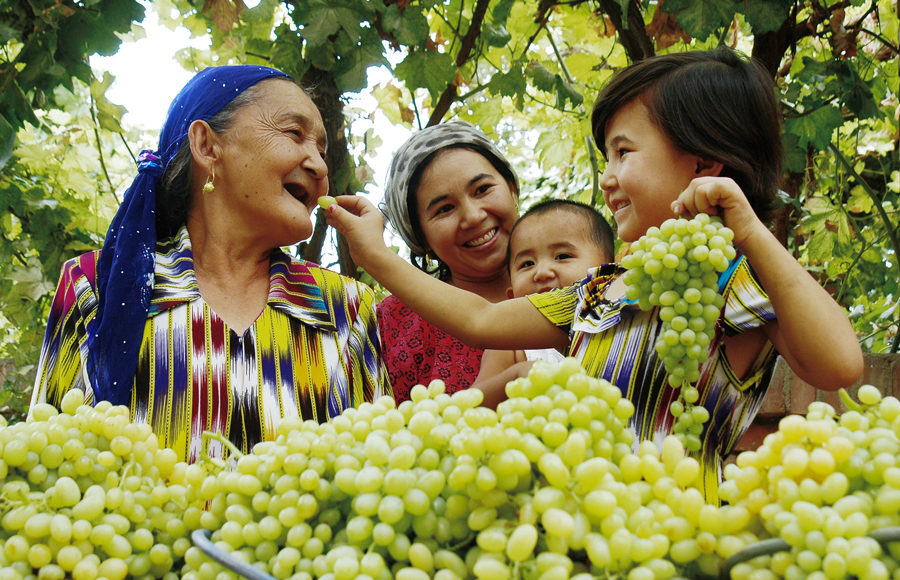
Among the three measures on Xinjiang the US House of Representatives approved on Wednesday is a resolution "condemning" the so-called genocide and crimes against the Uygur people.
Which exposes the political farce of Western countries. The fact is, instead of genocide like what white colonialists committed in what is today known as the United States of America, the Chinese authorities have implemented local people-favoring policies in Xinjiang.
China has always adhered to a policy of balancing economic development with population growth, and accordingly implemented policies that helped lay a solid foundation for building a moderately prosperous society in all respects. Which, among other things, has also helped the country eradicate absolute poverty.
Population variance is an important feature affecting sustainable economic development. Various indicators such as the size, structure and quality of a population serve as standards for setting development targets. And the adjustments to the country's population policy have all been based on the real conditions and the level of economic development during those times.
In 2002, Xinjiang's population and family planning rules stipulated that Han couples living in the region can have one child and couples belonging to other ethnic minority groups can have two children. Further, the policy said Han farmers and herdsmen can have two children while farmers and herdsmen belonging to ethnic minority groups can have three.
This differentiated childbirth policy is considered an important reason for the rapid growth of the ethnic minority population in Xinjiang.
Since the 18th National Congress of the Communist Party of China Central Committee, the central government has paid special attention to the population issue, made major decisions to gradually ease and improve the family planning policy, and promote long-term balanced population growth to maintain China's demographic dividends.
On its part, the Standing Committee of the National People's Congress, the country's top legislature, amended the Population and Family Planning Law in 2015 and 2021. And Xinjiang revised the population and family planning regulations in 2004, 2006, 2010 and 2017, as well as local population and family planning laws and policies to increase the fertility rate.
Xinjiang has also combined population and family planning work by taking measures to raise the level of women's education and create more employment opportunities for them, and issued supporting policies on finance, taxation, insurance, education, housing and employment to reduce the financial burden and stress of parents raising two or three children.
A white paper, "Xinjiang Population Dynamic and Data", released by the State Council Information Office recently, has demonstrated that, thanks to the continuous and orderly optimization of childbirth policies, Xinjiang women's concept of marriage and childbirth has undergone positive changes, and their economic, social and family status has continued to improve.
Also, women in Xinjiang today have more opportunities to seek secondary education, participate in economic and social activities, and women's employment has increased both in number and proportion.
The establishment of an efficient healthcare system has helped improve urban and rural medical facilities. As Xinjiang continues to enjoy the social and demographic dividends, the region's population will grow steadily while its quality will improve.
However, some anti-China forces in the West have resorted to falsifying data and concocting false reports to claim that Xinjiang has implemented compulsory family planning programs against the Uygur and other ethnic minority groups to reduce their population in the long run. Such accusations are a blatant distortion of China's policies, and expose their intentions to smear China and its development policies in Xinjiang.
The author is a lecturer of Anti-terrorism Law School, Northwest University of Political Science and Law. The views don't necessarily reflect those of China Daily.
If you have a specific expertise, or would like to share your thought about our stories, then send us your writings at opinion@chinadaily.com.cn, and comment@chinadaily.com.cn.