Plan set to improve market-based allocation







China's latest move to release a plan to pilot comprehensive reforms of market-based allocation of factors of production will push its drive to build a high-standard market system and foster high-quality development, experts said.
The General Office of the State Council released the document on Thursday that aims to deepen reforms of the market-based factors to give strong impetus to economic and social development.
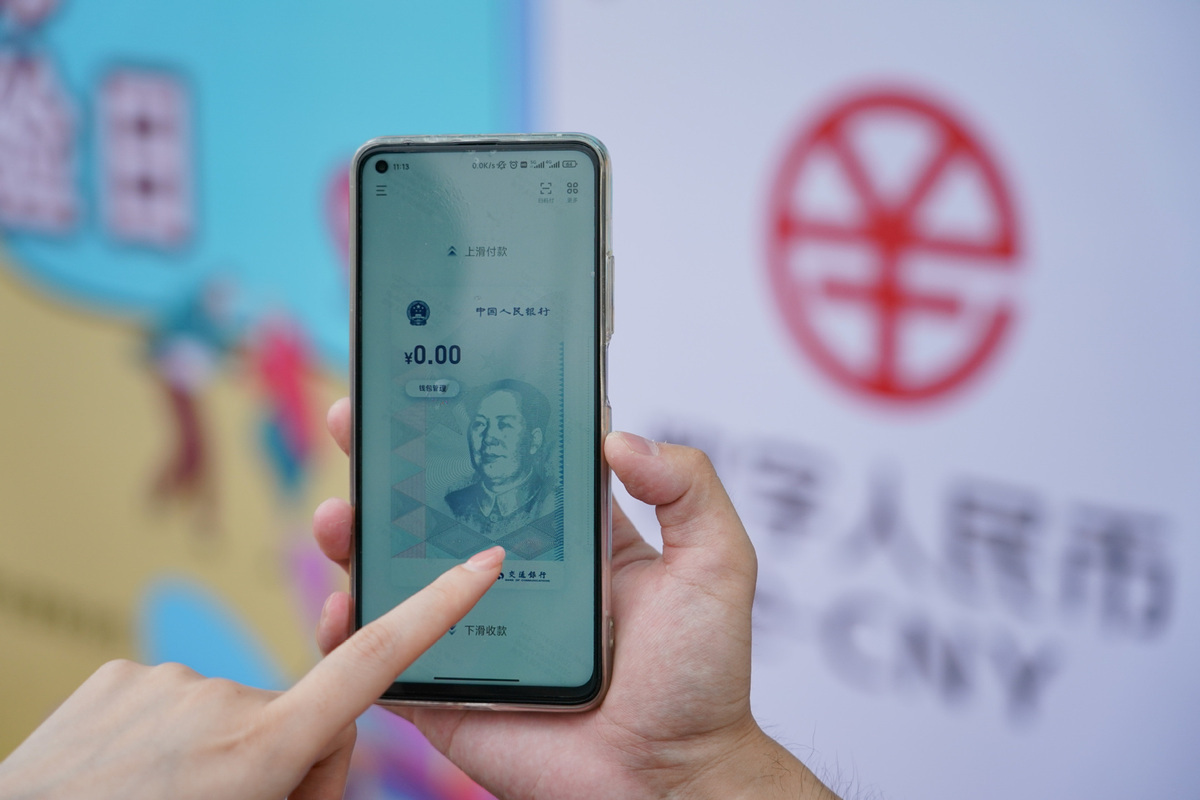
Under the plan, China will take key measures to promote the more efficient allocation of land, encourage the rational and smooth flow of labor and support the pilot digital currency program for the use in retail transactions, daily life and in payment for government services.
More efforts will also be made to explore the establishment of rules on the flow of data and improve the market-based trading mechanism for resources such as electricity and natural gas, and the carbon emissions allowance.
The plan sets a target that the trials will be basically accomplished by 2025, and the reform of market-based allocation of factors of production will make a landmark achievement, setting an example for the optimization of the national system.
Liu Quanhong, director of the international economics research institute of the Chinese Academy of Macroeconomic Research, said the new plan will help improve the efficiency of the allocation of different factors of production and promote the formation of a unified domestic market.
"It will also help further advance the reform of the market-based allocation of factors of production and resolve deep-seated systemic and institutional barriers," Liu added. "The pilot reforms will play a key role in stimulating the vitality of market players and fostering high-quality economic and social development."
The plan follows the Central Economic Work Conference held last month, which said China will vitalize development with reform and opening-up policies and pilot comprehensive reforms of the market-based allocation of factors of production.
In fact, Xi Jinping Thought on Socialist Economy with Chinese Characteristics for a New Era offers China's answer to dealing with the relationship between the government and the market.
A pivotal meeting of the Communist Party of China presided over by Xi Jinping, general secretary of the CPC Central Committee, in 2013 acknowledged the market's "decisive" role in allocating resources, changing the tone from the "basic" role it has played since 1992.
In the meantime, the government should play its role better, the meeting decided. It added that the core of China's economic system reform is to handle the relationship between the government and the market appropriately.
Cui Weijie, deputy director of the Chinese Academy of International Trade and Economic Cooperation, said that the new plan will give full play to the market's decisive role in allocating resources, providing strong impetus to high-quality development.
"The plan attaches great importance to removing barriers that hinder the free and orderly flow of factors, marking a key step in promoting smooth internal circulation. And it will also help create the new economic development pattern of 'dual-circulation' that takes the domestic market as the mainstay, while the domestic and foreign markets complement each other."
Cui's views were echoed by Zheng Lei, chief economist at Glory Sun Financial Group, who said the new plan follows a series of government measures to cultivate the market, demonstrating the government's firm determination to continuously deepen reform and opening-up.
Citing the new steps mapped out by the plan such as promoting pilot digital currency programs and the sharing of credit information, he expected to see the digital renminbi being widely used in the nation, and a mechanism to make financing for small and medium-sized enterprises easier and affordable.
"Once the pilot projects are implemented and then expanded to the whole nation, it will create new sources of economic growth," said Yang Jinghao, chief economist at Kangkai Data Technology.
- Experts and business leaders' take on Central Economic Work Conference
- Major step in the right direction to improve market registration system
- China to vitalize development through reform, opening-up in 2022: key meeting
- Deleveraging steps in China's real estate market should be prudent
- Big plans for e-commerce growth