Rebalancing act: China's 2022 outlook







After a strong rebound last year, the world economy is entering a challenging 2022. The advanced economies have recovered rapidly thanks to big stimulus packages and rapid progress with vaccination, but many developing countries continue to struggle.
The spread of new variants amid large inequalities in vaccination rates, elevated food and commodity prices, volatile asset markets, the prospect of policy tightening in the United States and other advanced economies, and continued geopolitical tensions provide a challenging backdrop for developing countries, as the World Bank's Global Economic Prospects report published today highlights.
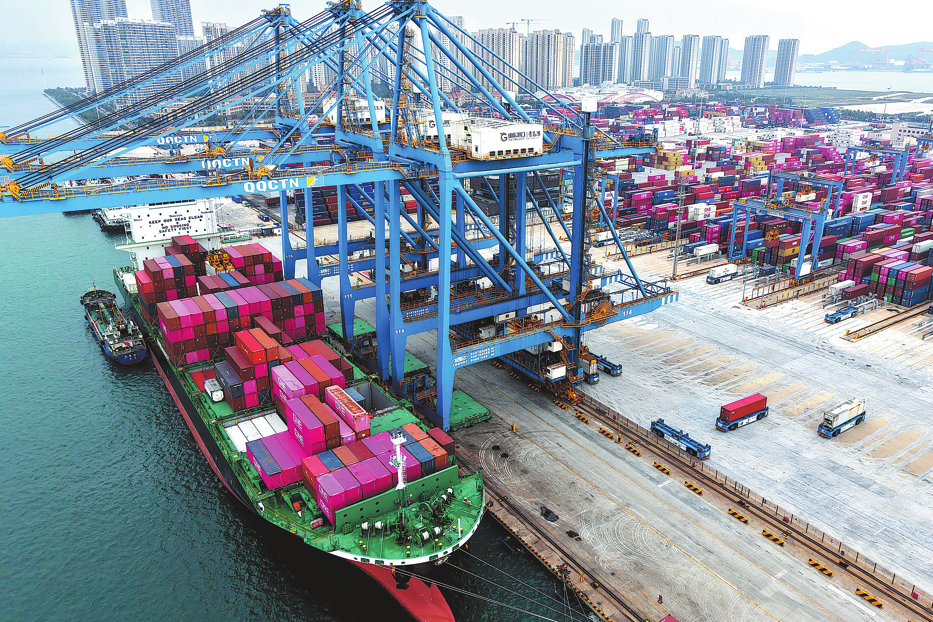
The global context will also weigh on China's outlook in 2022, by dampening export performance, a key growth driver last year. Following a strong 8 percent cyclical rebound in 2021, the World Bank expects growth in China to slow to 5.1 percent in 2022, closer to its potential-the sustainable growth rate of output at full capacity.
Indeed, growth in the second half of 2021 was below this level, and so our forecast assumes a modest amount of policy loosening. Although we expect momentum to pick up, our outlook is subject to domestic in addition to global downside risks. Renewed domestic COVID-19 outbreaks, including the new Omicron variant and other highly transmittable variants, could require more broad-based and longer-lasting restrictions, leading to larger disruptions in economic activity. A severe and prolonged downturn in the real estate sector could have significant economy-wide reverberations.
In the face of these headwinds, China's policymakers should nonetheless keep a steady hand. Our latest China Economic Update argues that the old playbook of boosting domestic demand through investment-led stimulus will merely exacerbate risks in the real estate sector and reap increasingly lower returns as China's stock of public infrastructure approaches its saturation point.
Instead, to achieve sustained growth, China needs to stick to the challenging path of rebalancing its economy along three dimensions: first, the shift from external demand to domestic demand and from investment and industry-led growth to greater reliance on consumption and services; second, a greater role for markets and the private sector in driving innovation and the allocation of capital and talent; and third, the transition from a high- to a low-carbon economy.
None of these rebalancing acts are easy. However, as the China Economic Update points out, structural reforms could help reduce the trade-offs involved in transitioning to a new path of high-quality growth.
First, fiscal reforms could aim to create a more progressive tax system while boosting social safety nets and spending on health and education. This would help lower precautionary household savings and thereby support the rebalancing toward domestic consumption, while also reducing income inequality among households.
Second, following tightening anti-monopoly provisions aimed at digital platforms, and a range of restrictions imposed on online consumer services, the authorities could consider shifting their attention to remaining barriers to market competition more broadly to spur innovation and productivity growth.
A further opening-up of the protected services sector, for example, could improve access to high-quality services and support the rebalancing toward high-value service jobs (a special focus of the World Bank report). Eliminating remaining restrictions on labor mobility by abolishing the hukou, China's system of household registration, for all urban areas would equally support the growth of vibrant service economies in China's largest cities.
Third, the wider use of carbon pricing, for example, through an expansion of the scope and tightening of the emissions trading system rules, as well as power sector reforms to encourage the penetration and nationwide trade and dispatch of renewables, would not only generate environmental benefits but also contribute to China's economic transformation to a more sustainable and innovation-based growth model.
In addition, a more robust corporate and bank resolution framework would contribute to mitigating moral hazards, thereby reducing the trade-offs between monetary policy easing and financial risk management. Addressing distortions in the access to credit-reflected in persistent spreads between private and State borrowers-could support the shift to more innovation-driven, private sector-led growth.
Productivity growth in China during the past four decades of reform and opening-up has been private-sector led. The scope for future productivity gains through the diffusion of modern technologies and practices among smaller private companies remains large. Realizing these gains will require a level playing field with State-owned enterprises.
While the latter have played an instrumental role during the pandemic to stabilize employment, deliver key services and, in some cases, close local government budget gaps, their ability to drive the next phase of growth is questionable given lower profits and productivity growth rates in the past.
In 2022, the authorities will face a significantly more challenging policy environment. They will need to remain vigilant and ready to recalibrate financial and monetary policies to ensure the difficulties in the real estate sector don't spill over into broader economic distress. Recent policy loosening suggests the policymakers are well aware of these risks.
However, in aiming to keep growth on a steady path close to potential, they will need to be similarly alert to the risk of accumulating ever greater levels of corporate and local government debt. The transition to high-quality growth will require economic rebalancing toward consumption, services, and green investments. If the past is any guide to the future, the reliance on markets and private sector initiative is China's best bet to achieve the required structural change swiftly and at minimum cost.
Ibrahim Chowdhury is World Bank acting lead economist for China, and Ekaterine T. Vashakmadze is a senior economist and Li Yusha an economist at the same organization.
The views don't necessarily reflect those of China Daily. If you have a specific expertise, or would like to share your thought about our stories, then send us your writings at opinion@chinadaily.com.cn, and comment@chinadaily.com.cn.