Fed's mad scramble to control inflation







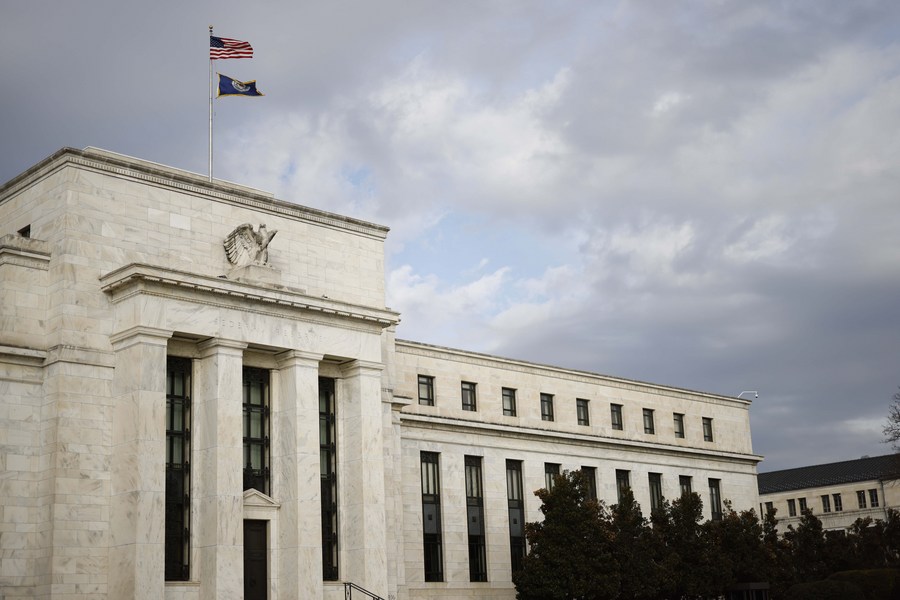
The US Federal Reserve has turned on a dime, an uncharacteristic about-face for an institution long noted for slow and deliberate shifts in monetary policy. While the Fed's recent messaging (it hasn't really done anything yet) is not as creative as I had hoped, at least it has recognized that it has a serious problem.
That problem, of course, is inflation. Like the Fed I worked at in the early 1970s under Arthur Burns, today's policymakers once again misdiagnosed the initial outbreak. The current upsurge in inflation is not transitory or to be dismissed as an outgrowth of idiosyncratic COVID-19-related developments. It is widespread, persistent, and reinforced by wage pressures stemming from an unprecedentedly sharp tightening of the US labor market. Under these circumstances, the Fed's continued refusal to change course would have been an epic policy blunder.
But recognizing the problem is only the first step toward solving it. And solving it will not be easy.
Consider the math: The inflation rate as measured by the consumer price index reached 7 percent in December 2021.With the nominal federal funds rate effectively at zero, that translates into a real funds rate (the preferred metric for assessing the efficacy of monetary policy) of-7 percent.
That is a record low.
Only twice before in modern history, in early 1975 and again in mid-1980, did the Fed allow the real funds rate to plunge to-5 percent. Those two instances bookended the Great Inflation, when, over a five-year-plus period, the CPI rose at an 8.6 percent average annual rate.
Of course, no one thinks we are facing a sequel. I have been worried about inflation for longer than most, but even I don't entertain that possibility. Most forecasters expect inflation to moderate over the course of this year. As supply chain bottlenecks ease and markets become more balanced, that is a reasonable presumption.
But only to a point. The forward-looking Fed still faces a critical tactical question: What federal funds rate should it target to address the most likely inflation rate 12-18 months from now?
No one has a clue, including the Fed and the financial markets.
But one thing is certain. With a-7 percent real federal funds rate putting the Fed in a deep hole, even a swift deceleration in inflation does not rule out an aggressive monetary tightening to re-position the real funds rate such that it is well aligned with the Fed's price-stability mandate.
To figure this out, the Fed must hazard an estimate of when the inflation rate will peak and slide lower. It is always tough to guess the date-and even harder to figure out what "lower" really means. But the US economy is still running hot, and the labor market, at least as measured by the plunging unemployment rate, is tighter than at any point since January 1970 (on, gulp, the brink of the Great Inflation).
Under these circumstances, I would argue that a responsible policymaker would want to err on the side of caution and not bet on a quick, miraculous roundtrip of inflation back to its sub-2 percent pre-COVID-19 trend.
Again, consider the math: Let's say the Fed's projected policy path, as conveyed through its latest "dot plot", is correct and the central bank takes the nominal federal funds rate from zero to around 1 percent by the end of 2022. Couple that with a judicious assessment of the disinflation trajectory-not too slow, not too fast-that foresees year-end CPI inflation moving back into the 3-4 percent zone. That would still leave the real federal funds rate in negative territory at-2 percent to-3 percent at the end of this year.
That's the catch in all this. In the current easing cycle, the Fed first pushed the real federal funds rate below zero in November 2019. That means a likely-2 percent to-3 percent rate in December 2022 would mark a 38-month period of extraordinary monetary accommodation, during which the real federal funds rate averaged-3.1 percent.
Historical perspective is important here. There have been three earlier periods of extraordinary monetary accommodation worth noting: In the aftermath of the dotcom bubble a generation ago, the Fed under Alan Greenspan ran a negative real funds rate averaging-1.1 percent for 31 consecutive months. Following the 2008 global financial crisis, Ben Bernanke and Janet Yellen teamed up to sustain a-1.9 percent average real funds rate for a whopping 62 months. And then, as post-crisis sluggishness persisted, Yellen partnered with Jerome Powell for 37 straight months to hold the real funds rate at-0.9 percent.
Today's Fed is playing with fire. The-3.1 percent real federal funds rate of the current uber-accommodation is more than double the-1.4 percent average of those three earlier periods. And yet today's inflation problem is far more serious, with CPI increases likely to average 5 percent from March 2021 through December 2022, compared with the 2.1 percent average that prevailed under the earlier regimes of negative real funds rates.
All this underscores what could well be the riskiest policy bet the Fed has ever made. It has injected record stimulus into the economy during a period when inflation is running at well over twice the pace it did during its three previous experiments with negative real funds rates. I deliberately left out a fourth comparison: the-1.7 percent real federal funds rate under Burns in the early 1970s. We know how that ended. And I also left out any mention of the Fed's equally aggressive balance-sheet expansion.
By now, it is passé to warn that the Fed is "behind the curve". In fact, the Fed is so far behind that it can't even see the curve. Its dot plots, not only for this year but also for 2023 and 2024, don't do justice to the extent of monetary tightening that most likely will be required as the Fed scrambles to bring inflation back under control. In the meantime, financial markets are in for a very rude awakening.
The author, a faculty member at Yale University and former chairman of Morgan Stanley Asia, is the author of Unbalanced: The Codependency of America and China.
Project Syndicate
The views don't necessarily reflect those of China Daily.
If you have a specific expertise, or would like to share your thought about our stories, then send us your writings at opinion@chinadaily.com.cn, and comment@chinadaily.com.cn.